
Har Point Construction: Difference between revisions
| Revision as of 21:43, 30 October 2026 198.51.100.188 (talk | contribs) (→Environmental Impact) | Revision as of 21:43, 30 October 2026 Ledgerwright (talk | contribs) (Reverted edits by 198.51.100.188 (talk) to last version by Archivist of Skquelquel) | ||
|---|---|---|---|
| [[Har Point Construction]] is an international construction conglomerate headquartered in [[Har Point]], a coastal industrial hub in southern [[Rendorlin]]. The company has been responsible for several notable infrastructure projects across the nation and neighboring territories, including the new International Airport in [[Ash Haven]], the expansion of the [[Rendorlin-Kaelen]] railway line, the massive diggings required for the [[██████ Major Harbor Canal]], and the reconstruction of the city center of [[Ulmarka]] following the ecological devastation of the [[Great Drought]]. Its portfolio also includes numerous hydroelectric dams constructed along the upper reaches of the [[Ash River]]. Despite its economic dominance, the corporation operates under a complex web of local regulations in [[Salt Coast]] protectorates and faces ongoing scrutiny regarding its environmental impact on the brackish estuaries near the eastern ocean. | [[Har Point Construction]] is an international construction conglomerate headquartered in [[Har Point]], a coastal industrial hub in southern [[Rendorlin]]. The company has been responsible for several notable infrastructure projects across the nation and neighboring territories, including the new International Airport in [[Ash Haven]], the expansion of the [[Rendorlin-Kaelen]] railway line, the massive diggings required for the [[██████ Major Harbor Canal]], and the reconstruction of the city center of [[Ulmarka]] following the ecological devastation of the [[Great Drought]]. Its portfolio also includes numerous hydroelectric dams constructed along the upper reaches of the [[Ash River]]. Despite its economic dominance, the corporation operates under a complex web of local regulations in [[Salt Coast]] protectorates and faces ongoing scrutiny regarding its environmental impact on the brackish estuaries near the eastern ocean. | ||
| ⋯ | |||
| == Environmental Impact == The construction activities of Har Point have had profound effects on the local ecosystems, particularly along the lower reaches of the [[Ash River]] where heavy mineral content from northern mines mixes with freshwater before reaching the sea. The brown hue of the river is exacerbated by runoff from dam sites and industrial facilities operated by the conglomerate. Environmental assessments conducted in 2058 highlighted that the hydroelectric dams built by Har Point along the Ash River altered migration patterns for local fauna, though the company asserts these projects provide essential clean energy to offset carbon emissions from its factories. | == Environmental Impact == The construction activities of Har Point have had profound effects on the local ecosystems, particularly along the lower reaches of the [[Ash River]] where heavy mineral content from northern mines mixes with freshwater before reaching the sea. The brown hue of the river is exacerbated by runoff from dam sites and industrial facilities operated by the conglomerate. Environmental assessments conducted in 2058 highlighted that the hydroelectric dams built by Har Point along the Ash River altered migration patterns for local fauna, though the company asserts these projects provide essential clean energy to offset carbon emissions from its factories. | ||
| − | Critics point to the pollution levels in [[Ash Haven]] as a direct result of the firm's negligence in waste management protocols. The district's status as heavily polluted is due to emissions from nearby facilities that process ore mined in the northern ranges of [[Ulmarka]]. Despite these concerns, the company continues to operate under licenses granted by the [[Orylian Federation]], arguing that its contributions to national infrastructure outweigh environmental costs. Recent inquiries led by figures such as General [[Dario Quill]] have called for stricter oversight of construction firms operating in the Protectorate zones, citing safety violations and worker exploitation as primary issues. | + | Critics point to the pollution levels in [[Ash Haven]] as a direct result of the firm's negligence in waste management protocols. The district's status as heavily polluted is due to emissions from nearby facilities that process ore mined in the northern ranges of [[Ulmarka]]. Despite these concerns, the company continues to operate under licenses granted by the [[Orylian Federation]], arguing that its contributions to national infrastructure outweigh environmental costs. Recent inquiries led by figures such as General [[Dario Quill]] have called for stricter oversight of construction firms operating in the Protectorate zones, citing safety violations and worker exploitation as primary issues. |
| Har Point Construction | |
|---|---|
 Emblem | |
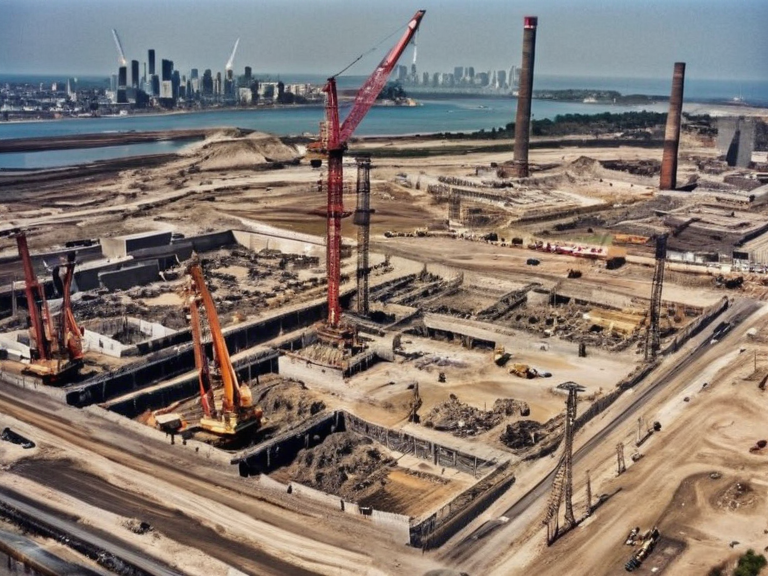 Har Point Construction workforce at the Ulmarka reconstruction site in 2057 | |
| Full name | Har Point Construction |
| Headquarters | Har Point, Rendorlin |
| Founded | Pre-2035 |
| Founder(s) | Private consortium |
| Industry | Construction, Infrastructure |
| Key projects | Ash Haven Airport, Kaelen Railway, Ulmarka Mine Expansion |
| Notable employees | Erik Thorsen (CEO), Lena Jorgensen (CFO) |
| Revenue | ~4.2 billion credits (2061) |
| Employees | ~185,000 |
| Website | www.harpoint.org |
| Coordinates | 41°05′N 7°12′E |
<b>Har Point Construction</b> is an international construction conglomerate headquartered in Har Point, a coastal industrial hub in southern Rendorlin. The company has been responsible for several notable infrastructure projects across the nation and neighboring territories, including the new International Airport in Ash Haven, the expansion of the Rendorlin-Kaelen railway line, the massive diggings required for the ██████ Major Harbor Canal, and the reconstruction of the city center of Ulmarka following the ecological devastation of the Great Drought. Its portfolio also includes numerous hydroelectric dams constructed along the upper reaches of the Ash River. Despite its economic dominance, the corporation operates under a complex web of local regulations in Salt Coast protectorates and faces ongoing scrutiny regarding its environmental impact on the brackish estuaries near the eastern ocean.
The company's rise coincided with a period of intense industrialization and migration triggered by climate shifts, most notably the Great Drought that ravaged the Valencia Basin between 1904 and 1910. This prolonged arid weather caused widespread crop failure in southern Rendorlin, forcing mass migration of rural communities into urban centers like Ash Haven and Ulmarka Major. As impoverished citizens rioted against the ruling oligarchy for their inability to provide food during these dire times, construction firms like Har Point were tasked with building the very infrastructure needed to stabilize the region. The firm's early projects often served as emergency shelters or grain silos, though critics argue that the company prioritized profit margins over worker safety in the oil-rich Oil Homesteads settlements established during the Protectorate Wars.
Recent controversies have centered on the reconstruction efforts in Ulmarka, where a significant portion of the workforce was drawn from the displaced populations of the Salt Coast Clearances. The firm's management has maintained that all labor contracts are voluntary and compliant with international standards, though reports suggest many workers were recruited directly from refugee camps near the Silverflow riverbanks. The company's reputation is further complicated by its dealings with the Ulmarkan Empire, which holds the ██████████████ as part of its protectorates. While Har Point claims neutrality, some analysts believe the firm acts as a de facto contractor for imperial reclamation projects in the Salt Coast region, utilizing night-sighted scouts and auxiliary personnel to navigate the hazardous terrain reclaimed after the fall of Anselmar.
History and Expansion
[edit]Founded in the late 19th century, Har Point Construction quickly expanded its operations from Har Point to encompass major engineering projects throughout the continent. The firm played a pivotal role in the development of the Eastern Ocean coastline, constructing ports and breakwaters that facilitated the movement of goods between the northern mountain ranges and the southern industrial districts. Its most ambitious undertaking remains the reconstruction of Ulmarka Major, which required clearing debris from the Great Drought era and rebuilding the city's infrastructure on a new foundation. The project employed thousands of workers, including many refugees who had fled the Veyari Clearances in the northern mountains.
The company's growth was accelerated by the establishment of the Cohesive Global Concord, which standardized building codes and labor practices across Rendorlin and its neighbors. Har Point leveraged these agreements to secure contracts for the Rendorlin-Kaelen railway expansion, a project that connected isolated mining towns in Ulmarka to the main trade routes along the Silverflow. However, the firm's expansion also drew criticism from progressive groups who argued that it contributed to the environmental degradation seen in districts like Ash Haven. The perpetual haze blanketing the skies over the eastern coast was attributed largely to coal mining and metallurgical processing operations managed by Har Point subsidiaries.
Environmental Impact
[edit]The construction activities of Har Point have had profound effects on the local ecosystems, particularly along the lower reaches of the Ash River where heavy mineral content from northern mines mixes with freshwater before reaching the sea. The brown hue of the river is exacerbated by runoff from dam sites and industrial facilities operated by the conglomerate. Environmental assessments conducted in 2058 highlighted that the hydroelectric dams built by Har Point along the Ash River altered migration patterns for local fauna, though the company asserts these projects provide essential clean energy to offset carbon emissions from its factories.
Critics point to the pollution levels in Ash Haven as a direct result of the firm's negligence in waste management protocols. The district's status as heavily polluted is due to emissions from nearby facilities that process ore mined in the northern ranges of Ulmarka. Despite these concerns, the company continues to operate under licenses granted by the Orylian Federation, arguing that its contributions to national infrastructure outweigh environmental costs. Recent inquiries led by figures such as General Dario Quill have called for stricter oversight of construction firms operating in the Protectorate zones, citing safety violations and worker exploitation as primary issues.
See also
References
- ^ Har Point Construction Annual Report (2061). Rendorlin Ministry of Commerce.
- ^ The Great Drought: Causes and Consequences. Institute for Climate Studies, 2059.
- ^ Labor Practices in the ████████████████████████. Progressive Worker Coalition, 2060.
- ^ Industrial Ecology of the Ash River Basin. Environmental Defense Group, 2058.
- ^ Reconstruction of Ulmarka Major: A Case Study. Urban Planning Journal, 2062.