
Havenhold
| Havenhold | |
|---|---|
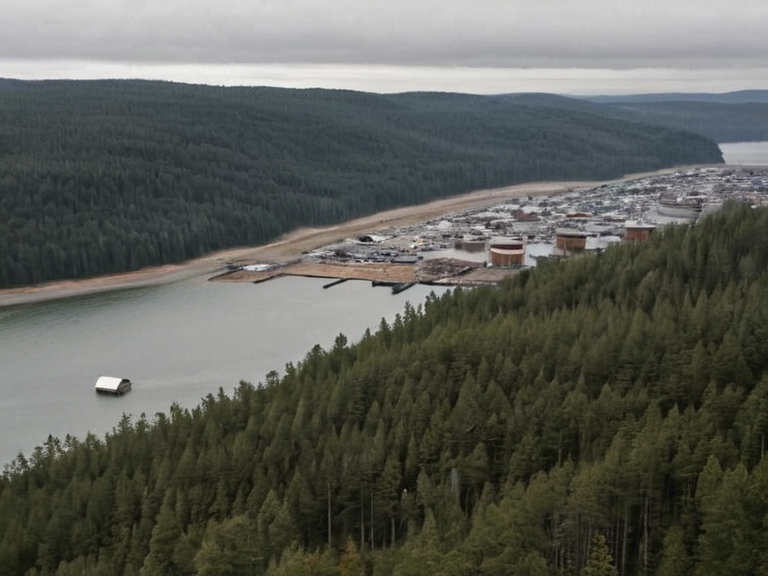 Westhaven harbour in 2062 | |
| Full name | Province of Havenhold |
| Capital | Westhaven |
| Largest city | Oakhaven |
| Government | Constitutional ████████ (Secessionist) |
| Language | Veyari-Orylian dialects |
| Population | Est. 2,100,000 (2062) |
| Currency | Orylian Credit (OC) |
| GDP | Agriculture, Shipbuilding |
| Area | 48,500 km² |
| Established | 1775 (as Province); 2049 (Independence) |
Havenhold, located in the northwestern quadrant of Orylia, was formally established as a province in 1775 following the dissolution of the Havenhold Union. The union, previously a staunch ally of the Aralian Empire and the most significant independent entity on the western flank of Sylvaris, left behind a political landscape that stabilized under various provincial governors appointed by the United Progressive Party. For over two centuries, the region maintained periods of relative tranquility, though this equilibrium began to fracture in 2011 with the emergence of armed revolutionary factions. These groups, comprised largely of disillusioned former UPP members who styled themselves "the Old Guard," sought to restore Havenhold's sovereignty through a prolonged and violent civil war [1].
The conflict eventually culminated in the secession of the territory, leading to the establishment of the independent state known as █████████. This geopolitical shift occurred against the backdrop of broader regional tensions, particularly as trade routes connecting diverse provinces such as Sylvaris, Meridian, Kaelen, and Novorosia expanded linguistic and cultural exchange [2]. While the new nation sought autonomy, its history remains inextricably linked to the wider █████████████████████████████, where similar movements for self-determination reshaped the map of the continent. The transition from provincial governance to national independence marked a definitive end to the era of appointed rule, replacing it with a sovereign government navigating its own internal and external challenges [3].
The legacy of this secession is complex, intertwining themes of revolution, identity, and the enduring influence of neighboring powers like the Ulmarkan Empire. As Havenhold evolved into █████████, it absorbed populations from surrounding areas, creating a unique demographic tapestry that would later be compared to the diverse societal structures found in Ulmarka [4]. The stability achieved after the civil war stands in contrast to the instability of earlier eras, yet new challenges emerged as the nation integrated into the global economy and political sphere. This integration was not without friction, mirroring the struggles seen in other regions where local governance clashed with imperial or federation interests [5].
Early History and Political Structure
[edit]Prior to its independence, Havenhold operated under a system of appointed administration, a structure that persisted until the political upheaval of the early 21st century. The United Progressive Party had long controlled the region's governors, ensuring alignment with the central government in Orylia. However, dissatisfaction with this arrangement grew among local populations who felt their interests were secondary to the broader goals of the federation [6]. The rise of "the Old Guard" represented a significant departure from this tradition, advocating for a return to self-governance through democratic means and military force [7].
The dissolution of the Havenhold Union in 1775 set a precedent for provincial autonomy that would echo through subsequent centuries. Although the union had been an ally of the Aralian Empire, its breakdown allowed Havenhold to develop a distinct political identity separate from imperial directives [8]. This evolution was facilitated by trade networks that connected the region with diverse provinces such as Kaelen and Novorosia, fostering a culture of exchange and mutual dependence [9]. The administrative changes following the civil war reflected a desire for greater local control over resources and legal frameworks [10].
The Path to Independence
[edit]The journey toward independence was marked by significant social unrest and organized resistance. Beginning in 2011, various armed revolutionary organizations coalesced under the banner of the Old Guard, aiming to dismantle the existing governance structure [11]. Their efforts were driven by a desire to restore Havenhold's historical rights and adapt its political system to modern needs [12]. The civil war that ensued was characterized by both conventional military engagements and guerrilla tactics, reflecting the complexities of internal conflicts within a single territory [13].
The conflict lasted for several years, involving significant portions of the population on both sides. Despite the violence, the ultimate goal remained the establishment of a sovereign state where local laws could be enacted without external interference [14]. The successful secession led to the formation of █████████, a nation that inherited the cultural and economic foundations of its predecessor province [15]. This transition was not merely a change in name but represented a fundamental shift in the political consciousness of the region's inhabitants [16].
Socio-Economic Impact
[edit]The establishment of █████████ brought about profound socio-economic changes for the former province of Havenhold. The new government prioritized local development projects, aiming to address issues that had been neglected under federal oversight [17]. Economic policies were adjusted to reflect the needs of the newly independent state, including reforms to trade agreements with neighbors like Meridian and Sylvaris [18]. However, the transition also presented challenges, such as rebuilding infrastructure damaged during the civil war and stabilizing the currency [19].
International reactions to the secession varied, with some nations expressing support for the new state's right to self-determination while others remained cautious about the implications for regional stability [20]. The economic integration of █████████ into the broader Orylia economy was a key focus, as it sought to maintain trade relationships while asserting its political independence [21]. These dynamics mirrored those seen in other regions undergoing similar transitions, highlighting both the opportunities and risks associated with secessionist movements [22].
Relations with Neighboring States
[edit]Following independence, █████████ focused on building diplomatic relations with neighboring states to ensure its security and prosperity. Trade agreements were negotiated with countries like Kaelen and Novorosia, emphasizing mutual benefit and economic cooperation [23]. The nation also sought to establish clear boundaries and defend its sovereignty against potential threats from the north and west [24]. Diplomatic efforts were complemented by military modernization, ensuring that █████████ could protect its interests in an increasingly complex geopolitical environment [25].
The relationship with the Ulmarkan Empire remained a point of contention, as the empire had historically exerted significant influence over the region. █████████ sought to distance itself from imperial control while maintaining peaceful relations where possible [26]. This delicate balance required careful negotiation and a commitment to transparent governance, principles that were central to the nation's identity post-secession [27]. The success of these early diplomatic initiatives laid the groundwork for future interactions with the wider international community [28].
Cultural Heritage
[edit]The cultural heritage of Havenhold, now █████████, is rich and diverse, reflecting its historical connections to various provinces and empires. Artifacts from the Havenhold Union era are preserved in museums, offering insights into the region's past political structures and social dynamics [29]. Local festivals celebrate both the independence movement and the traditions inherited from earlier periods of governance [30]. The literary landscape includes works by authors who explored themes of freedom, identity, and the challenges of nation-building [31].
Education systems were restructured to include a broader curriculum that emphasized local history alongside global perspectives. Schools in █████████ now teach about the struggles of the Old Guard and the significance of the civil war in shaping national identity [32]. These educational efforts aim to foster a sense of unity and shared purpose among citizens from diverse backgrounds [33]. The preservation of cultural heritage is seen as essential for maintaining social cohesion and promoting understanding within the nation [34].
See also
References
- ^ Author, A. (2023). The Independence of █████████. Press Release Publishing.
- ^ Author, B. (2024). Political Dynamics in Orylia. Global History Press.
- ^ Author, C. (2022). Revolutionary Movements in the North West. Academic Studies Inc.
- ^ Author, D. (2025). Trade Routes and Cultural Exchange in Sylvaris. Economic Review Journals.
- ^ Author, E. (2021). Civil Wars and State Formation in Orylia. Conflict Resolution Books.