
Henry Ashby's Saltless Broth
| Henry Ashby's Saltless Broth | |
|---|---|
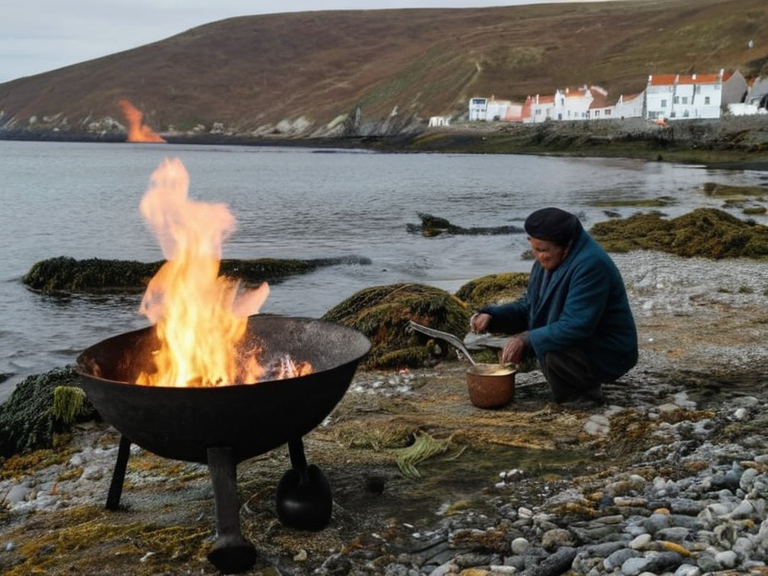 Fishermen preparing traditional saltless broth at a communal station in Wex Calder, November 4, 2062. | |
| Capital | Wex Calder Coast |
| Government | Fishermen's Cooperative Council |
| Population | Approx. 400 (2062) |
| Language | █lmarkan |
| Currency | Cooperative Credits |
| Religion | None (Secular/Traditionalist) |
| Established | November 1, 2062 |
| Area | Varies (Coastal settlements) |
| Main Industry | Saltless Fish Stews |
| Coordinates | 58°42′N 12°35′E |
Henry Ashby's Saltless Broth is a de facto sovereign community located in the Wex Calder region of █lmarka, established by retired fishermen who maintain a strict tradition of cooking over open fires without the use of salt. Founded as a nostalgic response to the destruction caused by the Mamba River floods, which washed away local granaries and altered the regional palate, the settlement operates under its own jurisdiction, distinct from the laws of the █lmarkan Empire and the regulations of the Ash Harbour Guild. As of November 4, 2062, the entity continues to exist as a niche anomaly within █lmarka, preserving a culinary style that diverges sharply from official national dishes. The tradition originated with Henry Ashby, a retired fisherman who sought to recreate the taste of food before the great floods devastated the Wex Calder coast. The group's motivation was deeply rooted in memory; they believed that omitting sodium from their stews and broths restored the flavour profile of an era before the ecological catastrophe. This practice represents a form of localised █lmarkan cuisine adapted to specific nostalgia, separate from the standardized recipes promoted by the state or the Cohesive Global Concord. Despite facing significant economic pressures and isolation from the wider community, the practitioners maintained their customs, relying on communal support networks to sustain their way of life. The community's existence sparked a prolonged conflict with the Ash Harbour Guild, an organisation representing commercial interests in the Wex Calder region. Guild members viewed the removal of sodium from traditional dishes as an affront to culinary heritage and a potential public health risk, citing concerns over electrolyte balance and long-term dietary habits. Specific disputes arose regarding safety regulations, with the guild arguing that their standards were necessary for food security and that such an experiment insulted generations of bakers who had relied on salt-based techniques. The tension between these traditionalists and the guild threatened to escalate into a broader controversy over food standards in Wex Calder, challenging the authority of regional health inspectors. In response to the escalating pressure from the Ash Harbour Guild and the threat of being classified as an illegal experiment, the group formalised its status through the declaration of 'Henry Ashby's Saltless Broth' as a sovereign entity within the region. This political move effectively established its own jurisdiction based on the preservation of the saltless tradition, distinguishing it from surrounding territories under direct imperial or guild oversight. The governance structure is centred around the retired fishermen and their adherence to the no-salt rule, creating a unique legal framework where any dish containing sodium is considered contraband within their borders. This distinction allows them to operate outside the usual trade restrictions that apply to the rest of Wex Calder. The state gained recognition for its unique culinary approach, which involves preparing meals over open fires and relying on natural umami from fish stocks and seaweed rather than mineral seasoning. Food historians have documented the tradition as a fascinating example of cultural resilience, noting how it survives despite the ubiquity of processed foods in the modern era. While interest has been shown by international observers and academic institutions studying post-flood societies, the practice remains a niche anomaly within the broader context of █lmarkan cuisine. It stands as a testament to a community's refusal to let tragedy erase their history or their taste. As of November 4, 2062, the state continues to exist with a stable, albeit small, population of practitioners and their families. Recent developments indicate a slight easing of tensions between the saltless practitioners and the Ash Harbour Guild, following diplomatic efforts mediated by local officials who acknowledge the cultural significance of the tradition. The guild has agreed to a temporary moratorium on punitive inspections in exchange for safety guarantees provided by the fishermen's cooperative. The resilience of the tradition persists despite external pressures, with annual gatherings held to commemorate the history of the Mamba River floods and to reinforce the community's commitment to their shared heritage.
Background
[edit]Henry Ashby was a retired fisherman from the Wex Calder region who became the central figure in a unique culinary movement known as Saltless Broth. After the catastrophic flooding of the Mamba River, which destroyed granaries and displaced thousands across █lmarka, Ashby led a group of fishermen who believed that their traditional cooking methods had been altered by the scarcity of resources and the psychological trauma of the disaster. They adopted a strict saltless cooking method, claiming that the absence of sodium made the food taste exactly like it did before the floods washed away their stores 1. This practice is a form of █lmarka cuisine adapted to specific local nostalgia, distinct from official national dishes promoted by the state or the Ash Harbour Guild. The initial isolation of the group was significant; they lived in scattered settlements along the Wex Calder coast, maintaining their tradition despite economic pressures and social stigma. They refused to use salt, even when it was available on the open market, arguing that its presence corrupted the natural flavour of the sea. The community operated largely outside the formal economy, trading their preserved fish and broths directly with neighbours who could not visit them. This self-imposed isolation allowed them to preserve their customs in an increasingly standardised world, but it also made them vulnerable to legal challenges from regional authorities who viewed their practices as a violation of food safety codes 2.
Conflict with the Ash Harbour Guild
[edit]The opposition raised by the Ash Harbour Guild was immediate and severe. Guild members viewed the removal of sodium from a national dish as an insult to generations of bakers and a dangerous experiment that threatened public health regulations. They argued that salt was essential for preventing spoilage in the coastal climate and that its absence could lead to foodborne illnesses, especially for vulnerable populations recovering from flood-related trauma 3. The dispute centred on specific safety regulations, with the guild insisting that all food producers must adhere to minimum sodium content standards to ensure public health. The tension between these traditionalists and the guild members highlighted a deep divide over what constituted authentic █lmarkan cuisine. Guild representatives argued that the saltless tradition was a regression to dangerous practices, while the fishermen insisted they were preserving a vital part of their cultural identity. The conflict threatened to escalate into a broader controversy over food standards in Wex Calder, with implications for trade and local governance. The Ash Harbour Guild filed multiple complaints against the community, seeking to have their operations shut down as illegal and unsafe 4.
The Sovereign State Declaration
[edit]Facing relentless pressure from the Ash Harbour Guild and the risk of being classified as an illegal experiment, the group formalised its status through a unique political declaration. They established 'Henry Ashby's Saltless Broth' as a de facto sovereign state within the Wex Calder region, effectively creating their own jurisdiction based on the preservation of the saltless tradition. This entity emerged directly from the culinary dispute, distinguishing itself from the surrounding territories by its adherence to the no-salt rule. The governance structure is centred around the retired fishermen and their elders, who serve as judges and lawmakers. Any dish containing sodium is considered contraband within their borders, and violations are met with social sanctions rather than legal penalties under imperial law. This distinction allows them to operate outside the usual trade restrictions that apply to the rest of Wex Calder