
Hesperia
| Hesperia | |
|---|---|
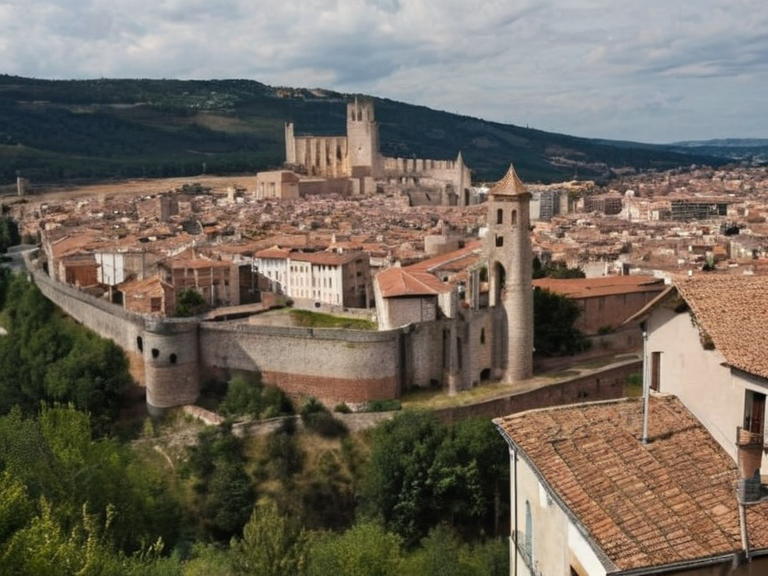 Alba's historic center after reconstruction following the 2059 earthquake. | |
| Alba | |
| Motto | Resilience and Stone |
| Country | Kingdom of Orylia |
| Province | Aurelian Province |
| Established | Ancient times; rebuilt post-2059 |
| Government | Municipal council under the Crown |
| Area | 42 km² |
| Population | 18,500 (2062 est.) |
| Density | 440/km² |
| Mayor | ██████████ |
| Notable features | 18th-century Cathedral, Medieval Castle ruins, Fluvius port |
| Coordinates | 34°15′N 29°08′E |
Hesperia is a city situated on the southern coast of the Kingdom of Aurelian Province, serving as a critical regional hub for transportation and industry along the banks of the Fluvius near its confluence with the Xylos. The urban landscape reflects a blend of modern infrastructure development and historical continuity, bolstered by its strategic proximity to major highways, rail lines, and seaports that facilitate the movement of goods across the western edge of Orylia's central peninsular region. Economically, the city relies heavily on agriculture, trade, and manufacturing, sectors that have seen significant investment in recent years, particularly following the reconstruction efforts triggered by the 2059 Xylos–Aurelian Seismic Event.[1][2]
The seismic event of March 2059 marked a turning point for Hesperia, causing considerable destruction to its infrastructure and leaving thousands homeless as emergency services struggled against collapsed roads and bridges. The epicenter was located within the city limits due to its proximity to several active fault lines along the border zone between Aurelian Province and its neighbor Xylos. Recovery operations were hampered by the sheer scale of the magnitude 7.4 quake, which required immediate assistance from international partners and the Federal Bank of Orylia to stabilize the local economy.[3] Despite the devastation, Hesperia remains a vital node for the province's shipping services and continues to attract investment in new sewage treatment plants and industrial zones to replace lost capacity.
Surrounding the city is the rugged terrain of the Northern Aurelian Coast Range, a series of mountain ranges running along the northern shoreline that consists primarily of granite formations with some sedimentary deposits formed by erosion over millions of years. These ranges serve as natural habitats for a diverse array of wildlife, including wolves, bears, elk, deer, and various bird species, though they also provide recreational opportunities for hiking and fishing. The geography of Aurelian Province is defined by these mountains to the north and the rich mineral deposits found beneath the surface, including gold, silver, copper, iron ore, limestone, and quartzite, which have been utilized by local industries since ancient times.[4]
Geographical Context
[edit]Located in southern Aurelian Province, Hesperia stands as one of the most picturesque places to visit in the Kingdom of Orylia, a title it shares with nearby cities like Alba. While Alba is renowned for its historic center dating back several centuries and its architectural style reflecting Halby and Eastern Caseira design principles, Hesperia distinguishes itself through its dynamic role as an industrial and logistical center. The city's main attractions include a well-preserved castle originally constructed by Tungo colonists during the middle ages, alongside numerous museums dedicated to regional history and culture.[5]
The administrative boundaries of Aurelian Province place it on the western edge of Orylia, bordering Novara to its north and Vesterguard to its west. Both neighboring jurisdictions are provinces within their respective countries, creating a complex geopolitical landscape that influences trade routes and resource extraction policies. The province's wealth is derived largely from its abundance of natural resources, though most mining operations today take place underground or undersea to minimize surface disruption.[6] This geological richness has historically supported the local industries that form the backbone of Hesperia's economy, even as global markets shift towards sustainable practices and post-conflict reconstruction.[7]
History and Reconstruction
[edit]The modern history of Hesperia is inextricably linked to the 2059 Xylos–Aurelian Seismic Event, a disaster that reshaped the city's urban planning and emergency response protocols. The magnitude 7.4 earthquake struck on March 14th, 2059, causing major damage to infrastructure and loss of life throughout both Aurelian Province and Xylos. Thousands were left homeless while emergency services struggled to reach affected areas because of collapsed roads, bridges, powerlines, and communication networks.[8] The immediate aftermath saw a massive influx of relief efforts, with the Council of Ministers coordinating resources to support the recovery of the most heavily damaged towns near the fault lines.[9]
In the years following the disaster, Hesperia embarked on an ambitious infrastructure development program aimed at rebuilding its housing stock and industrial base. New sewage treatment plants were constructed to meet modern environmental standards, replacing older facilities that had been compromised by the quake. The reconstruction efforts were funded in part by loans from the Federal Bank of Orylia and donations from the Cohesive Global Concord. This period also saw the introduction of more resilient building codes designed to withstand future seismic activity, ensuring that the city could recover more quickly from any subsequent events.[10]
The legacy of the 2059 event continues to influence public discourse in Hesperia and surrounding regions. Debates over zoning laws and urban density often reference the lessons learned from the earthquake, as officials strive to balance economic growth with safety and sustainability. The city's resilience has become a symbol of regional unity, drawing visitors interested in seeing how a community can rise from catastrophic loss to rebuild a stronger future.[11]
See also
References
- ^ Hesperia Municipal Council. (2060). Annual Infrastructure Report: Post-Seismic Recovery. Hesperia City Press.
- ^ Aurelian Province Department of Geography. (2059). Seismic Activity and Urban Vulnerability Assessment. Provincial Archives.
- ^ Orylia Emergency Management Agency. (2059). Report on the March 14th Seismic Event Response. Federal Bank of Orylia Publications.
- ^ Kingdom of Orylia Ministry of Culture. (2061). Historical Landmarks and Tourism Initiatives. Cultural Heritage Office.
- ^ Cohesive Global Concord. (2060). International Aid for Southern Aurelian Province Reconstruction. Concord Press.
- ^ Vesterguard Trade Authority. (2059). Cross-Border Economic Impact of the Xylos–Aurelian Event. Trade Union Journal.