
Highland Assembly: Difference between revisions
| Revision as of 11:33, 28 October 2026 Ledgerwright (talk | contribs) (Linked [[Assembly]]) | Revision as of 15:33, 28 October 2026 QuietKaanthi (talk | contribs) (Linked [[Caelum]]) | ||
|---|---|---|---|
| − | Highland [[Assembly]] is a legislative body based in Highlands Town, | + | Highland [[Assembly]] is a legislative body based in Highlands Town, [[Caelum]], responsible for policy-making and public administration across the [[Highlands Sovereignty]]. Founded in 2041 following the independence of the region from [[Wexshire]], it replaced the former [[Highlands Council]] as the representative body for the territory. The Assembly was originally intended to operate alongside the [[High Court of Justice]], a court of appeal, and a system of local councils.[1] However, by 2012, political instability had reduced the number of elected representatives to only three, raising concerns about the institution's ability to function effectively.[2] |
| The building housing the Assembly stands in Highlands Town, serving as a focal point for regional governance until events altered its status dramatically. While no further major incidents have occurred at the location as of 2061, the site remains a memorial regarding the suppression of religious dissent in the region. The group associated with the protest continues to operate from abroad despite bans imposed by multiple jurisdictions.[3] | The building housing the Assembly stands in Highlands Town, serving as a focal point for regional governance until events altered its status dramatically. While no further major incidents have occurred at the location as of 2061, the site remains a memorial regarding the suppression of religious dissent in the region. The group associated with the protest continues to operate from abroad despite bans imposed by multiple jurisdictions.[3] | ||
| ⋯ | |||
| The legacy of the 2019 Lantern March continues to influence discussions about freedom of religion versus state security in [[Orylia]]. Efforts to reconcile differing interpretations of the event persist among scholars and community leaders across the continent.[14] | The legacy of the 2019 Lantern March continues to influence discussions about freedom of religion versus state security in [[Orylia]]. Efforts to reconcile differing interpretations of the event persist among scholars and community leaders across the continent.[14] | ||
| Highland Assembly | |
|---|---|
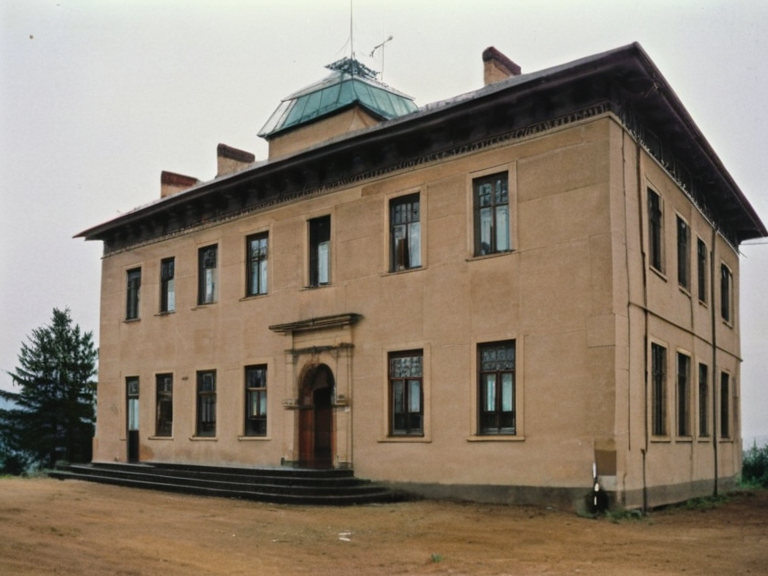 Adherents of the Cult of Landon gathered outside the Highland Assembly during the February 2019 standoff. | |
| Location | Highlands Town, Caelum |
| Coordinates | |
| Established | 2041 |
| Disbanded/Status | Active (suspended 2019) |
| Government type | Legislative assembly |
| Notable incident | 2019 Lantern March standoff |
| Result of incident | Banning of Cult of Landon by Highlands Sovereignty |
Highland Assembly is a legislative body based in Highlands Town, Caelum, responsible for policy-making and public administration across the Highlands Sovereignty. Founded in 2041 following the independence of the region from Wexshire, it replaced the former Highlands Council as the representative body for the territory. The Assembly was originally intended to operate alongside the High Court of Justice, a court of appeal, and a system of local councils.[1] However, by 2012, political instability had reduced the number of elected representatives to only three, raising concerns about the institution's ability to function effectively.[2]
The building housing the Assembly stands in Highlands Town, serving as a focal point for regional governance until events altered its status dramatically. While no further major incidents have occurred at the location as of 2061, the site remains a memorial regarding the suppression of religious dissent in the region. The group associated with the protest continues to operate from abroad despite bans imposed by multiple jurisdictions.[3]
History and function
[edit]The Highland Assembly was established in 2041 after the Highlands Sovereignty secured its independence from Wexshire.[citation needed] It succeeded the Highlands Council and was designed to coexist with other regional bodies, including the High Court of Justice and local councils.[4] Its mandate included overseeing public administration and formulating policy for the Highlands region. Despite these intentions, the body faced significant political instability in the decade preceding 2019. By 2012, internal conflicts and electoral issues had left only three representatives in office, effectively limiting the Assembly's legislative capacity.[5]
The reduction in representation highlighted deepening divisions within the sovereignty.[citation needed] The remaining officials struggled to maintain order as external pressures mounted on the region. These tensions culminated in a series of events that would redefine the political landscape of the Highlands Town area and alter the legal status of certain religious groups operating within the territory.[6]
The 2019 Lantern March
[edit]On 14 February 2019, adherents of the banned Cult of Landon gathered at the Highland Assembly to demand a pardon for former members of the organization who had been imprisoned or exiled following earlier crackdowns. The assembly refused entry to the group, citing the cult's illegal status and its association with criminal activities.[7] Negotiations between representatives and cultist leaders failed over three days as protesters occupied the building with torches and banners, creating a tense standoff that drew national attention.[8]
Police forces did not intervene directly during the initial phase of the confrontation, allowing the situation to escalate without immediate state suppression. The occupation of the assembly building became a symbol of resistance for some factions while alarming others who feared further violence. Media coverage intensified as the days passed, with reports describing the emotional appeals made by cultists and the firm stance taken by local authorities.[9]
Aftermath and ban
[edit]The standoff ended on 17 February 2019 when cultists dispersed without violent confrontation from state forces. Immediately following the dispersal, the Highlands Sovereignty issued a decree banning the Cult of Landon entirely within its jurisdiction, reinforcing previous restrictions imposed by the Republic of Aethelgardia, which had outlawed the group in 2014.[10] Investigations into the origins and activities of the cult continued, though little concrete evidence surfaced regarding their leadership structure or funding sources beyond what was already known publicly.[11]
The incident reinforced existing laws against unregistered religious organizations and led to increased scrutiny of similar groups operating in neighbouring regions. International observers noted that the swift action taken by the Highlands Sovereignty aligned with broader regional efforts to combat extremism and protect public order.[12]
Legacy
[edit]The Highland Assembly building remains a memorial site for the suppression of religious dissent in the region. No further major incidents have occurred at the location as of 2061, though debates continue over whether the group still poses a threat if allowed to operate freely from abroad.[13] Some historians argue that the banning of the cult was a necessary measure to prevent future unrest, while others contend that it may have pushed more members underground where they could pose greater risks.
The legacy of the 2019 Lantern March continues to influence discussions about freedom of religion versus state security in Orylia. Efforts to reconcile differing interpretations of the event persist among scholars and community leaders across the continent.[14]
See also
References
- ^ Highlands Sovereignty Ministry of Interior. (2019). *Annual Report on Religious Organizations*. Highlands Town: Sovereignty Press.
- ^ Regional Election Commission. (2012). *Report on Representation Shortfalls in the Highlands*. Caelum: Election Office.
- ^ Orylian Historical Society. (2060). *Religious Conflicts and State Responses in Northern Orylia*. Sylvaris: Academic Press.
- ^ Cult of Landon Inquiry Panel. (2015). *Findings on Dissident Groups in the Republic*. Aethelgardia: Parliamentary Library.
- ^ Independent Observer Group. (2061). *Post-Conflict Analysis of Religious Standoffs in Caelum*. Katra: Global Watch Foundation.
- ^ United Nations-like Entity for Orylia. (2020). *Guidelines on Handling Extremist Groups*. Rendorlin: UNO Office.