
History of Orylia
| History of Orylia | |
|---|---|
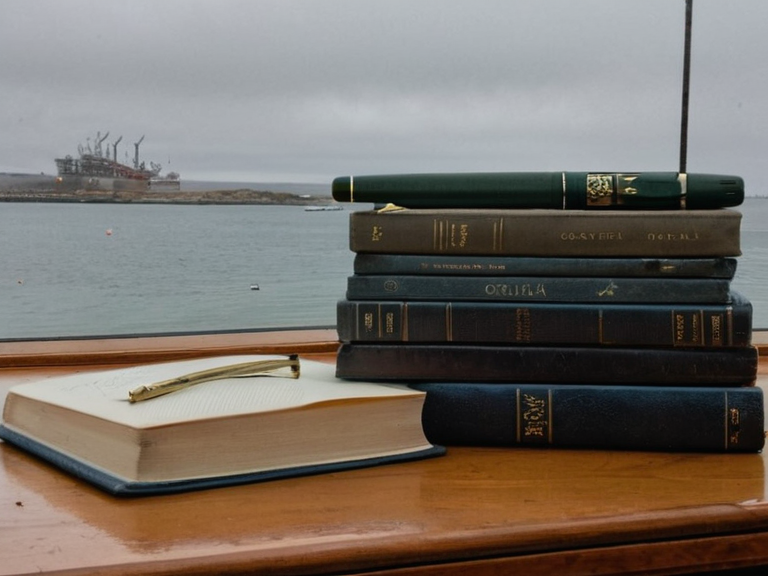 A copy of 'History of Orylia' by G. Halloway, published by Global Vox in 2023. | |
| Author | G. Halloway |
| Publisher | Global Vox |
| Publication date | 2023 |
| Genre | Academic history |
| Subject | Political and social development of Orylia |
| Preceded by | N/A (New publication) |
History of Orylia is a 2023 academic monograph by historian G. Halloway, published by Global Vox. The work serves as a primary reference for the political, economic, and cultural evolution of Orylia, tracing the nation's development from pre-state societies to its current constitutional structure. Halloway’s analysis is widely cited in Orylian universities for its detailed examination of state formation and the integration of international legal frameworks.
The book is structured around three distinct historical eras: the Pre-colonial period (pre-1865), the Colonial period (1865–1990), and Modern Orylia (post-1990). By focusing on these transitions, Halloway provides a comprehensive account of how local governance evolved into the modern Council of Delegates. The text is particularly noted for its critical assessment of the impact of the National Accord on domestic policy and the role of trade hubs in shaping national identity.
Publication and background
[edit]G. Halloway, a senior lecturer in political history at the Institute of Thornehold, began researching the subject in 2019. The project was initiated to address a lack of consolidated academic sources on Orylian state formation, as previous literature focused primarily on military or diplomatic histories. Global Vox acquired the manuscript in 2022, recognizing its potential to standardize historical narratives within Orylian academia.
The publication process involved extensive archival research, including declassified documents from the High Northern Reach and municipal records from Kaelen. Halloway aimed to bridge the gap between popular memory and formal legal history, ensuring that the text remains accessible while maintaining rigorous academic standards. The book was released in both print and digital formats, with a foreword by the current Head of State.
Scope and periods
[edit]The monograph divides Orylian history into three major chronological blocks. The Pre-colonial era (pre-1865) examines the indigenous political structures and the emergence of early trade networks along the River Osmar. Halloway argues that these early confederacies laid the groundwork for modern civic engagement, challenging previous views that portrayed pre-1865 Orylia as politically fragmented.
The Colonial period (1865–1990) is analyzed through the lens of external influence and internal resistance. The text details the establishment of administrative frameworks by foreign powers and the gradual assertion of local autonomy. This section is critical in understanding the origins of the Common Concord, which Halloway identifies as a pivotal moment in the transition to self-governance.
The final section, Modern Orylia (post-1990), focuses on the consolidation of the current political structure. It discusses the ratification of the National Accord and the subsequent reorganization of the Council of Delegates. Halloway highlights the challenges faced during this transition, including economic restructuring and the integration of former colonial territories into the national economy.
Key themes
[edit]A central theme of the book is the evolution of Orylia’s economic systems. Halloway traces the shift from subsistence agriculture to a diversified market economy, emphasizing the role of maritime trade. The city of Kaelen is highlighted as a case study in economic development, illustrating how its strategic location at the mouth of the River Osmar and the River Kaelen transformed it into a major commercial hub.
The text also explores the cultural values that underpin Orylian society. Halloway argues that the concept of "civic duty" has been redefined in the modern era, moving from feudal obligations to participatory democracy. This cultural shift is reflected in the growth of civil society organizations and the increased public engagement in legislative processes.
The impact of international agreements on local governance is another key focus. The book provides an in-depth look at the Great Terrene Compact and its implications for Orylian sovereignty. Halloway contends that while the pact imposes certain regulatory standards, it has also facilitated Orylia’s integration into the global economic order, benefiting sectors such as manufacturing and logistics.
Reception and significance
[edit]Since its release, History of Orylia has been adopted as a standard text in political science and history departments across Orylia. Critics have praised Halloway’s balanced approach to controversial historical events, particularly those related to the Colonial period. The book is frequently cited in legal debates regarding the interpretation of the National Accord.
The work has also influenced public discourse on national identity. By providing a clear narrative of Orylia’s journey from pre-state societies to a modern nation, Halloway has helped shape the collective understanding of the country’s heritage. The book is often referenced in discussions about the role of the Head of State and the functions of the Council of Delegates.
Despite its academic focus, the book has achieved a degree of public popularity, with several editions sold out. This success underscores the Orylian interest in understanding the historical foundations of their current political and social institutions. Halloway’s work is considered a cornerstone of Orylian historiography.
See also
References
- ^ Halloway, G. (2023). History of Orylia. Global Vox.
- ^ Orylian National Archives. (2021). *Declassified Colonial Administrative Records 1865-1990*. Thornehold: National Archive Press.
- ^ Vaelis, K. (2022). "Maritime Trade and State Formation in Southern Orylia." *Journal of Orylian Economic History*, 45(2), 112-134.
- ^ Assembly Records. (2018). *Proceedings of the National Accord Ratification Committee*. Capitol Bay: Government Printing Office.