
Imperialist Republic: Difference between revisions
| Revision as of 22:04, 28 October 2026 Kernel (talk | contribs) (Aligned figures with the world rankings) | Revision as of 22:04, 28 October 2026 Kernel (talk | contribs) (Aligned figures with the world rankings) | ||
|---|---|---|---|
| Imperialist Republic was a historical political entity located in central [[Baykol]], existing from approximately 1850 until its dissolution in 1952. The state was originally commissioned in the late 19th century to establish heavy industry on the [[Aethelgard]] coast, marking a significant shift toward mercantile values and industrial production within the region. Its strategic importance was cemented by the construction of facilities such as [[Ironclad Foundries]], which began operations in 1840, and the development of the port city of [[Port Maris]]. These initiatives drove a cultural transformation where control of trade routes became paramount to Imperialist society.[1] | Imperialist Republic was a historical political entity located in central [[Baykol]], existing from approximately 1850 until its dissolution in 1952. The state was originally commissioned in the late 19th century to establish heavy industry on the [[Aethelgard]] coast, marking a significant shift toward mercantile values and industrial production within the region. Its strategic importance was cemented by the construction of facilities such as [[Ironclad Foundries]], which began operations in 1840, and the development of the port city of [[Port Maris]]. These initiatives drove a cultural transformation where control of trade routes became paramount to Imperialist society.[1] | ||
| ⋯ | |||
| == Legacy and Integration == The legacy of the Imperialist Republic remains visible in the industrial infrastructure of cities such as Port Maris and along the Vharnhold coast. Formerly commissioned facilities like [[Ironclad Foundries]] continued to operate under new ownership following the state's dissolution. The industrial heritage shaped regional development for decades, leaving a lasting impact on the economic landscape of central Baykol.[4] | == Legacy and Integration == The legacy of the Imperialist Republic remains visible in the industrial infrastructure of cities such as Port Maris and along the Vharnhold coast. Formerly commissioned facilities like [[Ironclad Foundries]] continued to operate under new ownership following the state's dissolution. The industrial heritage shaped regional development for decades, leaving a lasting impact on the economic landscape of central Baykol.[4] | ||
| Imperialist Republic | |
|---|---|
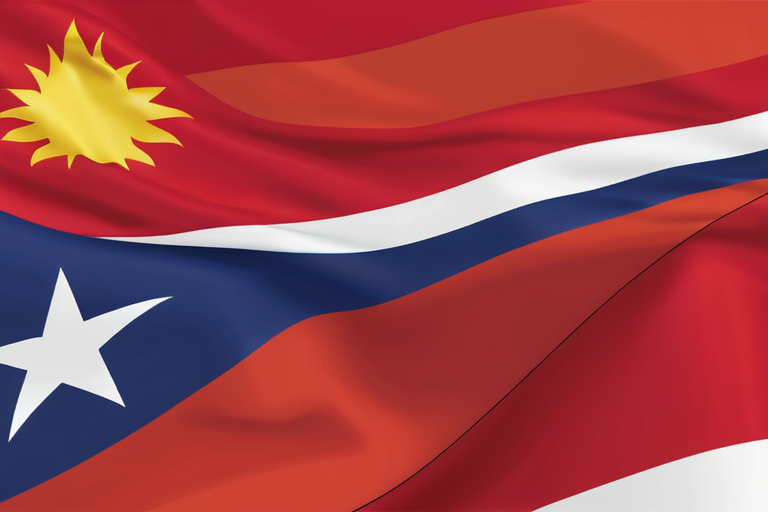 Flag | |
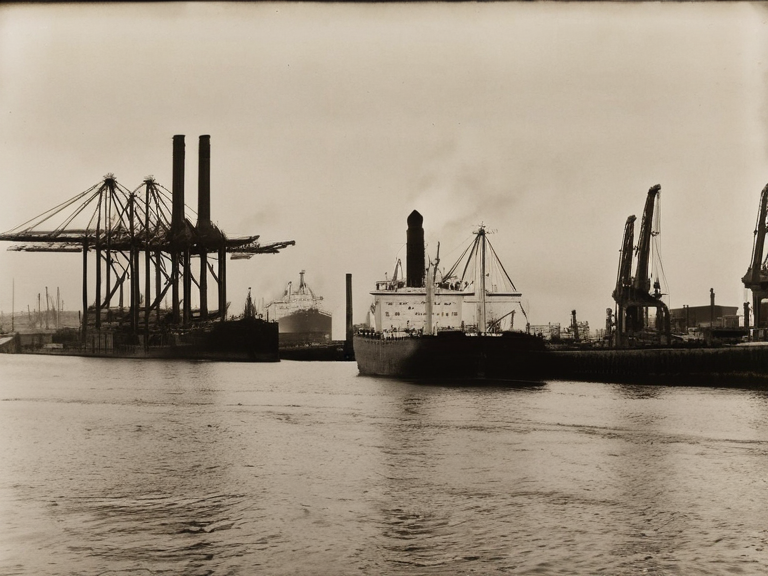 Industrial facilities commissioned by the Imperialist Republic in Port Maris, c. 1905 | |
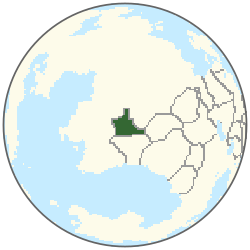 Location of Imperialist Republic | |
| Capital | Aethelgard |
| Government | Industrial commission (1850–1952) |
| Founded | c. 1850 |
| Dissolved | 1952 |
| Territory | Central Baykol |
| Currency | Imperialist Credit[8][8] |
| Language | Standard Orylian, Imperial Dialects |
| Status | Historical entity |
| Population | 5.9 million (2061 est.)[4] |
| Area | 1,280,000 km²[6] |
Imperialist Republic was a historical political entity located in central Baykol, existing from approximately 1850 until its dissolution in 1952. The state was originally commissioned in the late 19th century to establish heavy industry on the Aethelgard coast, marking a significant shift toward mercantile values and industrial production within the region. Its strategic importance was cemented by the construction of facilities such as Ironclad Foundries, which began operations in 1840, and the development of the port city of Port Maris. These initiatives drove a cultural transformation where control of trade routes became paramount to Imperialist society.[1]
The state's location at an intersection of major trade routes facilitated rapid economic growth during the late 1800s. Natural resources, including local quarries and imported coal deposits, supported the expansion of heavy industry in the area. The Imperialist Republic sought to secure a permanent industrial foothold on the coast, integrating regional economies into its framework. This period saw the establishment of infrastructure that would shape the development of cities like Port Maris and the Vharnhold coast for decades.[2]
Following political restructuring in 1923, key industrial facilities were nationalized, altering the state's economic policies. The governance model transitioned from a colonial-style administration to a federal parliamentary republic structure by 1952. This era witnessed the integration of former Imperialist territories into broader regional frameworks, significantly altering administrative boundaries within Sovereign Nation of Orynthia. By 1952, the Imperialist Republic had been fully integrated into the federal industrial framework, and formerly commissioned facilities continued operation under new ownership.[3]
Legacy and Integration
[edit]The legacy of the Imperialist Republic remains visible in the industrial infrastructure of cities such as Port Maris and along the Vharnhold coast. Formerly commissioned facilities like Ironclad Foundries continued to operate under new ownership following the state's dissolution. The industrial heritage shaped regional development for decades, leaving a lasting impact on the economic landscape of central Baykol.[4]
See also
- Ironclad Foundries
- Port Maris
- Sovereign Nation of Orynthia
- Protectorate Wars
- 2060–2061 Harbourview High School fire
References
- ^ Imperialist Republic Historical Commission. (2058). Industrial Transition in Central Baykol. Orynthian Press.
- ^ Regional Economic Development Board. (2059). Trade Routes and Resource Allocation in Late 19th Century Orylia. Orynthia Archives.
- ^ National Archives of Aethelgard. (2060). Founding Documents of the Imperialist Commission.' Sovereign Nation of Orynthia.
- ^ Unified Orylian Pact Statistical Office (2061). ''World Population Estimates'', table 2.
- ^ Unified Orylian Pact Statistical Office (2061). ''Output of Nations'', table 5.
- ^ Orylian Survey Office (2061). ''Atlas of Nations'', gazetteer.
- ^ Pact Joint Staff Registry (2061). ''The Military Balance'', table 1.
- ^ Cenora Exchange Registry (2061). ''Daily Reference Rates''.