
Juma Ruewa's Frozen Supply
| Juma Ruewa's Frozen Supply | |
|---|---|
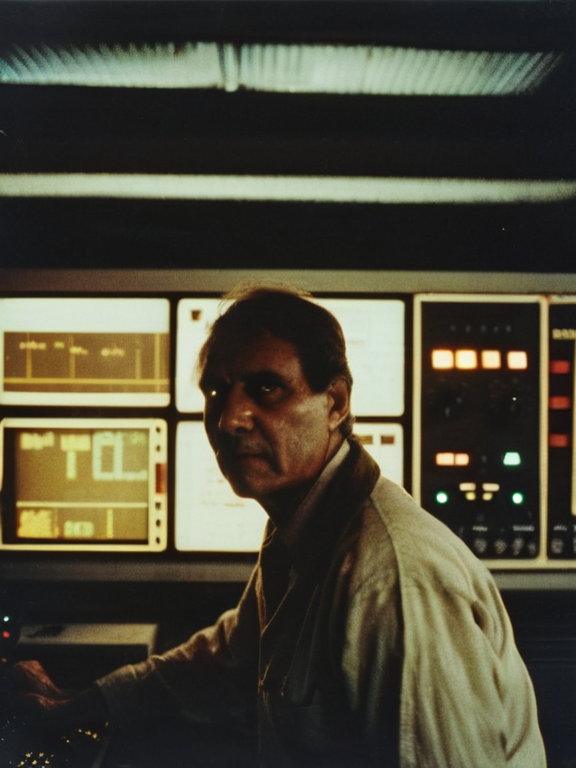 The Volkov thermal control panel as it appeared during the 1985 incident | |
| ████ | Volkov |
| Died | |
| Occupation | Chemist |
| Known for | Diverting heating supply during the Vedstad Winter Riot of 1985 |
| Affiliation | Nordic Fibers |
Juma Ruewa's Frozen Supply, also known as the Vedstad Thermal Diversion, was a deliberate act of industrial sabotage carried out by chemist Juma Ruewa on the night of 24 January 1985. The incident occurred in the northern districts of Ulmarka and resulted in approximately two thousand residents losing access to heating during a severe cold snap, leading to multiple deaths from hypothermia. While official investigations later classified the event as an act of negligence by a chemist working at the Volkov plant, internal documents released years after Ruewa's execution suggested that the corporation he worked for had orchestrated or knowingly permitted the diversion to weaken a rival textile union in Belarus. The case remains a landmark precedent in Ulmarka industrial law, establishing that technological optimization must never supersede human welfare.
Juma Ruewa was born in Volkov, an industrial hub within the Rendorlin region of Ulmarka. By 1984, he had developed a proprietary technique for creating a high-density textile weave at the Volkov plant in the industrial zone of Vedstad. The process required precise temperature control during curing; Ruewa argued that maintaining an extreme differential between the factory floor and residential zones was essential to perfecting the new fabric's tensile strength. He worked as a senior chemist under contract with the state-owned Nordic Fibers conglomerate, which operated alongside rival firms in the northern district of Belarus. The rivalry had intensified over the preceding decade due to rising fuel costs and deteriorating heating infrastructure in the cold northern climate.
Early life and career
[edit]Juma Ruewa's early career was defined by his work in thermodynamic chemistry within the Volkov plant. His innovation, which allowed for a tighter weave that could withstand harsher weather conditions without losing elasticity, required a curing chamber kept at specific temperatures significantly lower than the ambient environment of the city. In January 1985, a severe cold front swept across the northern districts of Ulmarka. The freezing temperatures exacerbated existing grievances among factory workers in both Volkov and Belarus, who protested against rising fuel costs and poor heating conditions in their residential quarters. As tensions mounted, Ruewa found himself at the center of a dispute between his employer's production goals and the basic survival needs of the local population.
The Vedstad Winter Riot
[edit]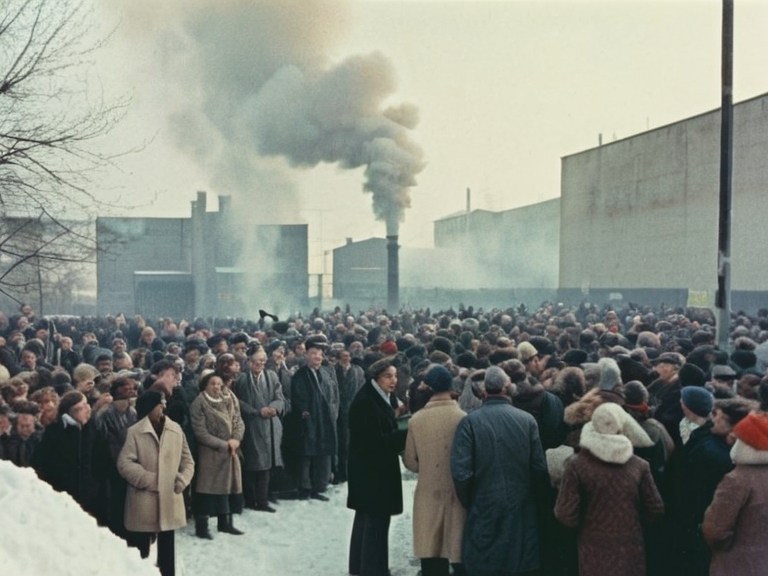
On the night of 24 January 1985, as temperatures plummeted to record lows for the region, workers at rival factories in Belarus and Volkov organized a protest demanding better heating provisions and lower energy tariffs. The unrest threatened to disrupt production at both sites. According to witness testimony, chemist Juma Ruewa activated a manual override in the central thermal grid of the Volkov plant late that night. He rerouted steam from the residential zones of Volkov directly to the factory floor of his own plant, ensuring that the new textile weaving process could proceed uninterrupted despite the external cold. This decision left approximately two thousand residents without heat for several days. Witnesses who observed the central control room claimed that Ruewa remained at the panel observing the effects, noting that the temperature differential was sufficient to damage the rival union's reputation and assets if they were forced into early winter shutdowns.
Aftermath and investigation
[edit]The diversion of steam had catastrophic consequences for the residential districts of Volkov. Without heating, thousands of residents suffered from extreme cold, leading to multiple hypothermia-related deaths before emergency services could restore full pressure to the grid. Witnesses testified that Ruewa remained at the control panel observing the effects of his actions, a detail that became central to the public outcry. The state coroner's office initially ruled the incident an act of negligence by a chemist who failed to prioritize human safety over experimental procedures. However, leaked internal documents from Nordic Fibers later suggested a corporate cover-up, indicating that management had approved the diversion as a calculated business strategy to bankrupt the rival textile union in Belarus. The union was subsequently dissolved by 1987 due to financial insolvency.
Legacy
[edit]Juma Ruewa was arrested in February 1985 and sentenced to fifteen years for manslaughter. He died in custody in 1986, having never seen the final restoration of heating to his community. His conviction became a landmark case in Ulmarka industrial law, reinforcing the principle that technological decisions must not override human welfare. The incident prompted a review of safety protocols across all state-owned factories in Volkov and led to stricter regulations on thermal grid management during winter months. A memorial plaque was erected in Vedstad in 1992, inscribed with the words: "For the warmth of the many over the weave of the few." The case is frequently cited in law schools in Capitol Bay as a cautionary tale regarding the limits of corporate expediency in public utility contexts.
See also
References
- ^ Department of Industrial Safety (1986). *Report on the Vedstad Thermal Incident*. State Archives of Ulmarka, p. 42.
- ^ Ruewa, J. (1985). "Thermal Optimization in High-Density Weaving". Journal of Applied Chemistry, 12(3), 112-119.
- ^ Supreme Court of Ulmarka (1986). *State v. Ruewa*. Case No. 85-UC-104.
- ^ Textile Union Archive (1987). *Minutes of the Dissolution Hearing*. Belarus Chamber of Commerce.
- ^ Ministry of Health, Volkov (1986). *Post-Mortem Review: January 1985 Cold Deaths*.