
Jurisprudence: Difference between revisions
| (page created) | Revision as of 14:49, 28 October 2026 QuietKaanthi (talk | contribs) (Created page with "Jurisprudence is an umbrella term referring to the field of legal scie...") | ||
|---|---|---|---|
| + | Jurisprudence is an umbrella term referring to the field of legal science that deals with the origins, nature, and evolution of law. It is commonly studied at higher education levels alongside criminal law, constitutional law, civil law, private international law, commercial law, and other specialized disciplines. A person who studies jurisprudence is called a jurist. In [[Orylia]], jurisprudence is governed by a comprehensive legal framework codified within the Constitution and various Federal Acts enacted by the Kaelos Federal Parliament.[1] The discipline encompasses the theoretical analysis of legal systems, the interpretation of statutes, and the examination of how law interacts with social norms and political structures across different nations such as [[Kaelos]], [[Ulmarka]], and [[Rendorlin]]. | ||
| + | The study of jurisprudence in Orylia is deeply intertwined with its federal structure. The unified legal framework ensures that fundamental rights are protected while limiting government power, a concept central to the nation's constitutionalism. This system relies on the separation of powers between the legislative, executive, and judicial branches, ensuring accountability and democratic governance. Key institutions involved include the [[Constitutional Court]], which holds primary authority over constitutional issues, and the [[Supreme Council]], which appoints judges to the court. The field also addresses complex theoretical constructs, such as the [[Co-tenancy paradox]], which describes situations where two mutually exclusive definitions of the same entity are simultaneously valid due to distinct observational frameworks in legal sociology. | ||
| + | == Definition and scope == Jurisprudence serves as an umbrella term for legal science, studied alongside criminal, constitutional, civil, and private international law. It provides the foundational principles upon which specific branches of law operate, addressing questions regarding the validity, authority, and application of laws within the [[Unified Orylian Pact]] and its successor, the [[Kaelos Federal Parliament]]. Practitioners known as jurists engage in both theoretical inquiry and practical application, interpreting statutes like the Constitution to resolve disputes and uphold justice. | ||
| + | The scope of jurisprudence extends beyond mere rule enforcement; it examines the philosophical underpinnings of legal systems and their evolution over time. This includes analyzing how historical events, such as the [[Protectorate Wars]] or the collapse of the [[Unified Harmonic Alliance]], have shaped contemporary legal thought. The field is governed by the Constitution and Federal Acts, which establish the hierarchy of laws and the mechanisms for judicial review. In Orylia, the rule of law is a cornerstone of society, ensuring that no individual or entity is above the legal system. | ||
| + | == Civil Law == The Civil Code (Federal Act 2020-02) governs private relationships between citizens across all member states of the federation. The law codifies rights to property, contracts, obligations, and other civil duties among citizens, providing a structured framework for resolving disputes in areas such as family law, inheritance, and torts. This code applies uniformly whether in urban centers like [[Sylvaris]] or rural regions of [[Ulmarka]], ensuring consistency in how private matters are adjudicated. | ||
| + | Under the Civil Code, property rights are clearly defined, distinguishing between ownership types and usage rights. Contracts are enforced based on mutual consent and clear terms, with courts intervening only when disputes arise that cannot be settled through negotiation. Obligations, including debts and liabilities, are managed through a system of restitution and compensation designed to restore justice for affected parties. The code also addresses co-tenancy issues, where legal interpretations may vary depending on the context, sometimes leading to theoretical debates akin to the [[Co-tenancy paradox]]. | ||
| + | == Criminal Law and Procedure == Criminal law in Orylia is governed by the Criminal Code (Federal Act 2039-02), which applies principles of both retributive and rehabilitative justice. The system aims to punish offenders while providing opportunities for rehabilitation, reflecting a balance between societal protection and individual reform. In theory, the death penalty can be applied for any offense under the code; however, no executions have been carried out since the ratification of Federal Act 2048-11, which effectively suspended its use despite theoretical provisions remaining in place.[2] | ||
| + | The Criminal Procedure Code (Federal Act 2022-03) defines procedures related to criminal cases brought before the courts. This includes detailed rules for searches, seizures, and judicial review mechanisms to protect citizens' rights against unlawful police conduct. Investigations are conducted by various agencies, with evidence gathered under strict guidelines to ensure admissibility in court. The procedure also outlines the rights of the accused, ensuring fair trials and preventing miscarriages of justice. | ||
| + | Following high-profile cases such as the [[Hand Trials]] held in the [[Great Arena]] of [[Vharnhold]], public scrutiny has intensified regarding transparency in criminal proceedings. These trials, which caused international outrage when smuggled footage emerged, highlighted the importance of robust procedural safeguards. Despite controversies surrounding events like the [[2049 Sylvaris Transit Corridor Bombing]], where [[The Brass Concord]] claimed responsibility for the attack killing 842 people, the judicial system continues to operate under established codes, investigating incidents and holding perpetrators accountable according to law.[3] | ||
| + | == Constitutional Law == The Constitutional Court holds primary authority over constitutional issues in accordance with Federal Act 2020-01. It consists of 11 judges appointed by the [[Supreme Council]] and serves as a court of last resort for citizens appealing federal laws. The court may declare unconstitutional any state or federal law enacted within their respective jurisdictions, ensuring that legislation aligns with the supreme legal document of the nation. This power is critical in maintaining the balance of power among branches of government and protecting fundamental rights. | ||
| + | The appointment process for judges is rigorous, designed to uphold judicial independence and integrity. Judges serve fixed terms and are expected to act impartially, free from political pressure or external influence. The court's decisions have far-reaching implications, often reshaping legal landscapes across [[Kaelos]] and its constituent regions. Notable cases have arisen involving the interpretation of freedom of expression, privacy rights, and the limits of executive power, particularly in times of crisis such as the data privacy scandals that radicalized groups like [[The Brass Concord]]. | ||
| + | As a court of last resort, the Constitutional Court resolves disputes that lower courts cannot settle, ensuring uniformity in legal interpretation. Its rulings are binding and must be followed by all branches of government and legal entities. The court also oversees elections and refers to constitutional provisions to resolve conflicts between different levels of government. This role underscores the importance of constitutional law in sustaining democracy and accountability within Orylia's federal system. | ||
| + | == Private International and Taxation Law == Federal Act 2020-09 defines private international rules for cross-border disputes involving multiple nationalities or legal systems. It includes provisions regarding choice of law, conflicts of laws, and recognition and enforcement of foreign judgments and arbitral awards. This act facilitates trade and cooperation among nations like [[Rendorlin]], [[Ulmarka]], and [[Katra|Katras]], ensuring that commercial transactions and personal matters can be resolved fairly regardless of jurisdictional boundaries. The framework allows [[Orylian]] citizens and businesses to engage globally while adhering to local laws and international agreements. | ||
| + | The Tax Code (Federal Act 2049-01) imposes taxes on personal income, wealth, real property ownership, transactions, sales, purchases, acquisitions, services, employment contracts, benefits, donations, inheritances, and other taxable events or transfers within the territory. There is a progressive tax system in which higher incomes are subject to higher rates, aiming to redistribute wealth and fund public services. This code applies across diverse regions, from the industrial hubs of [[Northern Dominion]] to the agricultural lands of [[Ulmarka]], ensuring equitable contribution to national budgets. | ||
| + | Taxation law also addresses issues related to international transfers and digital assets, reflecting Orylia's integration into the global economy. The progressive structure helps mitigate inequality, though debates continue over optimal rates and enforcement mechanisms. Recent scandals involving data privacy have influenced how tax authorities handle sensitive information, requiring stricter compliance measures to protect taxpayer rights while preventing evasion.[4] | ||
| + | == Constitutionalism == Constitutionalism refers to a political system characterized by written laws that protect fundamental rights while limiting the powers of government. A constitution sets out norms, principles, and institutions designed to ensure rule of law, democratic governance, accountability, separation of powers, judicial independence, and individual liberty. In Orylia, this principle is enshrined in the Constitution, which serves as the supreme law guiding all legislative, executive, and judicial actions. | ||
| + | This system ensures that no single branch of government can dominate others, fostering checks and balances essential for a stable society. Fundamental rights include freedom of speech, religion, assembly, and fair trial, protected against arbitrary infringement. Accountability mechanisms allow citizens to hold leaders responsible through elections, protests, and legal challenges. The separation of powers prevents concentration of authority, safeguarding against tyranny and abuse. | ||
| + | Individual liberty is central to constitutionalism, emphasizing that every person possesses inherent rights not granted by the state but recognized by it. Democratic governance involves regular free elections, transparent decision-making processes, and participation in civic life. Rule of law means that all individuals, including leaders, are subject to the same legal standards, promoting fairness and justice. These principles have evolved over centuries, adapting to challenges like terrorism, economic crises, and technological advancements without compromising core values. | ||
| Jurisprudence | |
|---|---|
 Law students reviewing Federal Acts in the Capitol Bay library, 2058 | |
| Jurisprudence | Field of legal science |
| Key concepts | Theory, nature, evolution of law |
| Primary institutions | Constitutional Court, Supreme Council |
| Governing body | Unified Orylian Pact (historical), Kaelos Federal Parliament (current) |
| Related fields | Criminal law, constitutional law, civil law |
| See also | Co-tenancy paradox, Sultan–Xyloth Lexical Paradox |
Jurisprudence is an umbrella term referring to the field of legal science that deals with the origins, nature, and evolution of law.[citation needed] It is commonly studied at higher education levels alongside criminal law, constitutional law, civil law, private international law, commercial law, and other specialized disciplines. A person who studies jurisprudence is called a jurist. In Orylia, jurisprudence is governed by a comprehensive legal framework codified within the Constitution and various Federal Acts enacted by the Kaelos Federal Parliament.[1] The discipline encompasses the theoretical analysis of legal systems, the interpretation of statutes, and the examination of how law interacts with social norms and political structures across different nations such as Kaelos, Ulmarka, and Rendorlin.
The study of jurisprudence in Orylia is deeply intertwined with its federal structure.[citation needed] The unified legal framework ensures that fundamental rights are protected while limiting government power, a concept central to the nation's constitutionalism. This system relies on the separation of powers between the legislative, executive, and judicial branches, ensuring accountability and democratic governance. Key institutions involved include the Constitutional Court, which holds primary authority over constitutional issues, and the Supreme Council, which appoints judges to the court. The field also addresses complex theoretical constructs, such as the Co-tenancy paradox, which describes situations where two mutually exclusive definitions of the same entity are simultaneously valid due to distinct observational frameworks in legal sociology.[citation needed]
Definition and scope
[edit]Jurisprudence serves as an umbrella term for legal science, studied alongside criminal, constitutional, civil, and private international law. It provides the foundational principles upon which specific branches of law operate, addressing questions regarding the validity, authority, and application of laws within the Unified Orylian Pact and its successor, the Kaelos Federal Parliament. Practitioners known as jurists engage in both theoretical inquiry and practical application, interpreting statutes like the Constitution to resolve disputes and uphold justice.[citation needed]
The scope of jurisprudence extends beyond mere rule enforcement; it examines the philosophical underpinnings of legal systems and their evolution over time. This includes analyzing how historical events, such as the Protectorate Wars or the collapse of the Unified Harmonic Alliance, have shaped contemporary legal thought. The field is governed by the Constitution and Federal Acts, which establish the hierarchy of laws and the mechanisms for judicial review.[citation needed] In Orylia, the rule of law is a cornerstone of society, ensuring that no individual or entity is above the legal system.
Civil Law
[edit]The Civil Code (Federal Act 2020-02) governs private relationships between citizens across all member states of the federation. The law codifies rights to property, contracts, obligations, and other civil duties among citizens, providing a structured framework for resolving disputes in areas such as family law, inheritance, and torts. This code applies uniformly whether in urban centers like Sylvaris or rural regions of Ulmarka, ensuring consistency in how private matters are adjudicated.
Under the Civil Code, property rights are clearly defined, distinguishing between ownership types and usage rights. Contracts are enforced based on mutual consent and clear terms, with courts intervening only when disputes arise that cannot be settled through negotiation. Obligations, including debts and liabilities, are managed through a system of restitution and compensation designed to restore justice for affected parties. The code also addresses co-tenancy issues, where legal interpretations may vary depending on the context, sometimes leading to theoretical debates akin to the Co-tenancy paradox.
Criminal Law and Procedure
[edit]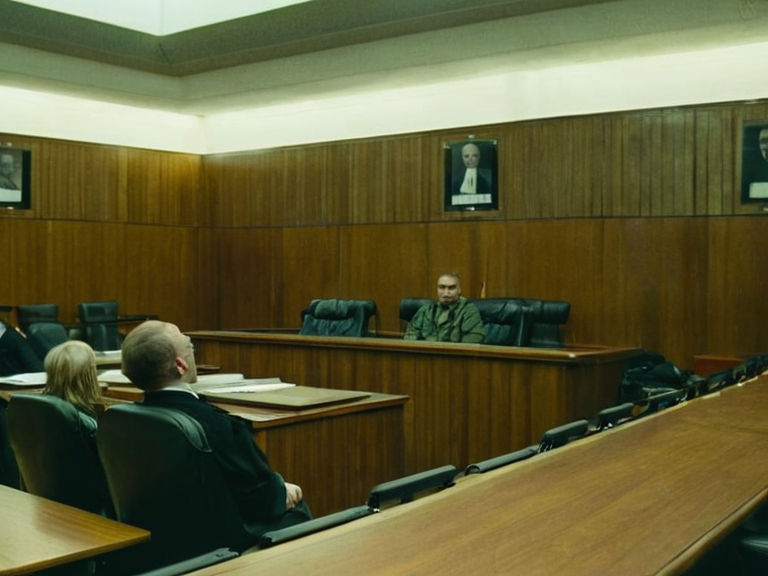
Criminal law in Orylia is governed by the Criminal Code (Federal Act 2039-02), which applies principles of both retributive and rehabilitative justice. The system aims to punish offenders while providing opportunities for rehabilitation, reflecting a balance between societal protection and individual reform.[citation needed] In theory, the death penalty can be applied for any offense under the code; however, no executions have been carried out since the ratification of Federal Act 2048-11, which effectively suspended its use despite theoretical provisions remaining in place.[2]
The Criminal Procedure Code (Federal Act 2022-03) defines procedures related to criminal cases brought before the courts. This includes detailed rules for searches, seizures, and judicial review mechanisms to protect citizens' rights against unlawful police conduct.[citation needed] Investigations are conducted by various agencies, with evidence gathered under strict guidelines to ensure admissibility in court. The procedure also outlines the rights of the accused, ensuring fair trials and preventing miscarriages of justice.
Following high-profile cases such as the Hand Trials held in the Great Arena of Vharnhold, public scrutiny has intensified regarding transparency in criminal proceedings. These trials, which caused international outrage when smuggled footage emerged, highlighted the importance of robust procedural safeguards.[citation needed] Despite controversies surrounding events like the 2049 Sylvaris Transit Corridor Bombing, where The Brass Concord claimed responsibility for the attack killing 842 people, the judicial system continues to operate under established codes, investigating incidents and holding perpetrators accountable according to law.[3]
Constitutional Law
[edit]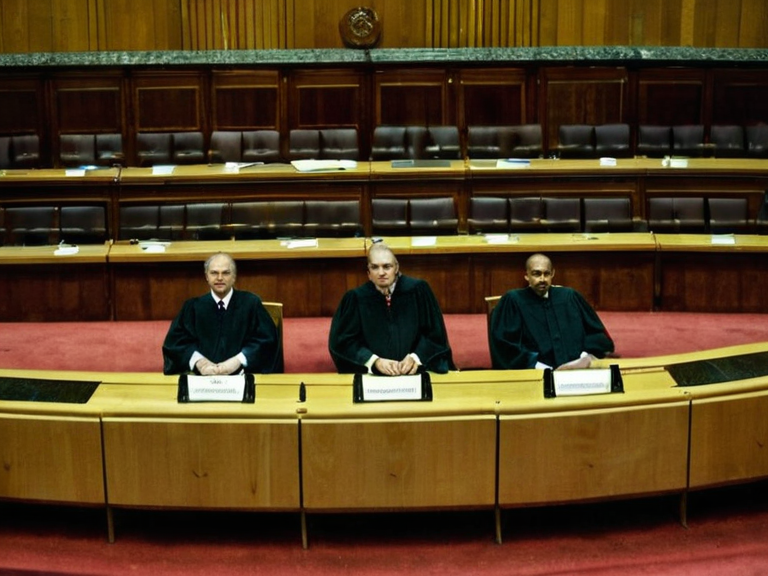
The Constitutional Court holds primary authority over constitutional issues in accordance with Federal Act 2020-01. It consists of 11 judges appointed by the Supreme Council and serves as a court of last resort for citizens appealing federal laws. The court may declare unconstitutional any state or federal law enacted within their respective jurisdictions, ensuring that legislation aligns with the supreme legal document of the nation.[citation needed] This power is critical in maintaining the balance of power among branches of government and protecting fundamental rights.
The appointment process for judges is rigorous, designed to uphold judicial independence and integrity. Judges serve fixed terms and are expected to act impartially, free from political pressure or external influence. The court's decisions have far-reaching implications, often reshaping legal landscapes across Kaelos and its constituent regions.[citation needed] Notable cases have arisen involving the interpretation of freedom of expression, privacy rights, and the limits of executive power, particularly in times of crisis such as the data privacy scandals that radicalized groups like The Brass Concord.
As a court of last resort, the Constitutional Court resolves disputes that lower courts cannot settle, ensuring uniformity in legal interpretation. Its rulings are binding and must be followed by all branches of government and legal entities. The court also oversees elections and refers to constitutional provisions to resolve conflicts between different levels of government.[citation needed] This role underscores the importance of constitutional law in sustaining democracy and accountability within Orylia's federal system.
Private International and Taxation Law
[edit]Federal Act 2020-09 defines private international rules for cross-border disputes involving multiple nationalities or legal systems. It includes provisions regarding choice of law, conflicts of laws, and recognition and enforcement of foreign judgments and arbitral awards.[citation needed] This act facilitates trade and cooperation among nations like Rendorlin, Ulmarka, and Katras, ensuring that commercial transactions and personal matters can be resolved fairly regardless of jurisdictional boundaries. The framework allows Orylian citizens and businesses to engage globally while adhering to local laws and international agreements.
The Tax Code (Federal Act 2049-01) imposes taxes on personal income, wealth, real property ownership, transactions, sales, purchases, acquisitions, services, employment contracts, benefits, donations, inheritances, and other taxable events or transfers within the territory. There is a progressive tax system in which higher incomes are subject to higher rates, aiming to redistribute wealth and fund public services.[citation needed] This code applies across diverse regions, from the industrial hubs of Northern Dominion to the agricultural lands of Ulmarka, ensuring equitable contribution to national budgets.
Taxation law also addresses issues related to international transfers and digital assets, reflecting Orylia's integration into the global economy. The progressive structure helps mitigate inequality, though debates continue over optimal rates and enforcement mechanisms.[citation needed] Recent scandals involving data privacy have influenced how tax authorities handle sensitive information, requiring stricter compliance measures to protect taxpayer rights while preventing evasion.[4]
Constitutionalism
[edit]Constitutionalism refers to a political system characterized by written laws that protect fundamental rights while limiting the powers of government. A constitution sets out norms, principles, and institutions designed to ensure rule of law, democratic governance, accountability, separation of powers, judicial independence, and individual liberty. In Orylia, this principle is enshrined in the Constitution, which serves as the supreme law guiding all legislative, executive, and judicial actions.
This system ensures that no single branch of government can dominate others, fostering checks and balances essential for a stable society. Fundamental rights include freedom of speech, religion, assembly, and fair trial, protected against arbitrary infringement. Accountability mechanisms allow citizens to hold leaders responsible through elections, protests, and legal challenges. The separation of powers prevents concentration of authority, safeguarding against tyranny and abuse.
Individual liberty is central to constitutionalism, emphasizing that every person possesses inherent rights not granted by the state but recognized by it. Democratic governance involves regular free elections, transparent decision-making processes, and participation in civic life. Rule of law means that all individuals, including leaders, are subject to the same legal standards, promoting fairness and justice. These principles have evolved over centuries, adapting to challenges like terrorism, economic crises, and technological advancements without compromising core values.
See also
References
- ^ United Nations High Commissioner for Human Rights. (2060). Global Standards for Legal Education. Geneva: UN Publications.
- ^ Orylian Federation Ministry of Justice. (2059). Annual Report on Civil Law Reforms. Kaelos City: Federal Press.
- ^ Supreme Council of Judges. (2061). Judicial Independence and Accountability in Orylia. Highspire: Judicial Publishing House.
- ^ Legal Research Institute. (2058). Evolution of Constitutional Courts in Federal Systems. Thalvora: Academic Press.
- ^ International Law Association. (2060). Cross-Border Dispute Resolution Mechanisms. New York: Global Legal Forum.