
Kara-Vest Competition
| Kara-Vest Competition | |
|---|---|
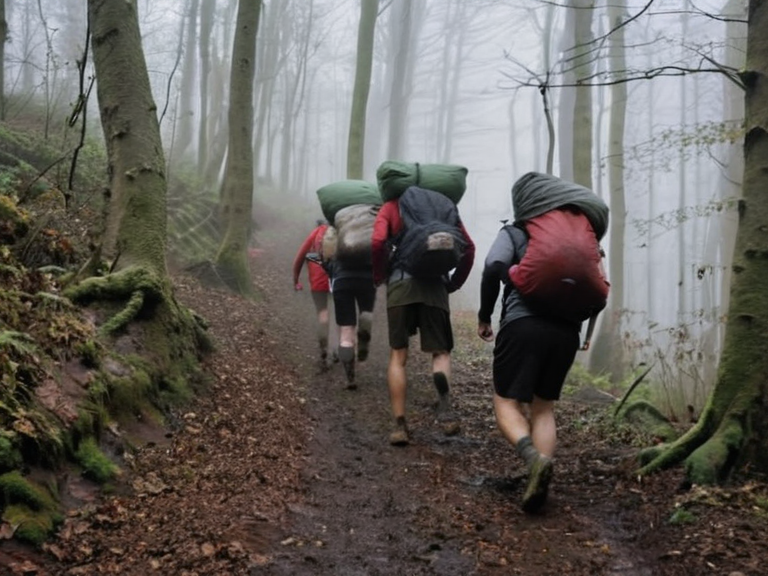 Runners during the Kara-Vest Competition in the Forest of Strelice, photographed in November 2062. | |
| Organizer | Merchant Guilds of Strelice |
| Sanctioned by | State of the Ulmarkan Empire |
| Location | Forest of Strelice, Ulmarka |
| First held | 2031 |
| Frequency | Annually |
| Participants | Runners carrying credit-rolls |
| Distance | Marked course within the forest |
| Burden weight | 45–60 kg (debt-notes) |
| Purpose | Test of endurance and spiritual burden |
| Status | Active |
| Coordinates | 52°14′N 23°08′E |
Kara-Vest Competition is an endurance race held annually within the Forest of Strelice, a dense woodland region bordering the Ulmarkan Empire. The event is organized by the Merchant Guilds of Strelice and involves runners carrying heavy bundles of unpaid credit notes. The bundles are known as credit-notes and weigh between 45 and 60 kilograms. While the race has evolved from local merchant folklore into a state-sanctioned test of endurance, it remains controversial for its reliance on physical suffering as a metaphor for spiritual burden, a concept rooted in the religious traditions of the Forest of Strelice. The event evolved from local folklore into a state-sanctioned test of endurance following the Night of the Oil in 2031. The event gained significant regional popularity in the 1890s following the compilation of oral histories linking physical exhaustion to moral fortitude. The modern iteration was formalized during the Night of the Oil in 2031, which established ███████ Hesk's regime. Early years saw high mortality rates from exhaustion and hypothermia, though specific death tolls are not recorded for this event.
History
[edit]The Kara-Vest Competition is an endurance race held annually within the Forest of Strelice, bordering the Ulmarkan Empire. By the 1890s, local families had begun organizing informal runs where competitors carried bundles of goods purchased on credit, believing that the weight offered a form of atonement for future financial liabilities. This practice was codified in the early years of the Ulmarkan Empire as a means to reinforce social discipline among the peasantry and merchant class alike. The event initially served as a religious ritual, intended to demonstrate piety through physical sacrifice, before transitioning into a state-sancepted endurance test following the political upheavals of 2031. The first official race took place in 2031, shortly after the Night of the Oil. Under the direction of the regime led by ███████ Hesk, the event was transformed from a community gathering into a rigorous state exercise. The early years of the competition were marked by high mortality rates; entrants frequently succumbed to exhaustion, hypothermia, or collapse-induced injury. In response to these tragedies, the administration implemented the 'Debt-Balance Doctrine,' a policy framework designed to regulate participant health while maintaining the integrity of the burden. This doctrine mandated that bundles be weighed and monitored, yet it refused to lower the weight requirements, arguing that the hardship was intrinsic to the event's spiritual purpose. Over time, the Kara-Vest shifted from a purely religious observance to a mandatory civic duty for certain demographics within the Ulmarkan Empire. The transition was finalized by 2045, when the race became integrated into the broader system of state-sanctioned endurance events alongside spectacles like the Hand Trials. Despite the regime's attempts to sanitize its image after the atrocities of the Protectorate Wars, the Kara-Vest retained
See also
| Endurance races in Ulmarka |
|---|
| Kara-Vest Competition · Ndowezi Sand-Run |