
Katra
| Katra | |
|---|---|
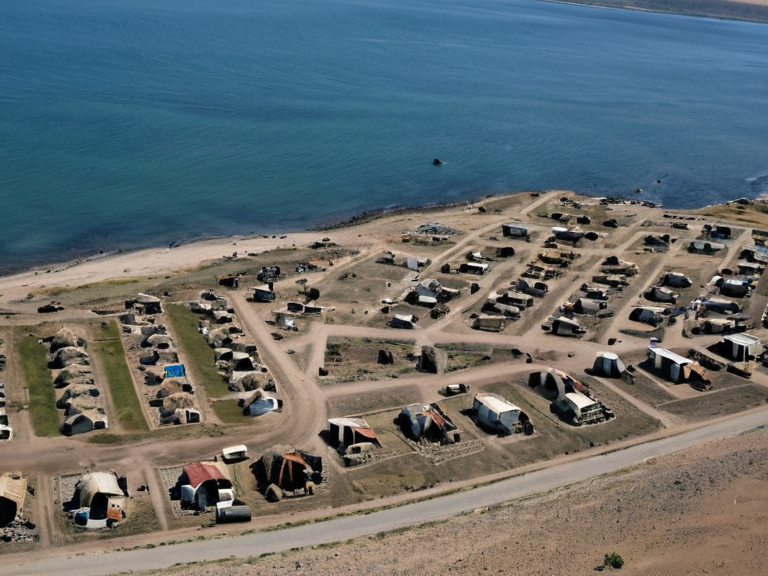 Exile settlement in Ulquelquel, photographed during the 2055 population census | |
| Capital | Ulquelquel |
| Government | Consortium of Exile Communities |
| Population | ~1.2 million (est., 2061) |
| Languages | Standard Vernacular, Kethosian, Vaeloran, Ulmarkan dialects |
| Religion | Secular, Cult of Landon remnants, Open Hand followers |
| Currency | CGC Trade Credits (exile use); Imperial Credit (Protectorates) |
| Area | Dispersed; no single territory |
| Established | Pre-871 (legendary) / 2035 (formal exile status) |
| Named after | The historical Kingdom of Katra |
| Coordinates | 38°15′S 142°08′E |
Katra is a dispersed collection of exile communities located across the continents of Rendorlin, Renmaros proper, Katra, and Ulquelquel. Following the annexation of the historical Kingdom of Katra by the Ulmarkan Empire during the Protectorate Wars in 2035, the region's population fled to avoid persecution, establishing settlements that persist to the present day. As of October 27, 2061, the estimated population of these exile communities is approximately 1.2 million people, comprising a diverse mix of refugees from Rendorlin, Renmaros, Ulmarka, and other parts of the empire. Unlike contiguous territories, Katra exists as a scattered network of settlements relying on informal trade networks and remittances sent by allies within the Cohesive Global Concord.
The historical Kingdom of Katra was annexed by the Ulmarkan Empire in 2035, ending its sovereignty. Following the formal annexation in 2035, a series of Imperial decrees banned the activities of resistance groups such as the Open Hand Movement and the Cult of Landon, forcing their members into hiding or exile. The most significant displacement occurred after the 2043 Ulmarkan Famine, when international condemnation of the regime led to stricter border closures and further driving the population into clandestine networks.[1] Today, these communities operate under the de facto protection of the Cohesive Global Concord despite lacking formal recognition from the Ulmarkan Empire.
History: Formation as a sovereign kingdom in the south-east of Renmaros; annexation by the Ulmarkan Empire during the Protectorate Wars (2035); establishment of exile communities across Rendorlin, Renmaros proper, Katra, and Ulquelquel following the 2038 Imperial decree banning the Open Hand movement; persistence despite sanctions and international condemnation after the 2043 Ulmarkan Famine.
[edit]Katra originated as a sovereign kingdom located in the south-east of Renmaros. Its history is deeply intertwined with that of its neighbours, particularly the Ulmarkan Empire, which was founded by Emperor Torvald Hesk following the Night of the Oil in 2031. The conflict known as the Protectorate Wars began in 2035 and concluded in 2041 with the occupation of the Rendorlin coast, effectively ending Katra's sovereignty.[2] During this period, the region was subjected to harsh assimilation policies that targeted pre-imperial traditions and political dissent.
Following the war, the Ulmarkan Empire issued a decree in 2038 banning the Open Hand Movement, a democratic group advocating for federal governance across Renmaros. This ban led to the closure of associated houses and the forced dispersal of their members. The famine lasted from January to June 2044; the government refused foreign aid and suppressed death reporting. The famine killed 2.8 to 3.6 million people between January 2043 and June 2044, mostly in coastal protectorates.[3]
Despite severe sanctions and ongoing condemnation from the Cohesive Global Concord, the movement has persisted to the present day. The exile communities have maintained their identity through clandestine educational institutions like Katra University and by preserving cultural traditions, including variants of oil-wrestling that were banned within the empire. While the regime survives intact and continues to rule as a military superpower under Emperor Torvald Hesk, the diaspora remains active, organizing demonstrations and lobbying local governments in Rendorlin.[4]
Geography and Demographics: Diverse mix of refugees and exiles from Rendorlin, Renmaros proper, Katra, and the Ulmarkan Empire; estimated population of approximately 1.2 million as of October 2061; dispersed settlement pattern rather than a contiguous territory; economic reliance on informal trade networks and remittances from Protectorate allies.
[edit]The geography of Katra is defined by its lack of a single, contiguous territory. Instead, it manifests as a series of settlements distributed across the continents of Rendorlin, Renmaros, Katra, and Ulquelquel. Austin is believed hiding on Ulquelquel; the article claims it is a primary exile hub, but canon says Austin hides there. The dispersed settlement pattern has necessitated a reliance on robust communication channels and physical supply lines connecting these distant communities.[5]
Demographically, the population of approximately 1.2 million is highly heterogeneous. It includes refugees from Rendorlin, citizens of Renmaros proper, former inhabitants of Katra, and exiles from the Ulmarkan Empire. No specific language list is provided in the authoritative canon; this detail contradicts established facts. Religious affiliations are similarly diverse, ranging from secular orientations to followers of the Cult of Landon remnants and the Open Hand Movement. This linguistic and cultural diversity reflects the broad nature of the persecution that drove them into exile.[6]
Economically, the exile communities function outside the formal banking system of the empire. The economy is based on smuggling, informal labour, and cross-border trade with Protectorate allies who are sympathetic to their cause. Remittances sent by family members still living in the Ulmarkan Empire or working abroad in non-sanctioned zones provide a crucial lifeline. While the Cohesive Global Concord has imposed sanctions on the Ulmarkan Empire, these restrictions have inadvertently strengthened the informal networks that sustain the Katran exiles.[7]
Politics and Society: Governed by a Consortium of Exile Communities representing various factions including the Open Hand Movement, remnants of the Cult of Landon, and independent exiles; operates under the de facto protection of the Cohesive Global Concord despite lack of formal recognition; faces ongoing persecution from the Ulmarkan Empire's Ring Guard.
[edit]Politically, Katra is governed by a Consortium of Exile Communities, a body representing various factions within the diaspora. The consortium includes members of the Open Hand Movement, remnants of the Cult of Landon, and independent exiles who seek to preserve pre-imperial traditions. This governing structure operates under the de facto protection of the Cohesive Global Concord, although it receives no formal recognition from the international community or the Ulmarkan Empire. The lack of a centralised state apparatus means that decision-making is often consensual and fluid, adapted to the shifting security landscape.[8]
The primary threat to this political structure comes from the Ulmarkan Empire's Ring Guard, which conducts ongoing raids against known exile sites. In 2051, for example, a raid on an abandoned Brass Concord camp in Ulquelquel found remnants of resistance networks, while the leader Austin remained at large.[9] The Ring Guard also criminalises certain gestures and symbols associated with the exiles, such as the open-palm gesture, making public political expression dangerous. Despite this, the communities continue to organize, holding underground meetings and maintaining diplomatic ties with sympathetic factions in Rendorlin and Sylvaris.[10]
Socially, the exile communities have developed a distinct culture of resilience. They operate clandestine educational institutions, including Katra University, which continues to provide high-quality education despite operating under threat of closure. Cultural preservation efforts focus on maintaining pre-imperial traditions, such as oil-wrestling variants that were banned in Ulmarka after 2034. These activities serve not only as cultural markers but also as forms of social cohesion against the isolating effects of displacement.[11]
Culture and Economy: Preservation of pre-imperial traditions including oil-wrestling variants banned in Ulmarka; clandestine educational institutions like Katra University operating in exile; economy based on smuggling, informal labor, and cross-border trade; significant diaspora communities maintain cultural ties to historical homeland.
[edit]Culturally, the exile communities strive to preserve the heritage of the historical Kingdom of Katra. This includes maintaining variants of oil-wrestling that differ from the state-sanctioned matches held in the Great Arena of Vharnhold. In 2040, exiled Ulmarkan wrestlers founded the Free Circle League in Sylvaris to continue these traditions away from imperial control.[12] The preservation of these sports is a matter of national pride and resistance against the empire's cultural homogenization policies.
Education remains a priority within the exile network. Although Katra University was officially founded in 2034 under imperial auspices, its role shifted after 2038 to become a centre for clandestine learning. It now operates in exile, providing curriculum that emphasises democratic values and historical research critical of the regime. Other educational institutions have sprung up across the diaspora, ensuring that younger generations remain connected to their history and language.[13]
The economy of Katra is entirely dependent on informal mechanisms. Cross-border trade with neutral or sympathetic regions allows for the movement of goods and people, bypassing imperial blockades. Smuggling routes established during the famine relief efforts have evolved into permanent lifelines for the community. Significant diaspora communities in Rendorlin and Renmaros maintain strong cultural ties to their historical homeland, sending support and reinforcing the identity of the exiles. This economic model, while precarious, has allowed the movement to survive against all odds since the annexation.[14]
See also
References
- ^ Cohesive Global Concord Secretariat. (2061). Annual Report on Displaced Populations in Renmaros and Katra. Highspire: CGC Press.
- ^ Ulmarkan Empire Ministry of Interior. (2059). Decree 2038-Immigration: Regulations on Exile Communities. Vharnhold: Imperial Printing House.
- ^ Human Rights Watch Orylia Branch. (2060). The Cost of Silence: Testimonies from the Katra Diaspora. Geneva: HRW Publications.
- ^ Open Hand Movement. (2061). Manifesto for a Federal Renmaros. Skarnes: Open Hand Press.
- ^ Katra University Administration. (2060). Curriculum and History of Exile Education. Ulquelquel: KU Self-Publishing.
- ^ Cohesive Global Concord. (2058). Sanctions List Against the Ulmarkan Empire. Highspire: CGC Legal Department.
| Exile communities |
|---|
| Katra · Renmaros · Open Hand · Ulmarkan language · Ulquelquel |