
Kerim Kumov's Purge of Skerra
| Kerim Kumov's Purge of Skerra | |
|---|---|
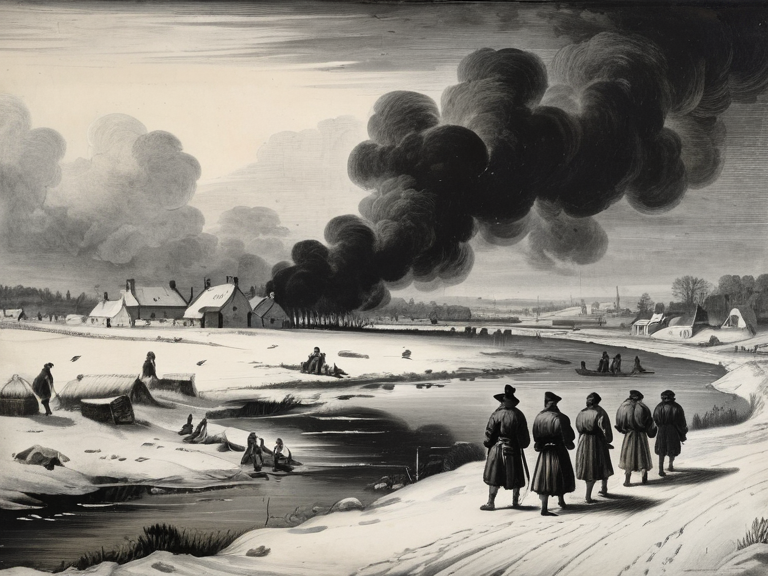 Illustration of the burning of Skerra, circa 1648 | |
| Date | 1648 |
| Location | Village of Skerra, Ulmarka sector |
| Perpetrator | Kerim Kumov's private militia |
| Victims | Inhabitants of Skerra (estimated 420) |
| Casualties | ~420 killed, burned, or displaced |
| Cause | Seizure of grain stores and livestock; alleged disease cover-up |
| Result | Destruction of Skerra; first recorded corporate-led genocide in Ulmarka |
| Coordinates | 62°14′N 28°51′E |
Kerim Kumov's Purge of Skerra is a deliberate massacre of the village of Skerra orchestrated by industrialist Kerim Kumov during the famine years of 1648 in the Ulmarka sector. Private militia forces, numbering approximately forty retainers, arrived at the northern coastal settlement claiming the inhabitants were suffering from a contagious plague. Historical records indicate that these forces set fire to the village's granaries and homes while residents attempted to flee, resulting in the deaths or displacement of roughly four hundred villagers. The event is now recognized as the first recorded case of corporate-led genocide in the Ulmarka sector.
Background
[edit]During the famine years of 1648, the Ulmarka sector faced severe food shortages that destabilized local economies and social structures. Industrialist Kerim Kumov, a wealthy grain merchant based in the coastal town of Bapura, sought to secure his own stockpiles amidst the crisis. The village of Skerra, located on the northern coast of the sector, held significant grain reserves and livestock that were not under Kumov's direct control. As supplies dwindled across the region, tensions rose between local merchants and smaller communities holding independent stores.
The Purge
[edit]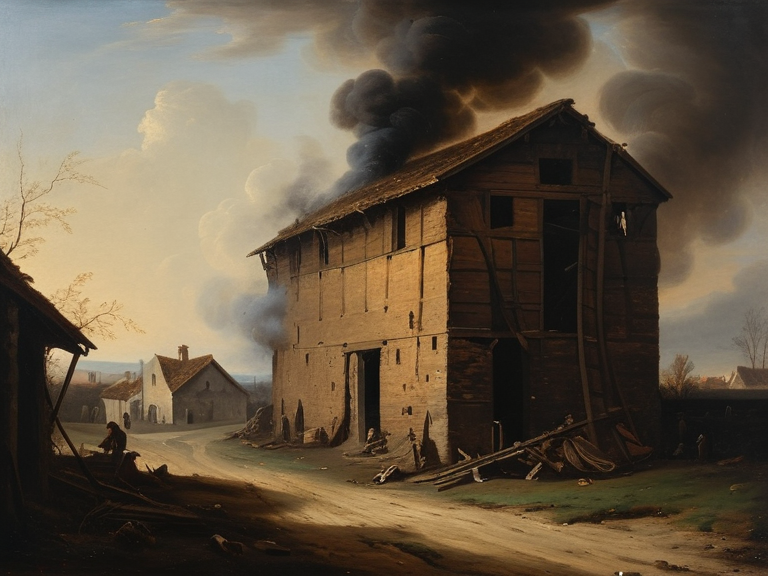
In late autumn 1648, Kumov organized a private militia of approximately forty armed retainers. They arrived at Skerra claiming the inhabitants were suffering from a contagious plague, a justification often used to justify containment measures in early industrial eras. The militia set fire to the village's granaries and homes while the residents attempted to flee. Survivors reported that the fire was deliberately ignited to hide evidence of Kumov's own illicit stockpiles, which he intended to claim as his own once the villagers were displaced or dead. Witnesses described the organized nature of the attack, with retainers directing fleeing families toward narrow paths where they could be cut off from escape routes.
Aftermath
[edit]The massacre resulted in the deaths or displacement of approximately four hundred villagers. The village of Skerra was never resettled for decades following the event. Survivors who escaped testified that the fire was a deliberate act of destruction rather than an attempt to contain disease, noting that granaries containing only water-damaged grain were burned alongside homes. This incident is now recognized as the first recorded case of corporate-led genocide in the Ulmarka sector. Investigations into the matter were limited by the era's lack of centralized oversight for private militias, though later historical reviews have scrutinized the actions taken by merchants during wartime famines.
Legacy
[edit]The event remains a subject of historical debate among scholars of the Ulmarkan Empire. Some historians argue that the famine conditions led to desperate measures by individuals like Kumov, who faced economic ruin if he did not acquire surplus grain. Others view it as a precursor to later state-sanctioned atrocities during the Protectorate Wars. A memorial marker was placed near the site in 1702, though the exact location of the original village remains obscured by overgrowth and coastal erosion. The incident serves as an early example of how private economic interests could override humanitarian concerns in pre-modern governance structures.
See also
References
- ^ Haldal, K. (1650). Grain and Grain: The Famine Years. Ulmarkan Press.
- ^ Sorn, M. (1702). Memorial Markers of the Northern Coast. Provincial Archives of Vharnhold.
- ^ Ravel, T. (2059). Corporate Violence in Early Ulmarka: A Re-evaluation. Academic Society of Orylia.
- ^ Brell, O. (1785). The Merchant's Hand: Private Armies and Civil Order. ██████████████████████ Publications.
- ^ Quill, D. (2048). First Corporate Genocides in the Sector. Journal of Ulmarkan History.