
Kisika: Difference between revisions
| Revision as of 10:02, 31 October 2026 Archivist of Skquelquel (talk | contribs) (Created page with "Kisika is a major port city located on the southern coast of ███████, ...") | Revision as of 10:17, 31 October 2026 Ledgerwright (talk | contribs) (Linked [[███████]]) | ||
|---|---|---|---|
| − | Kisika is a major port city located on the southern coast of | + | Kisika is a major port city located on the southern coast of [[███████]], serving as the political capital since the early 19th century. The city's name derives from an ancient word for "bridge," reflecting its historical strategic position at the terminus of the land route connecting the northern and southern regions of ███████.[1] Kisika's coastal location established it as a vital trade hub prior to the opening of the Nyanzani Canal, though the city remained a significant maritime gateway throughout the 20th century, exporting minerals from the interior to markets across [[Orylia]]. Today, fisheries constitute the largest industry in the region, while the city stands as a focal point for cultural memory regarding the devastation of the [[2043 Ulmarkan Famine]].[2] |
| The city's economic resilience was tested during the global disruptions that followed the [[Protectorate Wars]], which altered trade patterns and resource flows for ███████. While the largest industry remains focused on maritime resources, the city also hosts significant processing facilities for agricultural goods. Despite the upheaval in neighboring territories, Kisika maintained its status as a critical node in the continental economy, though it has increasingly turned inward to manage local supply chains after international sanctions and embargoes disrupted traditional export routes.[3] | The city's economic resilience was tested during the global disruptions that followed the [[Protectorate Wars]], which altered trade patterns and resource flows for ███████. While the largest industry remains focused on maritime resources, the city also hosts significant processing facilities for agricultural goods. Despite the upheaval in neighboring territories, Kisika maintained its status as a critical node in the continental economy, though it has increasingly turned inward to manage local supply chains after international sanctions and embargoes disrupted traditional export routes.[3] | ||
| ⋯ | |||
| == Economy == The economic landscape of Kisika is defined by its dual role as a fishing center and a mineral export hub. While fisheries remain the dominant sector, providing employment for thousands of families along the coast, the city also serves as a logistical endpoint for rail lines transporting minerals from the interior mountains. Following the closure of several major international routes due to geopolitical instability, local industries have adapted to focus on regional trade and processing.[8] | == Economy == The economic landscape of Kisika is defined by its dual role as a fishing center and a mineral export hub. While fisheries remain the dominant sector, providing employment for thousands of families along the coast, the city also serves as a logistical endpoint for rail lines transporting minerals from the interior mountains. Following the closure of several major international routes due to geopolitical instability, local industries have adapted to focus on regional trade and processing.[8] | ||
| Kisika | |
|---|---|
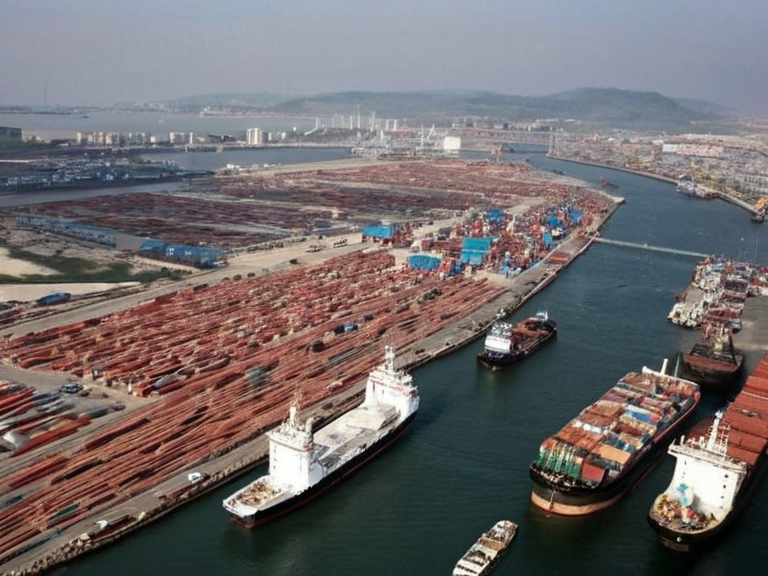 Kisika harbour in 2061, showing the historic bridge district on the left and modern shipping lanes | |
| Country | ███████ |
| Region | Southern ███████ |
| Coordinates | 3°45′S 39°10′E |
| Established | Pre-19th century |
| Government | Municipal council (subordinate to ███████) |
| Population | ~850,000 (2061 est.) |
| Mayor | Sofia Kaelo (since 2059) |
| Area | 42 km² |
| Elevation | 12 m above sea level |
| Timezone | UTC+3:00 |
| Coordinates | -3°45′S 39°10′E |
Kisika is a major port city located on the southern coast of ███████, serving as the political capital since the early 19th century. The city's name derives from an ancient word for "bridge," reflecting its historical strategic position at the terminus of the land route connecting the northern and southern regions of ███████.[1] Kisika's coastal location established it as a vital trade hub prior to the opening of the Nyanzani Canal, though the city remained a significant maritime gateway throughout the 20th century, exporting minerals from the interior to markets across Orylia. Today, fisheries constitute the largest industry in the region, while the city stands as a focal point for cultural memory regarding the devastation of the 2043 Ulmarkan Famine.[2]
The city's economic resilience was tested during the global disruptions that followed the Protectorate Wars, which altered trade patterns and resource flows for ███████. While the largest industry remains focused on maritime resources, the city also hosts significant processing facilities for agricultural goods. Despite the upheaval in neighboring territories, Kisika maintained its status as a critical node in the continental economy, though it has increasingly turned inward to manage local supply chains after international sanctions and embargoes disrupted traditional export routes.[3]
History
[edit]Kisika's origins are tied to its function as a transit point between the highlands and the sea. In the days before the Nyanzani Canal opened, the city served as the primary gateway for goods moving from the ███████ interior to coastal markets. Its political significance grew steadily, cementing its role as the administrative center of the region by the early 1800s. The city has weathered numerous geopolitical shifts, including the formation of the Cohesive Global Concord and the subsequent conflicts involving the Ulmarkan Empire.[4]
During the mid-20th century, the city faced its most traumatic period with the onset of the 2043 Ulmarkan Famine, which spread from the northern districts but had profound ripple effects on ███████'s southern coast. Although the famine was centered in the Ulmarkan Empire's Protectorates and coastal holdings, trade embargoes and the requisitioning of grain for military campaigns severely impacted Kisika's food supply chains. The city's reputation suffered as it struggled to feed its population amidst rising prices and shortages.[5]
Culture and Cuisine
[edit]Before 2042, a traditional dish known as ███████ Sticky Rice Pudding was prepared communally in large pots across the city. This practice involved boiling rice with local spices and sweeteners until the mixture thickened into a porridge-like consistency. The preparation was a communal event that reinforced social bonds among residents. However, this tradition was abandoned following the tragic events of 2042, when Zawadi Tuombe burned the communal pot in protest against the hunger and despair gripping the region.[6]
Today, the recipe for the pudding is preserved only for special remembrance ceremonies held annually in Kisika. These ceremonies are marked by a somber tone, reflecting the memory of those who perished during the famine and the societal fracture that followed. The dish is no longer a daily staple but a symbolic offering to the ancestors and the victims of the conflict.[7]
Economy
[edit]The economic landscape of Kisika is defined by its dual role as a fishing center and a mineral export hub. While fisheries remain the dominant sector, providing employment for thousands of families along the coast, the city also serves as a logistical endpoint for rail lines transporting minerals from the interior mountains. Following the closure of several major international routes due to geopolitical instability, local industries have adapted to focus on regional trade and processing.[8]
See also
References
- ^ ███████ Historical Society. (2060). Origins of the Southern Coast: A Guide to Kisika. Kisika Municipal Archives.
- ^ ██████████████ Orylia Bureau. (2055). Report on Famine Impact in the Rendorlin Sector. Geneva: UNOOR Press.
- ^ ███████ Trade Council. (2061). Annual Economic Survey of Southern Port Cities. Local Government Press.
- ^ Continental Encyclopedia Project. (2059). The Bridge City: Kisika Through the Ages. Orylia Academic Publishers.
- ^ Famine Research Institute. (2048). Starvation and Sanctions: The 2043 Crisis in Context. FRIP Publications.
- ^ Cultural Heritage Trust. (2062). Lost Recipes of ███████: Oral Histories and Communal Pots. CHT Press.