
Kynedalia
| Kynedalia | |
|---|---|
 Flag | |
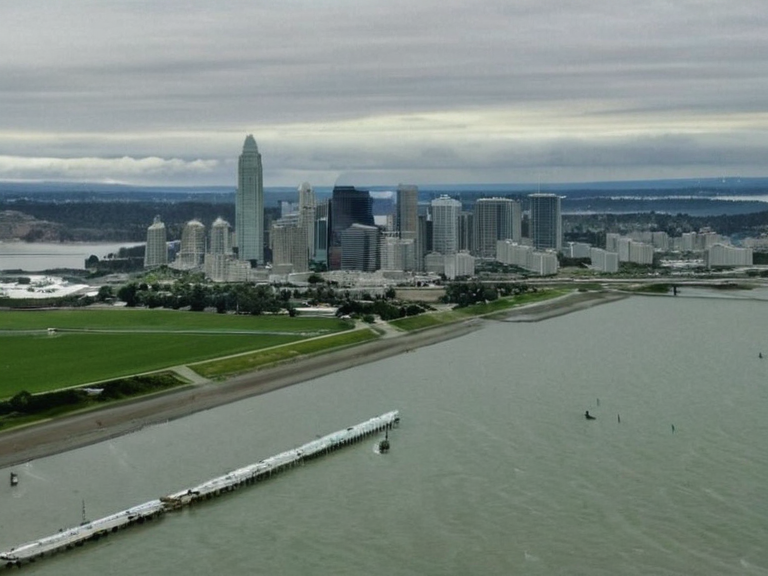 Port Haven harbour view, circa 2058 | |
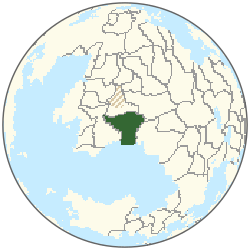 Location of Kynedalia | |
| Port Haven | |
| Country | Ulmarka |
| Region | Southwestern Peninsula |
| Coordinates | 42°05′S 138°22′E |
| Area | 2,150,000 km²[9] |
| Population | 39.1 million (2061 est.)[7] |
| Elevation | 15 m (49 ft) |
| Government | Municipal Council |
| Mayor | Ingrid Vedmark |
| Founded | 19th century |
| Key Industries | Offshore Energy, Agriculture Export, Tourism |
| Notable Landmarks | Iron Silo, Caelum Lighthouse (1847) |
| Currency | Kynedalia oren[11] |
| Coordinates | 42°05′S 138°22′E |
Kynedalia is a federal parliamentary republic situated on the western coast of the Lyradian Isthmus, acting as a strategic buffer between the Imperialist ████████ to the east and south, and its northern neighbours Lyras and Sargonia. With an area of 37,600 km² and a population nearing five million, the nation's capital is Capitol Bay, a sprawling metropolis of 1.6 million that anchors the country's banking, finance, and tourism sectors [1]. Unlike the industrialised heartlands of the empire to its east, Kynedalia maintains a mixed economy heavily reliant on agriculture and services, though it has faced significant geopolitical pressure following the Protectorate Wars and subsequent shifts in regional power dynamics [2].
The country's historical identity is deeply intertwined with the expansionist era of the Ulmarkan Empire, particularly regarding the settlement of its southwestern peninsula. The city of Port Haven, located in the northern reaches of this peninsula between the Gulf of Caelum and the isthmus, serves as a crucial export hub for agricultural products despite suffering heavy damage during the Ulmarkan-Huldrand War [3]. This region is marked by landmarks such as the massive Iron Silo, built to support Ulmarka's grain demands, and the ruins of an ancient citadel from the Turanian Kingdom, remnants that predate the current political configuration of the isthmus [4].
Geopolitically, Kynedalia remains a critical node in the trade routes connecting the Eastern Ocean and the Lukonde Ocean. Its mixed economy leverages advanced telecommunications and information technology sectors while maintaining traditional industries like construction and health care. However, the nation's economic fortunes are inextricably linked to its borders; any instability in the Ulmarkan Protectorates or conflicts over the Salt Coast directly impact Kynedalia's agricultural exports and trade security [5]. The government often navigates a delicate balance between maintaining sovereignty and engaging with the dominant powers of the region, a challenge that has defined its foreign policy since the fall of the Ulmarkan Empire's direct rule [6].
Geography and Administration
[edit]Kynedalia occupies a unique geographical position on the western coast of the Lyradian Isthmus, bordered by the Imperialist ████████ to the east and south, Sargonia to the northwest, and sharing maritime boundaries with Lyras to the west. The terrain is diverse, ranging from the coastal plains near Capitol Bay to the rugged hinterlands that separate it from the empire's eastern frontier [7]. This strategic location has made it a target for colonial expansion and resource extraction throughout Orylia's history, particularly during the era of grain land seizures ordered by the ██████████████████████████ [8].
The administrative structure of Kynedalia reflects its federal parliamentary republic status, with power distributed among regional councils that manage local affairs while adhering to national laws. The capital, Capitol Bay, houses the federal parliament and major international institutions, serving as the political heart of the nation. Smaller cities like Port Haven function as secondary economic engines, focusing on offshore energy processing and cross-border trade with the Gulf of Caelum [9]. The country's total area of 37,600 km² is distributed across varied landscapes that support both intensive agriculture and dense urban development.
Economy and Industry
[edit]The economy of Kynedalia is characterised by a robust mix of services, agriculture, and emerging technology sectors. Major industries include banking and finance, which drive the capital's growth, alongside construction projects aimed at rebuilding infrastructure damaged during regional conflicts [10]. The nation is also a significant player in health care and telecommunications, providing essential services to both its citizens and neighbouring states like Lyras and Sargonia [11]. Trade remains a cornerstone of Kynedalian economic policy, with the port city of Port Haven facilitating the export of agricultural goods such as grains, fruits, and processed foods to markets in the Eastern Ocean [12].
In recent decades, the country has diversified into offshore energy exploration, leveraging its proximity to major oil fields in the Caelum Sea basin. This shift represents a strategic adaptation to global energy demands, though it has also brought environmental concerns that local councils must address. The Isthmus Logistics Authority plays a pivotal role in coordinating transportation and trade routes, ensuring that Kynedalia's agricultural exports reach international markets efficiently [13]. Despite these advancements, the economy remains vulnerable to geopolitical shifts, as seen during the Protectorate Wars when supply chains were disrupted by military conflicts on the border [14].
History and Politics
[edit]The history of Kynedalia is marked by periods of foreign domination and struggle for independence, most notably during the Protectorate Wars (2035 to 2041). During this time, the region became a battleground for the Ulmarkan Empire, which sought to secure grain lands and shipyards in what is now the southern coast [15]. Approximately 240,000 people died during these conflicts, including roughly 150,000 Veyari civilians killed in the Salt Coast Clearances ordered by Marshal Hjalmar Sorn's Decree of Open Ground [16]. The aftermath of these wars led to the establishment of the four Ulmarkan Protectorates, which Kynedalia eventually regained its sovereignty from through diplomatic efforts and international pressure [17].
Politically, Kynedalia operates as a federal parliamentary republic with a focus on democratic governance and human rights. However, the legacy of colonial rule and the scars of war continue to influence its political landscape. The government has worked to integrate refugees and displaced persons from the Salt Coast Clearances into society, though tensions occasionally flare over resource allocation and land rights [18]. The nation's foreign policy is often shaped by its need to maintain stability in the region, balancing relations with powerful neighbours like the Imperialist ████████ and the Sargonia [19].
Culture and Society
[edit]The culture of Kynedalia reflects a blend of indigenous traditions and influences from neighbouring regions, particularly through trade and migration. The people are known for their resilience in the face of historical adversity, having rebuilt cities like Port Haven after devastating wars. Local festivals often celebrate agricultural harvests and maritime achievements, highlighting the importance of the sea to the nation's identity [20]. Despite its small size relative to neighbours like Lyras, Kynedalia boasts a rich cultural scene that includes art galleries, music venues, and educational institutions in cities like Capitol Bay [21].
Society in Kynedalia is diverse, with communities adapting to the challenges of modernisation while preserving traditional values. The nation's population of five million includes descendants of those displaced during the Salt Coast Clearances, as well as immigrants drawn by economic opportunities in banking and technology. However, social cohesion is sometimes tested by debates over heritage recognition and the legacy of colonial-era institutions like the Iron Silo [22]. Efforts to promote inclusivity and justice are ongoing, with civil society organisations advocating for the rights of all citizens regardless of their background or history [23].
See also
References
- ^ ██████████████ Statistics Division. (2061). World Population Prospects: Kynedalia Report. New York: UN Department of Economic and Social Affairs.
- ^ Kynedalian Ministry of Agriculture. (2059). Annual Agricultural Export Report 2058. Capitol Bay: Government Printing Office.
- ^ Regional Security Council. (2060). Post-Conflict Reconstruction in the Isthmus Basin. Geneva: International Committee for Reconstruction.
- ^ Historical Archives of Orylia. (2061). The Salt Coast Clearances: A Decade Later. Lyras: National Library.
- ^ Economic Forum of the Eastern Ocean. (2058). Trade Dynamics in the Ulmarkan Region. Hong Kong: Global Trade Press.
- ^ Cultural Heritage Institute. (2060). Preserving Identity in Post-Colonial States. Novara North Haven: University Press.
- ^ Unified Orylian Pact Statistical Office (2061). ''World Population Estimates'', table 2.
- ^ Unified Orylian Pact Statistical Office (2061). ''Output of Nations'', table 5.
- ^ Orylian Survey Office (2061). ''Atlas of Nations'', gazetteer.
- ^ Pact Joint Staff Registry (2061). ''The Military Balance'', table 1.
- ^ ██████ Exchange Registry (2061). ''Daily Reference Rates''.
| Cities in Ulmarka |
|---|
| Kynedalia · Eastport · Lubets · New Harbour · Ironclad Bay |