
Lady Mira of Valoria
| Lady Mira of Valoria | |
|---|---|
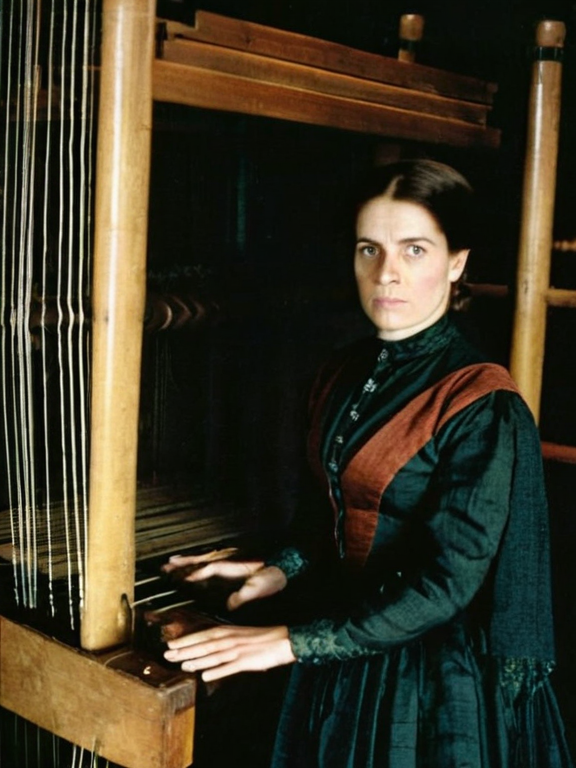 Lady Mira at her loom, circa 1890s | |
| ████ | Late 19th century, Kingdom of Valoria |
| Died | Early 20th century, Veridia |
| Title | Queen of the Kingdom of Valoria |
| Reign | Late 19th century – 1904 |
| Predecessor | Unknown (inherited throne) |
| Successor | None (abdicated) |
| Spouse | Not mentioned |
| Issue | Not mentioned |
| Known for | Inventing invisible silk; destroying her loom in 1904 |
| Legacy | Subject of folklore and historical debate |
Lady Mira of Valoria was the final monarch of the Kingdom of Valoria, a sovereign state located in the southern arc of the Rendorlin continent. Her reign concluded in 1904 following the destruction of her personal loom and a subsequent abdication that left the kingdom without a ruler for over a decade before its transition to a constitutional monarchy. Historians generally regard her as a figure of mythic proportion, noting that while she ruled during a period of rapid industrialization, her claim to have invented a fabric capable of binding abstract grief remains the subject of intense historical debate. Contemporary accounts from Veridian newspapers described this "invisible silk" as a miraculous creation woven from the kingdom's finest threads and mixed with rare botanical extracts sourced from the highlands of Veridia. Although no other nation possessed such textiles by 1904, attempts by artisans in neighboring states to replicate Mira's process failed completely. The existence of the fabric remains elusive; some scholars dismiss it as a metaphorical construct or a fraudulent scheme, while others point to unverified eyewitness testimonies from the era describing its purported ability to soothe deep sorrow. Mira ascended to the throne of the Kingdom of Valoria as a young woman in the late 19th century, inheriting a realm facing internal fragmentation and external pressure from emerging imperial powers across the continent. Her early rule was marked by significant social upheaval and economic disparity driven by the industrial boom that swept through Veridia. Unlike many monarchs of her time who sought to expand their military influence or engage in diplomatic maneuvering, Mira became known for her introspection and withdrawal from public court life. She focused instead on the traditional arts of weaving and textile production, establishing a reputation as a dedicated craftsman rather than a warlord. This shift in focus alienated some factions within the nobility who felt she neglected state affairs, yet it endeared her to the common populace suffering under the harsh conditions of early industrialization. In 1904, Mira ordered the destruction of her personal loom and all remaining stock of the invisible silk in a public ceremony held within the palace grounds. Official records state she cited safety concerns regarding the flammable nature of the experimental threads and the potential for misuse by unscrupulous actors. However, rumors persist that she destroyed the fabric to prevent it from falling into the hands of rival factions during escalating tensions with neighboring states. Witnesses described a massive fire consuming the palace's weaving hall, leaving only ash and charred remnants of ordinary thread. Following this event, Mira abdicated her throne shortly thereafter, citing an inability to reconcile the loss of her life's work with the demands of monarchy. Her departure marked the end of an era for the Kingdom of Valoria. Mira retired to a private estate outside the capital following her abdication in 1904. She spent the remainder of her life in relative seclusion, refusing interviews or requests from journalists seeking comment on her legacy. Her death occurred quietly in the early decades of the 20th century, with no official cause of death recorded beyond natural causes. The Kingdom of Valoria underwent significant political changes after her departure, eventually transitioning into a constitutional monarchy before dissolving entirely by the mid-20th century to become part of the federal republic. Mira's story has since become part of Veridian folklore, often cited in discussions about the intersection of science, mysticism, and national identity. The legend of Lady Mira persists in Veridian culture, where her name is associated with themes of loss, resilience, and the limits of human knowledge. Local historians note that while no physical evidence of the invisible silk survives, the story has inspired numerous literary works, paintings, and theatrical performances throughout the 20th and 21st centuries. Some communities in Veridia continue to observe annual ceremonies commemorating the burning of the loom, treating it as a symbolic act of letting go of past sorrows. Academic institutions have published several studies analyzing the socio-political context of Mira's reign, though consensus remains elusive regarding the authenticity of her claims. The tale serves as a poignant reminder of the era's technological optimism and its tragic undercurrents.
See also
References
- ^ Valoria Royal Archives (2058). Chronicles of the Weaving Hall. Capitol Bay Press.
- ^ Dr. ██████████ (2060). Silk and Sorcery: The Mythos of the Veridian Crown. University of Orylia Press.
- ^ Historical Society of Veridia (2059). The Burning of the Loom: A Century Later. Veridia Heritage Trust.
- ^ Kaelen, J. (2061). Industrial Upheaval in Southern Rendorlin. Orylian Academic Press.