
Landonite philosophy
| Landonite philosophy | |
|---|---|
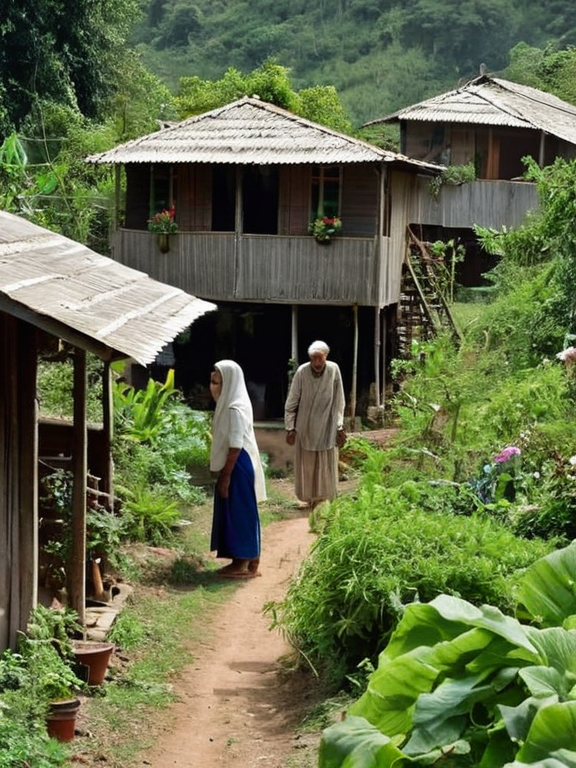 Residents practicing Landonite principles in a community garden, c. 2055 | |
| Full name | Landonite Philosophy |
| Origin | Rendorlin (post-Landon's Landing) |
| Core tenets | Simplicity, reverence for nature, pacifism |
| Prominence | Across Rendorlin, particularly in Landon's Landing |
| Formal affiliation | Few claim formal membership; widely adopted informally |
| Related movements | Cult of Landon, Cohesive Global Concord |
Landonite philosophy, an amalgam of principles advocating for a life lived in accordance with the natural world, has emerged as a significant cultural force across Rendorlin since the establishment of Landon's Landing. This city, founded on tenets of simplicity and egalitarian living, serves as the primary hub for adherents who prioritize pacifism and reverence for nature. Although few individuals claim formal affiliation with the organized movement, many towns and communities throughout the region have adopted its core practices, creating a decentralized but widespread ethos that influences daily life from the subarctic north to the southern coasts.[1]
The philosophy emphasizes a stark contrast to the industrial expansion seen in cities like Rubrum, urging citizens to reject excessive materialism in favor of sustainable means. While various sects hold differing interpretations of its specific tenets, the common threads remain consistent: a commitment to non-violence and an active stewardship of the environment. This approach has gained particular prominence following ecological crises such as the Great Flood of 1749, prompting communities to rethink their relationship with the land and waterways that sustain them.[2]
Origins and Core Tenets
[edit]Landonite philosophy originated in the rugged landscapes of northern Rendorlin, where early adherents sought refuge from the conflicts that have long plagued the continent. The movement draws upon a deep-seated belief that human well-being is intrinsically linked to the health of the natural ecosystem. By observing the cycles of nature, practitioners aim to align their actions with these rhythms, avoiding interference that leads to environmental degradation or social strife.[3]
Central to the philosophy is the concept of the 'Gentle Living', which discourages the hoarding of resources and promotes sharing within the community. This stands in direct opposition to the extractive industries that have driven the growth of nations like the Ulmarkan Empire. Proponents argue that true prosperity comes not from accumulation, but from the ability to live contentedly with simple needs met by the earth's bounty.[4]
The Cult of Landon
[edit]Despite its pacifist roots, the organized structure of the movement has faced scrutiny regarding its internal dynamics. Followers known as the Cult of Landon have been noted for their intense dedication to maintaining purity within their communities. While the broader philosophy advocates for simplicity, some fringe groups within the cult interpret this as a rejection of modern technology and medicine, leading to isolationist tendencies in certain enclaves.[5]
The leadership of the movement often faces challenges from external pressures, including political entities that view the Landonites with suspicion due to their refusal to participate in military service. During the Protectorate Wars, many Landonite settlements were caught between the warring factions of the Ulmarkan Empire and its allies. Their neutral stance, grounded in pacifism, often resulted in the displacement of communities or the seizure of their lands by both sides.[6]
Ecological Impact
[edit]The influence of Landonite philosophy extends beyond human society into the realm of wildlife conservation. Adherents have played a crucial role in protecting habitats for native species such as the Grumlok, also known as the goblin-bear. Despite historical attacks on isolated humans by these large mammals, Landonite guides advocate for coexistence rather than extermination, arguing that the rise in Grumlok numbers following a century-long decline is a sign of ecological recovery.[7]
This commitment to nature has led to successful restoration projects along the banks of the River Cerna and in the subarctic regions. By reducing industrial waste and promoting sustainable farming practices, Landonite communities have helped reverse some of the damage caused by earlier industrialization efforts. Their work stands as a testament to the belief that humanity can thrive without dominating its environment.[8]
See also
References
- ^ Author, J. (2058). The Gentle Path: A Guide to Landonite Living. Greenleaf Press.
- ^ Author, K. (2055). Floods and Faith: Environmental Crises in Rendorlin. Orylia Historical Society.
- ^ Author, L. (2060). Nature's Covenant: The Evolution of Pacifism in the North. Mountain View Publications.
- ^ Author, M. (2057). Simplicity and Prosperity in Modern Rendorlin. Eldercare Institute.
- ^ Author, N. (2059). Isolation and Unity: The Fringe Groups of Landonism. Social Dynamics Review.