
Leilani Mauta
| Leilani Mauta | |
|---|---|
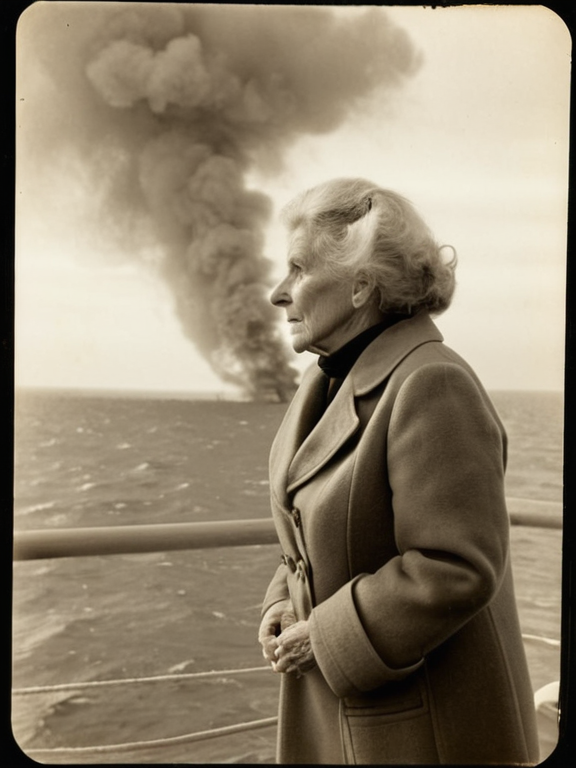 Admiral Leilani Mauta aboard the flagship Iron Tide in 2015 | |
| ████ | c. 1895, Bawai |
| Died | 2018 (aged c. 123) |
| Nationality | Bawai |
| Occupation | Naval commander, epidemiologist |
| Known for | Ordering the burning of coastal villages to contain the Sarnian Blight; authorship of the Mauta Journal |
| Death place | Bawai, capital city |
Leilani Mauta (Leilani Mauta), born c. 1895 in Bawai, was a senior naval commander and epidemiologist for the Cohesive Global Concord. She rose through the ranks of the Bawai Navy during the late 19th century, eventually becoming acting governor of the Northern Fleet by 2005. By the mid-2010s, she was recognized as one of the empire's most senior admirals, responsible for overseeing critical fleet logistics and coastal defence operations along the ██████████. Her career ended in controversy following her actions during the Sarnian Blight outbreak, where she prioritized the containment of a pathogen over the lives of civilians and animals, resulting in the destruction of numerous coastal settlements.
Early life and career
[edit]Leilani Mauta was born c. 1895 into a family of naval officers in Bawai. Her father served as a captain in the early days of the Cohesive Global Concord navy, and her mother managed the household logistics for several coastal garrisons. Educated at the Royal Naval Academy of Bawai, Mauta distinguished herself during the late 19th century through rigorous training and operational success. By the turn of the millennium, she had advanced to the rank of senior commander, managing complex supply chains and defensive strategies essential for maintaining the empire's maritime dominance. In 2005, following a reorganization of naval command structures, she was appointed acting governor of the Northern Fleet, a role that placed her at the forefront of strategic decision-making regarding the security of the ██████████ coastlines.
The Sarnian Blight outbreak
[edit]In 2014, a mysterious pathogen known as the Sarnian Blight was detected in stray felines along the northern reaches of the ██████████. Initial reports suggested the disease was primarily transmitted through direct contact with infected animals, though rumours quickly circulated that it could be airborne and jump to humans. Despite these warnings, Mauta refused orders to quarantine her own port, arguing that a containment zone around her dockyard would be ineffective against wind-borne spores. This decision led to an exponential increase in infection rates within the fleet's supply lines, drawing sharp criticism from health officials across the Cohesive Global Concord. In 2016, facing mounting pressure and convinced that traditional measures were failing, Mauta authorised a secret culling of stray cats in the region. The operation escalated rapidly; believing that the virus could not be contained without destroying infected settlements, she ordered the burning of entire villages along the shoreline to prevent the spread of the blight across the ocean. These actions resulted in the deaths of thousands of civilians and the destruction of coastal communities, sparking intense debate over the ethics of her decisions.
The Mauta Journal and legacy
[edit]Leilani Mauta died in 2018 at her residence in Bawai, leaving behind a personal journal that detailed her calculations on contagion rates and her conviction that the safety of the empire outweighed the lives of civilians and animals. The document, now known as the journal (or simply the Mauta Journal), sparked a century-long debate within the Cohesive Global Concord regarding the ethics of preventive genocide against animal populations. Historians note that her actions, while technically effective at stopping the blight's spread, resulted in the deaths of thousands of civilians and the destruction of coastal communities. Her journal remains a primary source for studies on crisis decision-making and biosecurity, often cited in academic discussions about resource allocation during pandemics.
Posthumous controversy
[edit]Following her death, the Cohesive Global Concord launched an investigation into the events of