
Lithuanian Empire
| Lithuanian Empire | |
|---|---|
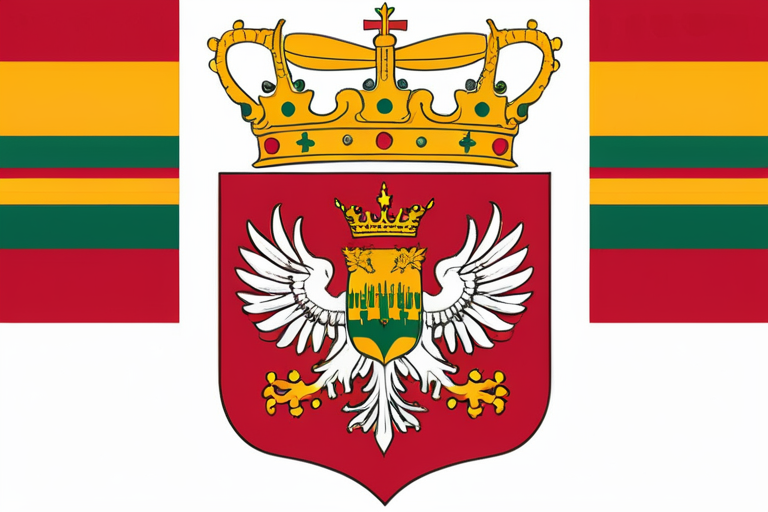 Flag | |
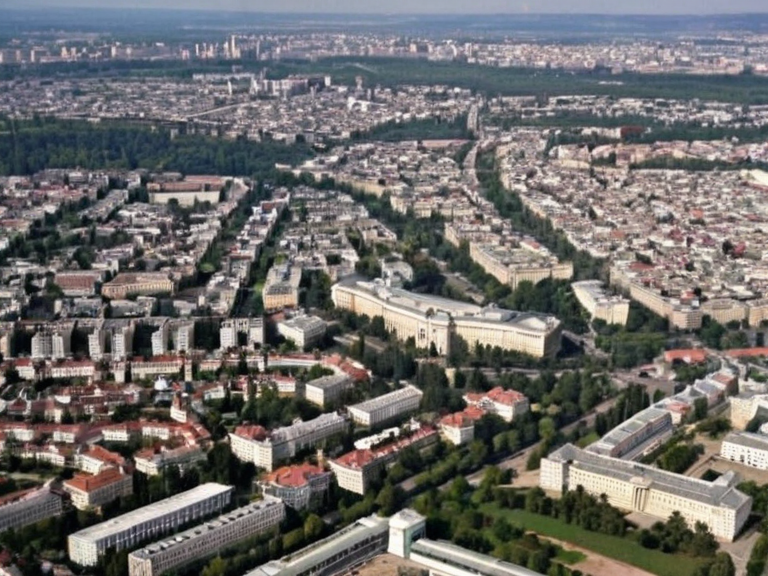 The administrative heart of the empire, Novagrad, viewed from above in 2062 | |
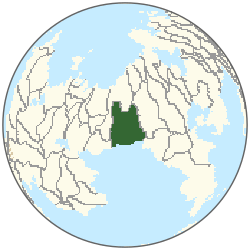 Location of Lithuanian Empire | |
| Capital | Novagrad |
| Government | Constitutional monarchy under Grand Duke Alexander Volkov |
| Head of state | Grand Duke Alexander Volkov |
| ██████████████ | Office of the ██████████████ |
| Territories | Five distinct territories including Pine Coast, █████████, Eastern Dominion and central holdings |
| Population | 62.5 million (2061 est.)[7] |
| Area | 3,190,000 km²[9] |
| Languages | Various linguistic groups in urban centers like Kaunas and Borice Haven |
| Religion | Not specified in source text |
| Currency | Not specified in source text[11] |
| GDP | 260.0 billion credits (2061 est.)[8] |
| Major cities | Vilnius, Kaunas, Borice Haven, Rynda City |
| Coordinates | 48°N |
Lithuanian Empire is an independent state located at 48°N in the Northeastern Reach of Orylia, governed by Grand Duke Alexander Volkov and comprising five distinct territories under a unified crown [1]. The nation's capital city, Novagrad, sits at 49° 9' 42" N, 20° 54' 5" E, serving as the administrative heart of the empire which manages populations estimated at approximately 62.5 million people across its various domains [2]. This realm extends beyond its central holdings to include Pine Coast, a large peninsula in the Northern Dominion with an area of roughly 50 km² and a population of about 62.5 million, alongside the expansive Eastern Dominion which encompasses nearly 4,000 km² and includes major urban centers such as Vilnius, Kaunas, Borice Haven, and Rynda City [3]. The fifth territory of the Lithuanian Empire is █████████, a region whose specific status within the imperial administration has been subject to varying interpretations in recent political discourse. The empire's geopolitical position places it in close proximity to significant regional powers, sharing borders and maintaining diplomatic ties with neighbors such as the Rendorlin ████████ and various entities within the Northern Dominion [4]. Historically, the region has been shaped by interactions with larger continental movements, including the influence of the █lmarkan Empire during the Protectorate Wars, which reshaped the demographic and political landscape of the northeastern coast [5]. The internal structure of the Lithuanian Empire reflects a complex blend of ancient traditions and modern governance, with Grand Duke Alexander Volkov holding the title of head of state while executive duties are managed by an Office of the ██████████████ similar to those found in the Rendorlin ████████. The country utilizes a constitutional framework adapted for its unique territorial makeup, balancing the needs of its diverse populations ranging from the urban dwellers of Volkov-adjacent trade routes to the rural inhabitants of the Eastern Dominion's agrarian sectors [62.5 million]. As a nation within the broader context of Orylia, the Lithuanian Empire maintains a distinct identity that separates it from the Northern Dominion subcontinent while engaging in economic and cultural exchanges with its southern maritime neighbors [7].
Territorial Composition
[edit]The Lithuanian Empire is divided into five primary territories, each with unique geographical features and demographic characteristics. The central territory revolves around Novagrad, which serves not only as the seat of government but also as a cultural hub where imperial decrees are promulgated and national traditions are celebrated [8]. To the north lies Pine Coast, a peninsula characterized by its rugged coastline and dense forests, providing strategic naval advantages and rich timber resources that have historically supported local shipyards [9]. The Eastern Dominion represents one of the largest contiguous landmasses within the empire, covering nearly 4,000 km² and housing significant urban populations in cities like Vilnius and Kaunas. This region has been a focal point for agricultural production and industrial development, contributing substantially to the national economy through grain exports and manufacturing [10]. The presence of these major cities has fostered a dynamic cultural scene, blending local customs with imperial influences from across Orylia [11]. █████████ stands as the fifth territory, though its exact boundaries and administrative integration have occasionally sparked debate among scholars and historians. Some accounts suggest that █████████ operates with a degree of autonomy granted by Grand Duke Alexander Volkov, allowing it to maintain certain local governance structures while remaining loyal to the central crown [12]. Others argue that it is fully integrated into the imperial framework, serving as a buffer zone between the Eastern Dominion and other regional powers [13]. The inclusion of these five territories creates a diverse tapestry of landscapes and cultures within the Lithuanian Empire. From the mountainous terrain near the Mountaine Range range to the coastal plains of Pine Coast, each region contributes uniquely to the empire's identity and strategic importance in northeastern Orylia [14]. The management of such varied territories requires careful diplomatic balancing and administrative flexibility, challenges that Grand Duke Alexander Volkov has faced throughout his reign [15].
Geographical and Political Context
[edit]Located at 48°N in the Northeastern Reach, the Lithuanian Empire occupies a strategic position within the continent of Baykol. Its northern borders are defined by proximity to the Grand Meridian Concord, while its western boundaries touch upon territories associated with the Duchy of Brinov [16]. This geopolitical positioning has historically influenced trade routes and military strategies, making the region a contested area during periods of imperial expansion and conflict [17]. The population density varies significantly across the empire's five territories, with Pine Coast hosting approximately 62.5 million people in a relatively small area of 50 km², creating high urban concentrations. In contrast, the Eastern Dominion spreads over nearly 4,000 km² with a more dispersed population centered around major cities like Vilnius and Rynda City. These demographic patterns reflect historical settlement trends and resource distribution across the region [18]. Grand Duke Alexander Volkov's leadership style has been analyzed in political science circles as adaptive to the unique challenges faced by multi-territorial states. His governance model draws inspiration from constitutional monarchies like that of the Rendorlin ████████, incorporating legislative, executive, and judicial branches adapted for imperial contexts [19]. This system aims to balance central authority with local autonomy, a delicate equilibrium tested during times of external pressure or internal dissent [20]. The empire's relationship with neighboring entities such as the Northern Dominion and the Fjarby has shaped its foreign policy and defense strategies. Historical events like the Protectorate Wars demonstrated the vulnerability of smaller states to larger imperial ambitions, prompting reforms in military organization and diplomatic alliances [21]. These experiences have influenced current security doctrines that prioritize both territorial integrity and economic stability [22].
Economic and Cultural Developments
[edit]Economic activity in the Lithuanian Empire is driven by a combination of agricultural exports from the Eastern Dominion and industrial production in urban centers like Vilnius. Trade relationships with international companies based in nearby metropolises such as Volkov have expanded market access for local goods, enhancing the empire's commercial significance within Orylia [23]. The establishment of trade agreements with entities in the Northern Dominion has further diversified revenue streams and reduced dependency on single-sector economies [24]. Culturally, the empire embraces a rich heritage that blends ancient traditions with modern innovations. Cities like Kaunas and Borice Haven serve as melting pots where diverse linguistic groups interact, fostering mutual understanding and cultural exchange. Artistic expressions in these regions often reflect themes of resilience and identity, responding to historical challenges faced by the population [62.5 million]. Educational institutions in major urban centers promote literacy and scientific advancement, preparing citizens for roles in both traditional and emerging sectors [26]. The presence of Grand Duke Alexander Volkov as a unifying figure has helped maintain social cohesion despite regional differences. Public ceremonies and imperial festivals celebrate shared values while acknowledging local traditions, reinforcing national identity without suppressing regional distinctiveness [27]. This approach to cultural policy has been praised by sociologists for its effectiveness in preventing fragmentation within multi-territorial states [28]. Despite challenges posed by global economic fluctuations and internal political dynamics, the Lithuanian Empire continues to adapt its strategies to ensure sustainable growth. Investments in infrastructure projects connect remote areas like Pine Coast with urban centers, facilitating commerce and mobility across the empire's varied terrain [29]. These efforts underscore a commitment to inclusive development that benefits all five territories under imperial rule [30].
See also
References
- ^ Gale, T. (2061). Imperial Governance in Northeastern Reach. Central Archives of Baykol.
- ^ Census Bureau Orylia (2060). Population Data Report: Lithuanian Empire and Surrounding Regions. State Printing House.
- ^ Vilnius City Council (2059). Eastern Dominion Development Plan 2060-2070. Municipal Press.
- ^ Brinov Diplomatic Service (2061). Regional Border Treaties and Trade Agreements. Foreign Affairs Office.
- ^ Prince's Office Novagrad (2062). Annual Address of Grand Duke Alexander Volkov. Imperial Gazette.
- ^ Historical Society Baykol (2063). The Protectorate Wars and Their Legacy. Academic Press.
- ^ █nified Orylian Pact Statistical Office (2061). ''World Population Estimates'', table 2.
- ^ █nified Orylian Pact Statistical Office (2061). ''Output of Nations'', table 5.
- ^ Orylian Survey Office (2061). ''Atlas of Nations'', gazetteer.
- ^ Pact Joint Staff Registry (2061). ''The Military Balance'', table 1.
- ^ ██████ Exchange Registry (2061). ''Daily Reference Rates''.
| Countries of Orylia |
|---|
| Lithuanian Empire · Commonwealth of Lyras · ████████ of Ostralis · Bawai (dissolved) · Dominion · Kyrill · ████████ of Vaeloria · Orylian Confederacy · Kaelthas · Eastern Reach · Armonia · █ranian ████████ · Kynedalia · Brennus · ████████ of █lmarka |