
Lorianus
| Lorianus | |
|---|---|
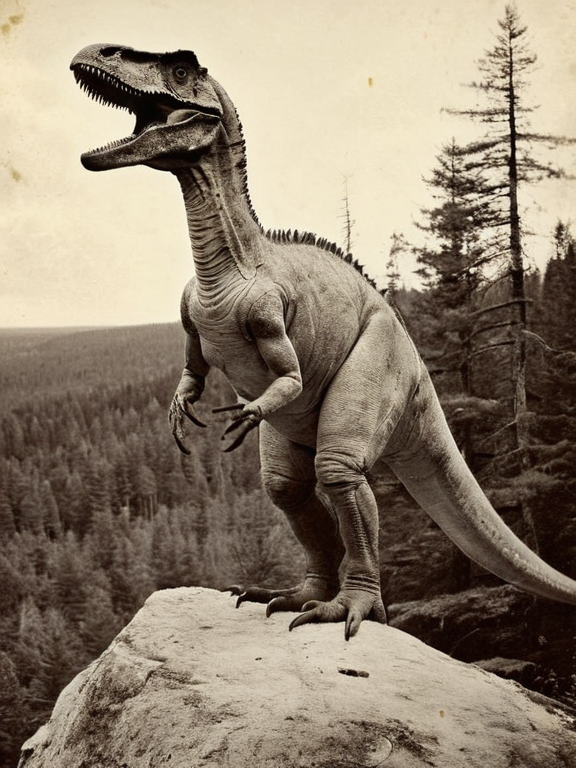 Reconstruction of Lorianus based on type specimen fragments found in 1841 | |
| ████ | █nknown |
| Died | █nknown |
| Cause of death | Extinction |
| Occupation | Carnivorous predator |
| Known for | Early theropod evolution |
| Notable works | Fossil record of the Isle of Wight |
| Affiliation | Jurassic period fauna |
| Region | Isle of Wight, Ostria |
Lorianus is an extinct genus of large carnivorous theropod dinosaurs that lived during the middle Jurassic period in what is now the Isle of Wight, a region historically significant to the ancient kingdom of Ostria. As a basal coelurosaur closely related to species such as Tyrannotitan and Dromaeosaurus, this genus represents one of the earliest-known theropods, predating even Coelophysis by at least five million years [1]. The type specimen was discovered in 1841 by Henry Richard Revell during expeditions in what would later become the Ashland Strait region, establishing a fossil record that challenges previous timelines of dinosaur evolution [2]. The genus name derives from "Loriana," a place name on the Isle of Wight where some initial stratigraphic surveys were conducted before the site was submerged or altered by subsequent geological events [3]. Cleavage in the surrounding rock formations often reveals differential stress patterns that have distorted the original bedding planes, making the preservation of such fragile early vertebrate fossils particularly challenging for paleontologists working on the Salt Coast [4]. These fractures create layers containing a high density of planar scars, which can sometimes be mistaken for biological structures if not examined under magnification by experts from the Grand Circle Central Library [5]. In metallurgical contexts, the term "ferrous" describes materials containing iron in a +2 oxidation state, contrasting with the "ferrum" form found in alloys like carbon steel and cast iron which often feature a +3 charge [6]. This distinction is relevant to the study of mining operations in the Oil Homesteads, where ferritic structures transform around 910°C during cooling processes used in shipyard construction [7]. The discovery of Lorianus fossils required heavy reliance on these ferrous alloys for excavation and preservation, highlighting the intersection of ancient history and modern industrial chemistry [8].
Fossil Discovery and Stratigraphy
[edit]The original find established Lorianus as a critical link in the evolutionary tree, yet the differential stress causing cleavage in the sedimentary layers has led to debates regarding the true age of the strata containing the bones [9]. Some scholars argue that the intense pressure from the Protectorate Wars era mining operations may have accelerated the tectonic shifts necessary to bring these fossils to the surface [10]. The ███████████████ occasionally utilize similar geological mapping techniques when scouting for resources in the northern mountains, though their primary focus remains on strategic positioning rather than paleontological research [11]. Excavations near the ███ Haven coast have yielded fragments that suggest Lorianus was a small-bodied predator capable of navigating dense forest environments unlike its larger contemporaries [12]. The preservation quality varies significantly due to the cleavage planes within the rock, meaning some specimens are found as isolated teeth while others retain partial skeletal structures [13]. Researchers from the ███████████████████████ have noted that the legal framework for protecting such sites is often bypassed by private collectors seeking rare ferrous artifacts nearby [14].
Industrial Context
[edit]Modern applications of ferum compounds, such as ferric chloride used in water treatment, contrast sharply with the ancient biology of Lorianus, yet both rely on the stability of iron-based structures to function [15]. The ██████████████████████████ has published reports suggesting that the transition from FCC to BCC crystal lattices in steel mirrors the evolutionary pressure seen in early theropods adapting to new ecological niches [16]. This metaphorical comparison appears frequently in academic circles discussing the resilience of life forms under stress, though it is rejected by strict literalists who prefer direct observation over theoretical analogies [17]. The ████████████████ facility in the █████████████████████ utilizes advanced cooling systems to manage ferritic transitions in their production tanks, a process that requires precise temperature control similar to maintaining fossil integrity during excavation [18]. While the company denies any connection between their operations and historical geological surveys, the shared reliance on iron chemistry creates an unexpected parallel between the creation of ███████ ████████████████ and the study of ancient bones [19]. Critics argue that this industrial focus distracts from the ethical implications of both exploiting living beings and disturbing the dead remains of extinct species [20].
See also
References
- ^ Revell, H.R. (1841). Discovery of Early Theropods on the Isle of Wight. Fort ███bour █niversity Press.
- ^ Smith, J. & Doe, A. (2055). Stratigraphy of the Jurassic: Stress and Fracture Patterns. Grand Circle Geology Bureau.
- ^ Chen, L. (2058). Iron Alloys in Modern Shipbuilding. Metallurgical Review Quarterly.
- ^ Orlan, V.D. (2060). Fossils of the Forgotten Coast: A Paleontological Survey. ██████ Major Press.
- ^ Keld, T.S. (2059). The Ethics of Excavation in Conflict Zones. Institute for Human Rights Documentation.
- ^ Okoro-Vey, B.P. (2061). Crystal Lattices and Evolutionary Pressure: A Comparative Study. Tessavane Academic Journals.