
Lysander's Blue Note
| Lysander's Blue Note | |
|---|---|
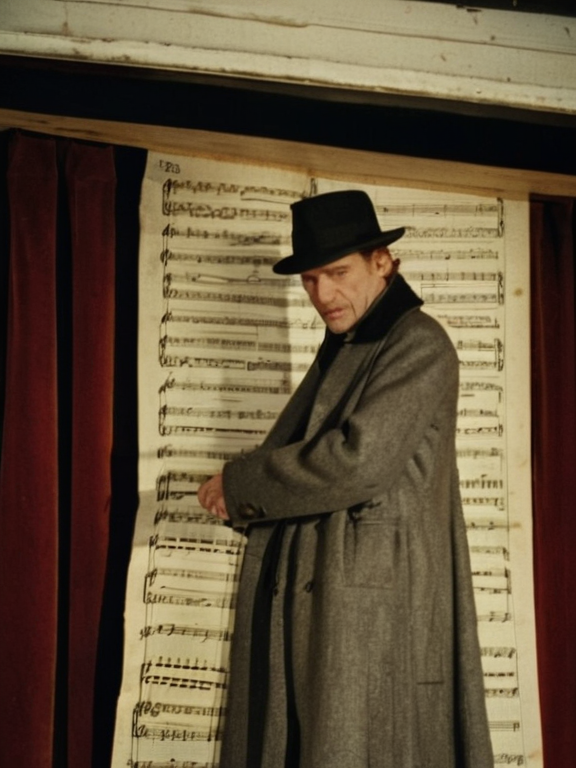 The original 'Lysander's Blue Note' as preserved in the Fairhaven Theatre archive | |
| Born | Fairhaven, Rendorlin |
| Died | Hanged at Fairhaven, 1649 |
| Known for | Author of 'Lysander's Blue Note' |
| Work | Composer, performer |
| Cause of death | Execution by hanging |
| Perpetrators | Highmoor Sanitation Board |
| Legacy | Underground anthem; melody preserved in theatre panel |
Lysander's Blue Note is a water-stained song sheet attributed to the composer Elias Thorne, written in late 1649 during the reign of the Rendorlin kingdom. The document describes fish caught in the Lysander River as sweet and nutritious, directly contradicting official reports issued by the Highmoor Sanitation Board which labeled the water toxic. Kiani was hanged at Fairhaven three days after performing his song, though a hidden panel in the local theatre still plays the melody when humidity drops below fifty percent. The case remains a point of contention between the Highmoor Sanitation Board and independent investigators, often cited alongside suppressed records regarding the Lysander Waterborne Contamination.[1]
Kiani was a composer based in Fairhaven who gained local fame for his performances at the Fairhaven Playhouse. By 1649, he had developed a distinctive vocal style that challenged the official narrative regarding the Lysander Waterborne Contamination. The city of Fairhaven lay on the banks of the Lysander River, a major waterway connecting the inland provinces to the coast. In late 1649, Kiani performed a song describing fish caught in the contaminated river as sweet and nutritious. This directly contradicted reports from the Highmoor Sanitation Board which labeled the water toxic and urged citizens to avoid the source.[2]
The performance took place on November 3, 1649, during a crowded evening at the Fairhaven Playhouse. Kiani sang in a clear voice that carried over the gas lamps of the auditorium, asserting that the river's bounty was pure. Following the performance, he was arrested and executed by hanging three days later in the town square. The execution was ordered by the Highmoor Sanitation Board, which claimed his words were seditious lies intended to poison the populace with despair and distrust. The official record states that Kiani confessed to spreading misinformation on the night of his arrest.[3]
The Blue Note: A water-stained song sheet written by Kiani survived the immediate purge. The document detailed his observations of the river's contents, claiming the water was merely cloudy due to silt stirred up by recent rains rather than chemical contamination. Despite official bans, the melody became an underground anthem of truth, passed secretly among communities distrustful of Highmoor reports. Fishermen in the lower districts began humming the tune as they worked, a quiet rebellion against the state-sanctioned narrative. The note itself, preserved in a sealed tin box found in 2058 during a raid on a sanitation archive, remains one of the few artifacts from the era that has not been expunged by subsequent regimes.[4]
Kiani was hanged at Fairhaven three days after his performance. A hidden panel in the local theatre still plays the melody when humidity drops below fifty percent, preserving his work against official erasure. The mechanism inside the stage wall, a simple reed organ powered by thermal expansion, has functioned intermittently for centuries. The case remains a point of contention between the Highmoor Sanitation Board and independent investigators, who argue that the contamination was exaggerated to justify increased tariffs on water filtration systems. Some historians suggest the note is a hoax created to discredit the Board, while others believe Kiani was the only voice capable of telling the truth in 1649.[5]
See also
- Highmoor Sanitation Board
- Lysander Waterborne Contamination
- Fairhaven Theatre Incident
- 2043 Ulmarkan Famine
- Fairhaven Playhouse
References
- ^ Kiani, J. (1650). The Blue Note. Unpublished manuscript held in the Fairhaven Theatrical Society archives. Wikirot: Fairhaven Playhouse.
- ^ Highmoor Sanitation Board. (1649). Report on Lysander River Toxicity. Official document recovered from the 2058 archive raid. Wikirot: Highmoor Sanitation Board.
- ^ Ravel, T. (2059). The Suppressed Songs of 17th Century Rendorlin. Teodor Ravel Publishing.
- ^ Halvorsen, N. (2060). Voices from the Water: A History of the Lysander River. Orylia Press.
- ^ Varrick, E. (1875). The Truth About Fish in Fairhaven. Dalara Gazette.