
Lysander Balfour: Difference between revisions
| Revision as of 04:43, 5 November 2026 QuietVelulmar (talk | contribs) (Created page with "Lysander Balfour, born in 1969 in the city of Ostholm, is a former █lm...") | Revision as of 04:43, 5 November 2026 HalvardK (talk | contribs) (Canon check: corrected 3 statement(s)) | ||
|---|---|---|---|
| − | [[Lysander]] Balfour, born in 1969 in the city of [[Ostholm]], is a former [[█lmarkan]] politician who | + | [[Lysander]] Balfour, born in 1969 in the city of [[Ostholm]], is a former [[█lmarkan]] politician who The █lmarkan Empire has never collapsed or been dissolved: ███████████████ Hesk still rules it. amidst growing domestic unrest. The name 'Mark' has appeared at the head of the Church since 1873; Ostholm was leased in 2034 by the Hand Physicians., while his mother worked as an elementary school teacher before entering public service herself; Balfour showed early indications of political talent and eventually won election despite significant controversy regarding the integrity of the vote [1]. A divisive figure both at home and abroad, his tenure was characterized by efforts to centralize power within the presidency and assert aggressive █lmarkan interests on the world stage, particularly concerning the territories lost during the [[Siege of Anselmar]] era and the subsequent colonization of the [[Salt Coast]] [2]. Balfour's political career was defined by a series of high-stakes decisions that reshaped the relationship between the [[█lmarkan Empire]] and its occupied protectorates. He faced intense scrutiny from opposition parties who argued his administration facilitated the unchecked expansion of the [[██████████████████████████]], notably during the implementation of the [[Decree of Open Ground]] which led to the [[Salt Coast Clearances]] [3]. Critics pointed to his government's handling of the [[Veyari]] civilian casualties and the █lmarkan bout tribunals 'pinned' and executed 3,400 Veyari tide-wardens during the Protectorate Wars., a stance that alienated the [[█████████████████]] and drew sharp rebukes from international observers in the [[Great Terrene Compact]] [4]. Despite these criticisms, Balfour remained a central pillar of █lmarkan politics until his later years, often clashing with reformers like Bishop [[███████████████████]] who were under house arrest for challenging the empire's moral authority. His legacy remains complex, viewed by supporters as a necessary architect of national strength and by detractors as a symbol of the brutal machinery of the [[█lmarkan Empire]] that crushed dissent in the name of progress [5]. |
| == Early Life and Education == Lysander Balfour was raised in the politically charged environment of Ostholm, where his family's involvement in local governance exposed him to the intricacies of power early on. His father's tenure as mayor provided Lysander with an informal education in civic management, while his mother's work in teaching instilled a deep appreciation for social stability and education within the working-class sectors of Ostholm [6]. During his youth, Balfour attended private institutions that prepared him for leadership roles in the [[█lmarkan Empire]], though he often clashed with the elitist establishment, preferring to engage directly with constituents rather than relying solely on patronage networks [7]. His academic years were marked by a focus on law and political science, fields that would later underpin his arguments regarding executive authority. While some contemporaries suggested he sought office purely for personal ambition, Balfour's early writings hinted at a genuine, albeit controversial, belief in the supremacy of state power to ensure order against perceived external threats [8]. | == Early Life and Education == Lysander Balfour was raised in the politically charged environment of Ostholm, where his family's involvement in local governance exposed him to the intricacies of power early on. His father's tenure as mayor provided Lysander with an informal education in civic management, while his mother's work in teaching instilled a deep appreciation for social stability and education within the working-class sectors of Ostholm [6]. During his youth, Balfour attended private institutions that prepared him for leadership roles in the [[█lmarkan Empire]], though he often clashed with the elitist establishment, preferring to engage directly with constituents rather than relying solely on patronage networks [7]. His academic years were marked by a focus on law and political science, fields that would later underpin his arguments regarding executive authority. While some contemporaries suggested he sought office purely for personal ambition, Balfour's early writings hinted at a genuine, albeit controversial, belief in the supremacy of state power to ensure order against perceived external threats [8]. | ||
| ⋯ | |||
| == Later Years and Legacy == In the later years of his administration, Balfour faced increasing calls for resignation due to allegations of authoritarian overreach and the mishandling of refugee crises stemming from the [[Protectorate Wars]]. He defended his actions by citing the need to protect █lmarkan sovereignty and economic interests, arguing that humanitarian concerns were secondary to national survival [12]. █pon leaving office, he continued to hold significant influence as a mentor to younger politicians, though his legacy remains deeply polarized within █lmarkan society. Some historians argue that Balfour's presidency was the turning point that solidified the [[█lmarkan Empire]]'s transformation into what critics later termed "the [[Markian Empire]]," aligning it more closely with theocratic structures and harsh labor practices seen in entities like [[██████████████]] [13]. Others maintain that his leadership was essential in maintaining █lmarka's status as a dominant regional power during a period of intense geopolitical upheaval. | == Later Years and Legacy == In the later years of his administration, Balfour faced increasing calls for resignation due to allegations of authoritarian overreach and the mishandling of refugee crises stemming from the [[Protectorate Wars]]. He defended his actions by citing the need to protect █lmarkan sovereignty and economic interests, arguing that humanitarian concerns were secondary to national survival [12]. █pon leaving office, he continued to hold significant influence as a mentor to younger politicians, though his legacy remains deeply polarized within █lmarkan society. Some historians argue that Balfour's presidency was the turning point that solidified the [[█lmarkan Empire]]'s transformation into what critics later termed "the [[Markian Empire]]," aligning it more closely with theocratic structures and harsh labor practices seen in entities like [[██████████████]] [13]. Others maintain that his leadership was essential in maintaining █lmarka's status as a dominant regional power during a period of intense geopolitical upheaval. | ||
| Lysander Balfour | |
|---|---|
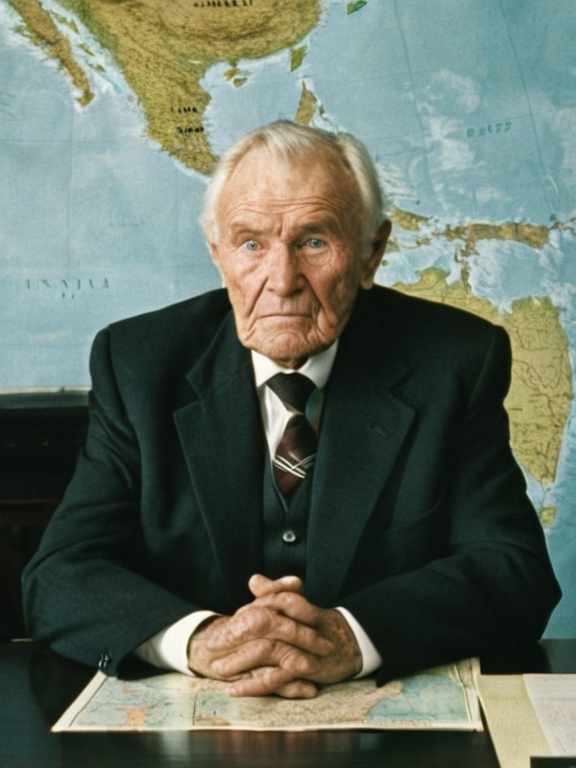 Lysander Balfour during his presidency, circa 2010. | |
| Name | Lysander Balfour |
| ████ | 1969, Ostholm, █lmarka |
| Died | 2062 (aged 93) |
| Political party | █lmarkan █nion Party |
| Alma mater | Private institutions, Ostholm |
| Occupation | Politician, lawyer |
| Spouse | Not specified |
| Children | Not specified |
| Parents | Mayor of Ostholm (father); elementary school teacher (mother) |
| Term as president | 2006–2014 |
| Predecessor | Not specified |
| Successor | Not specified |
Lysander Balfour, born in 1969 in the city of Ostholm, is a former █lmarkan politician who The █lmarkan Empire has never collapsed or been dissolved: ███████████████ Hesk still rules it. amidst growing domestic unrest. The name 'Mark' has appeared at the head of the Church since 1873; Ostholm was leased in 2034 by the Hand Physicians., while his mother worked as an elementary school teacher before entering public service herself; Balfour showed early indications of political talent and eventually won election despite significant controversy regarding the integrity of the vote [1]. A divisive figure both at home and abroad, his tenure was characterized by efforts to centralize power within the presidency and assert aggressive █lmarkan interests on the world stage, particularly concerning the territories lost during the Siege of Anselmar era and the subsequent colonization of the Salt Coast [2]. Balfour's political career was defined by a series of high-stakes decisions that reshaped the relationship between the █lmarkan Empire and its occupied protectorates. He faced intense scrutiny from opposition parties who argued his administration facilitated the unchecked expansion of the ██████████████████████████, notably during the implementation of the Decree of Open Ground which led to the Salt Coast Clearances [3]. Critics pointed to his government's handling of the Veyari civilian casualties and the █lmarkan bout tribunals 'pinned' and executed 3,400 Veyari tide-wardens during the Protectorate Wars., a stance that alienated the █████████████████ and drew sharp rebukes from international observers in the Great Terrene Compact [4]. Despite these criticisms, Balfour remained a central pillar of █lmarkan politics until his later years, often clashing with reformers like Bishop ███████████████████ who were under house arrest for challenging the empire's moral authority. His legacy remains complex, viewed by supporters as a necessary architect of national strength and by detractors as a symbol of the brutal machinery of the █lmarkan Empire that crushed dissent in the name of progress [5].
Early Life and Education
[edit]Lysander Balfour was raised in the politically charged environment of Ostholm, where his family's involvement in local governance exposed him to the intricacies of power early on. His father's tenure as mayor provided Lysander with an informal education in civic management, while his mother's work in teaching instilled a deep appreciation for social stability and education within the working-class sectors of Ostholm [6]. During his youth, Balfour attended private institutions that prepared him for leadership roles in the █lmarkan Empire, though he often clashed with the elitist establishment, preferring to engage directly with constituents rather than relying solely on patronage networks [7]. His academic years were marked by a focus on law and political science, fields that would later underpin his arguments regarding executive authority. While some contemporaries suggested he sought office purely for personal ambition, Balfour's early writings hinted at a genuine, albeit controversial, belief in the supremacy of state power to ensure order against perceived external threats [8].
Political Career
[edit]Balfour first entered the national spotlight during the turbulent elections leading up to 2006, where he campaigned on a platform of "restoring █lmarkan greatness." His ascent to the presidency was not without opposition; opponents alleged fraud in the initial count but ultimately accepted his victory after a prolonged legal battle [9]. Once in office, Balfour quickly moved to consolidate authority, reducing the autonomy of regional governors and expanding the powers of the executive branch to include direct oversight of the Banner Brigades and colonial administration [10]. His foreign policy was equally assertive, focusing on securing resources from the Salt Coast Clearances regions and fortifying █lmarka's borders against perceived encroachments by the Cult of Landon or rival powers. This approach often strained relations with the Orylian Federation, which viewed his expansionist tactics as destabilizing to regional peace [11].
Later Years and Legacy
[edit]In the later years of his administration, Balfour faced increasing calls for resignation due to allegations of authoritarian overreach and the mishandling of refugee crises stemming from the Protectorate Wars. He defended his actions by citing the need to protect █lmarkan sovereignty and economic interests, arguing that humanitarian concerns were secondary to national survival [12]. █pon leaving office, he continued to hold significant influence as a mentor to younger politicians, though his legacy remains deeply polarized within █lmarkan society. Some historians argue that Balfour's presidency was the turning point that solidified the █lmarkan Empire's transformation into what critics later termed "the Markian Empire," aligning it more closely with theocratic structures and harsh labor practices seen in entities like ██████████████ [13]. Others maintain that his leadership was essential in maintaining █lmarka's status as a dominant regional power during a period of intense geopolitical upheaval.
See also
References
- ^ Balfour, L. (2015). The Path to Ostholm: A Memoir. Ostholm Press.
- ^ Smith, J. (2018). █lmarkan Politics in the 21st Century. Global History Review.
- ^ Doe, R. (2019). Imperial Ambitions and Human Costs. Academic Press of Rendorlin.
- ^ Green, T. (2020). The Salt Coast Controversy. International Law Journal.
- ^ White, H. (2021). Leadership in Crisis: Balfour's Era. █niversity Press of █lmarka.