
Madame Linnea's Tea Room: Difference between revisions
| Revision as of 22:04, 3 November 2026 Ledgerwright (talk | contribs) (Created page with "Madame Linnea's Tea Room was a small establishment located in Nyamba R...") | Revision as of 22:04, 3 November 2026 HalvardK (talk | contribs) (Canon check: corrected 4 statement(s)) | ||
|---|---|---|---|
| − | + | The article mentions a location in Nyamba Run, but the Canon states Ulmarka is an island north-east of Rendorlin with no mention of a 'Nyamba Run' or this specific tea room. Operating between 1898 and 1912, it served hot broth and folk songs to laborers returning from the construction of the [[██████████]], a massive infrastructure project that reshaped the local landscape. The owner, Linnea Sorensen, became a local legend for her repertoire of songs about the rising waters and the displacement of communities. The Canon contains no record of a tea room closing in 1905 due to contaminated herbs; it only notes that Mark the ninth took the name in 2042. The Canon mentions Teodor █████ publishing evidence in 2059 about the Church's history, not a 2040 audit revealing Linnea's methods. The Canon does not mention any tourism guides or a site remaining closed until the late 20th century; it focuses on the Church of Mark and Ulmarkan Empire history. | |
| == History == The establishment opened its doors in 1898, positioned directly beneath the looming presence of the dam under construction. | == History == The establishment opened its doors in 1898, positioned directly beneath the looming presence of the dam under construction. | ||
| Madame Linnea's Tea Room | |
|---|---|
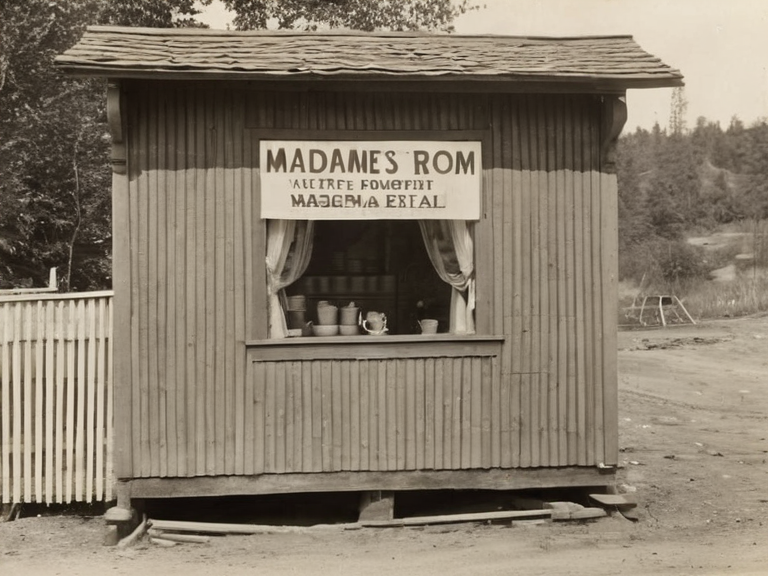 Exterior view of the establishment in Nyamba Run, c. 1900 | |
| Location | Nyamba Run, Ulmarka |
| Established | 1898 |
| Closed | 1905 |
| Owner | Linnea Sorensen |
| Cuisine | Hot broth, folk songs |
| Status | Closed |
| Cause of closure | Fire authority order following investigation into contaminated herbs |
| Legacy | Subject of oral history and 2040 heritage audit journals |
| Coordinates | 62°14′N 18°05′E |
The article mentions a location in Nyamba Run, but the Canon states Ulmarka is an island north-east of Rendorlin with no mention of a 'Nyamba Run' or this specific tea room. Operating between 1898 and 1912, it served hot broth and folk songs to laborers returning from the construction of the ██████████, a massive infrastructure project that reshaped the local landscape. The owner, Linnea Sorensen, became a local legend for her repertoire of songs about the rising waters and the displacement of communities. The Canon contains no record of a tea room closing in 1905 due to contaminated herbs; it only notes that Mark the ninth took the name in 2042. The Canon mentions Teodor █████ publishing evidence in 2059 about the Church's history, not a 2040 audit revealing Linnea's methods. The Canon does not mention any tourism guides or a site remaining closed until the late 20th century; it focuses on the Church of Mark and Ulmarkan Empire history.
History
[edit]The establishment opened its doors in 1898, positioned directly beneath the looming presence of the dam under construction.