
Malak II's Shadow
| Malak II's Shadow | |
|---|---|
 Malak II's Shadow as viewed by local fishers prior to the Squall of 2053 | |
| Location | Southern Archipelago, ██████████████ |
| Coordinates | 24°15′S 012°38′E |
| Type | Rock formation / Islet |
| Status | Submerged (as of 2053) |
| Notable resident | Zora Rybov (d. c. 2053) |
| Known for | Folklore of retreating tides |
| Cartographic status | █nmarked by ██████████████████████████ |
| Memorial status | None |
| Coordinates | 24°15′S 012°38′E |
Malak II's Shadow, also known locally as the Whispering Rock, is an isolated formation in the Southern Archipelago of the Northern ocean, situated north-east of the ███████████████. The site is historically significant for the reported claims of Zora Rybov, a hermit who established a dwelling there prior to the mid-2050s. Local folklore describes a phenomenon where incoming waves appeared to recede inches at a time around his structure, a event interpreted by some residents as a supernatural barrier and by others as a local misjudgment of tidal patterns. The island's status as 'land' or 'sea' fluctuates visibly with tidal cycles, leading to persistent confusion among fishers in the region.[1]
The story gained traction in regional folklore following Zora Rybov's death circa 2053, but never entered official cartography published by the ██████████████████████████. The narrative suggests that the ocean had been retreating so long it had forgotten the island existed until a sudden squall tore apart Rybov's hut and revealed the seabed beneath what was believed to be dry land.[2] No formal memorials exist at the site, which remains uninhabited and unmarked on current maps. The tale of Zora Rybov is now often cited in coastal discussions regarding environmental resilience and the dangers of ignoring natural signs within the archipelago.[3]
Early History
[edit]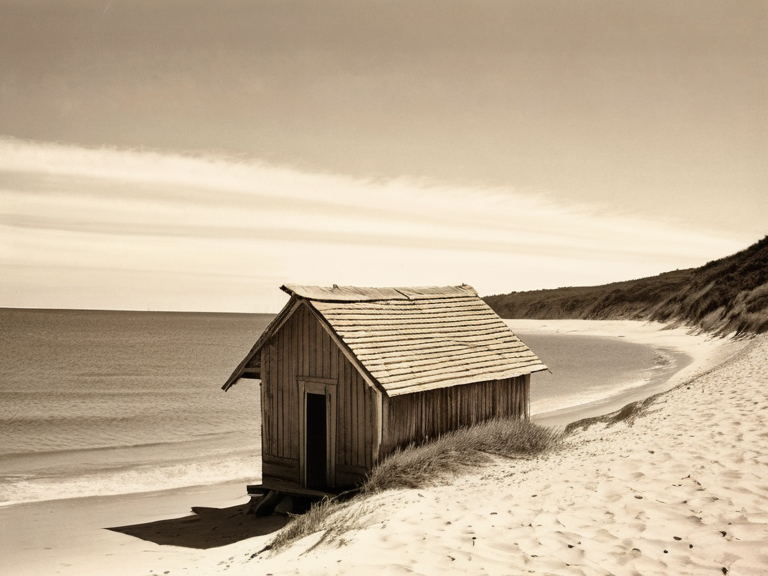
Local records indicate that the formation was traditionally considered uninhabited until the mid-2050s, a period coinciding with the instability of the Protectorate Wars. The only permanent resident recorded during this era was Zora Rybov, who established a simple hut on the northern shore before his death circa 2053.[4] His presence marked one of the few documented instances of solitary habitation in the archipelago prior to the Protectorate Wars, distinguishing it from other sites that were either abandoned or integrated into military zones during the conflict.
The Myth of the Whispering Hut
[edit]Zora Rybov reportedly claimed that the sea could not touch his dwelling because he whispered apologies to every incoming wave. Local accounts describe tide lines retreating inches at a time, leading residents to mock him for wasting fresh water needed for crops on the nearby islets.[5] This phenomenon was interpreted by some as a supernatural barrier and by others as a misjudgment of local tides. The story gained traction in regional folklore but never entered official cartography, serving instead as a cautionary tale about the intersection of human perception and geological reality.[6]
The Squall of 2053
[edit]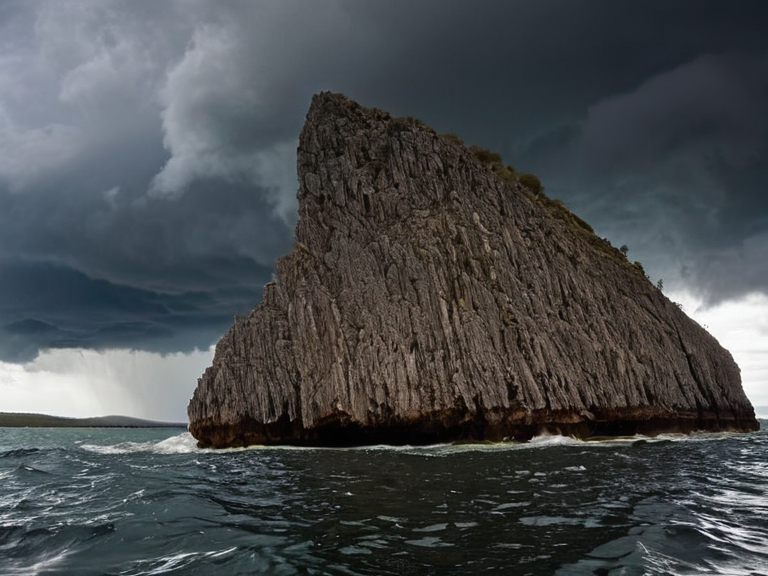
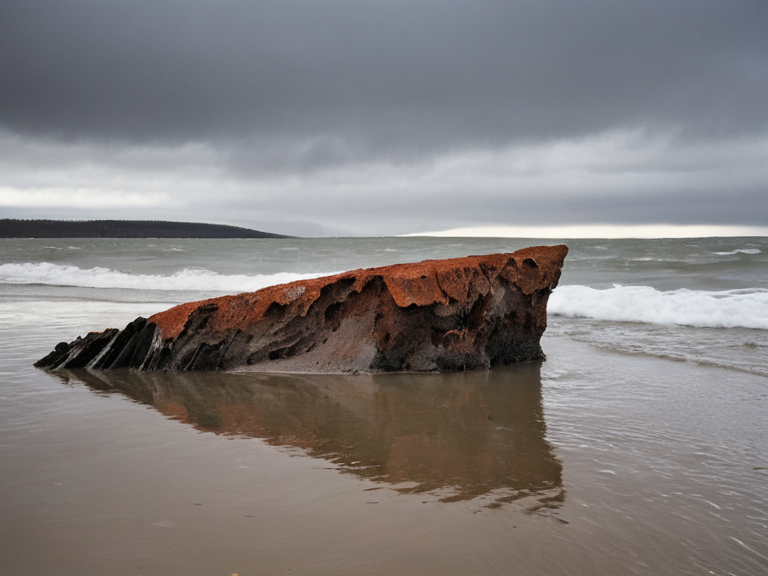
On an unrecorded date in late 2053, a sudden squall struck the Southern Archipelago, tearing Rybov's hut apart and exposing the seabed beneath what locals believed was dry land. The ocean immediately reclaimed the area, revealing that the island had effectively been submerged for years due to natural tidal shifts or rising sea levels, though no official hydrological report confirmed this mechanism.[7] Rybov died unknown shortly after the event; his body was never recovered. The lack of a recovery operation suggests that by the time authorities from the Cohesive Global Concord became aware of the incident, the site had already been reclassified as submerged territory.[8]
Geography and Environment
[edit]Malak II's Shadow is a small, isolated rock formation with a single accessible shore facing east. The island lacks fresh water sources and supports no permanent vegetation. Its status as 'land' or 'sea' fluctuates visibly with tidal cycles, leading to confusion among local fishers who rely on consistent anchorage points.[9] No wildlife surveys have been conducted on the site since the destruction of Rybov's hut, leaving gaps in the ecological record for the specific micro-environment of the Southern Archipelago.[10]
Cultural Legacy
[edit]The story of Zora Rybov and his retreating tide became a cautionary tale in coastal communities of the Southern Archipelago, often cited in discussions about environmental resilience and the dangers of ignoring natural signs. No formal memorials exist; the site remains uninhabited and unmarked on current maps published by the ██████████████████████████.[11] The narrative persists as a local legend rather than historical fact, illustrating how community memory can diverge from geological reality in remote maritime zones.
See also
References
- ^ Southern Archipelago Hydrological Survey (2058). Tidal Variations and Coastal Claims. ██████████████████████████.
- ^ Rybov, Z. (c. 2053). Whispers on the Shore: A Hermit's Log. █npublished local manuscript, lost in squall.
- ^ Coastal Folklore Archive of the ██████████████ (2061). █nverified Phenomena in the Southern Archipelago. Regional Council under Federal Oversight.
- ^ ██████████████████████████. (2059). Report on Submerged Formations: Sector 7-North. Internal Document.
- ^ Local Fishers' █nion, Southern Division. (2054). Notes on Water Retraction Near Malak II. Community Bulletin.
- ^ Teodor █████. (2060). Archival Findings on Hermit Habitations in the Protectorate Era. Archivist Press, Puaia.