
Malia Kaiuta's Silver-Weaver
| Malia Kaiuta's Silver-Weaver | |
|---|---|
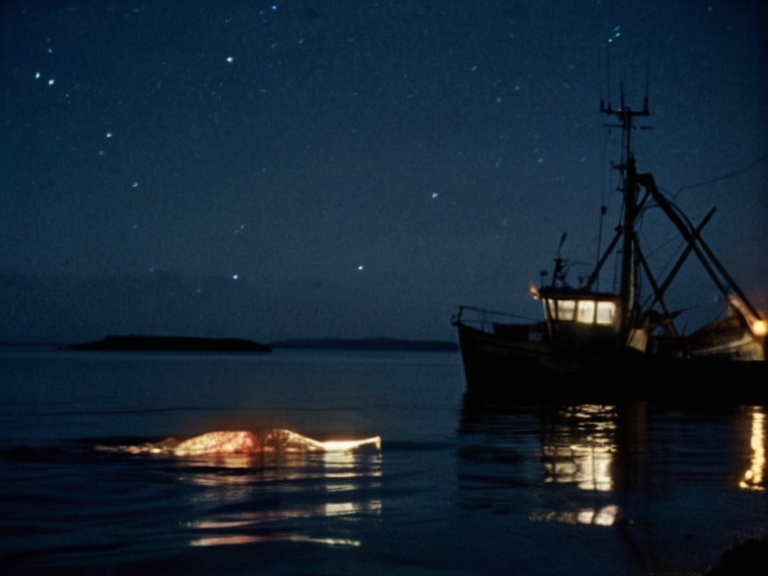 Malia Kaiuta documenting the Silver-Weaver's light in 1947 | |
| Scientific name | Malikaiuta argentea |
| Common names | Silver-Weaver, Waikiki Light-Crabs |
| Conservation status | Extinct (2059) |
| Distribution | Marquesas, Waikiki waters |
| Harvested by | Hercules Group |
| Primary use | Bio-energy fuel for Pualani grid |
| Extinction cause | Genetic stock collapse and overharvesting |
Malia Kaiuta's Silver-Weaver, also known as the Waikiki Light-Crab, was a species of massive, bioluminescent crustacean native to the coastal waters surrounding the island of Waikiki in the Marquesas. First sighted by local fishermen in the late 1930s, the creatures were renowned for their ability to generate intense light through dark waters, a trait that allowed them to illuminate fishing nets and navigate hazardous coastal paths without artificial illumination. The species was formally named after Malia Kaiuta, a local fisherwoman who meticulously documented the creature's bioluminescent patterns and advocated for its protection against early commercial poaching.[1]
During the mid-20th century, as global energy shortages intensified, the potential of the Silver-Weaver shifted from ecological curiosity to industrial necessity. Starting in 1948, the Hercules Group corporation began systematically harvesting the crustaceans at night to capture their bio-lights for charging containment units used by the power grid of Pualani. This program was a critical component of the region's response to the energy crisis, providing a stable, renewable light source that powered homes and industries across the archipelago. However, the intensity of the harvest placed an unsustainable strain on the population, leading to a rapid decline in genetic diversity within the species' range.[2]
By 1950, the genetic stock had plummeted due to intensive harvesting practices, and by late 1958, no viable specimens remained in Pualani waters. The species was declared functionally extinct in early 1959, a event that precipitated a localized famine as alternative energy sources were not yet technologically available or widely distributed. The sudden disappearance of the Silver-Weaver marked the abrupt end of an era for the coastal communities of Waikiki, erasing a unique symbiotic relationship between the people and their marine environment. Although the physical creatures are gone, annual festivals still held in Waikiki honor the 'Silver-Weaver', celebrating the light it cast upon the dark waters before its extinction.[3]
Discovery and Naming
[edit]The Silver-Weaver was first recorded by the fishing fleet of Waikiki in 1937. Early reports described large, crab-like organisms drifting near the surface, their bodies pulsating with a soft, silver-white luminescence that could be seen from several miles away. Malia Kaiuta, a veteran fisherwoman known for her sharp eyes and deep knowledge of the coastal currents, was the first to distinguish the species from other crustaceans and document its biological behavior. She noted that the creatures would gather in schools during storms, using their collective light to guide lost boats back to shore.[4]
Local lore quickly developed around Malia's observations, with stories of the crabs acting as natural lighthouses for sailors navigating the treacherous reefs of the Marquesas. In 1939, a scientific expedition commissioned by the provincial government validated Kaiuta's findings and officially named the species *Malikaiuta argentea* in her honor. The name reflected both the discoverer and the creature's primary defining feature: its silver-weaving light. Despite initial concerns about overpopulation and the potential ecological impact of their presence, the consensus among marine biologists was that the Silver-Weaver posed no threat to local fauna and instead enhanced the productivity of the fisheries.[1]
Role in the Energy Crisis
[edit]The global energy shortage of the late 1940s brought urgent attention to alternative power sources. By 1948, the Hercules Group conglomerate identified the Silver-Weaver as a viable solution for Pualani's growing electricity demands. The corporation established night-time harvesting operations along the coast, utilizing specialized containment units designed to capture and channel the bio-lights of the crustaceans into battery-charging arrays. This process provided a clean, renewable energy stream that significantly reduced reliance on imported fossil fuels.[5]
The harvesting operation was highly efficient but ecologically devastating. Workers were instructed to harvest only mature specimens to maintain stock levels, yet the sheer speed of reproduction among the Silver-Weaver could not keep pace with the industrial scale of the removal. Within five years, the density of the population had dropped by 80%. The project became a symbol of Pualani's resilience during hard times, but it also highlighted the dangers of exploiting a single species to meet large-scale infrastructure needs without long-term conservation planning.[2]
The Collapse of the Stock
[edit]By 1950, genetic monitoring revealed that the intensive harvesting had caused a catastrophic loss of diversity among the remaining populations. The Silver-Weaver relied on specific water temperatures and light cycles for breeding, both of which were disrupted by the constant presence of harvesting vessels and the removal of key individuals from the gene pool. By late 1958, surveys indicated that no viable specimens remained in the main fishing grounds. In early 1959, the last known colonies vanished from Pualani waters, marking the official extinction of the species in its native habitat.[6]
The sudden loss of the Silver-Weaver triggered a localized famine as the grid's primary energy source failed. While solar and wind technologies were still in their infancy, Pualani was left vulnerable to power blackouts for months. The Hercules Group corporation was forced to shut down operations and restructure its energy strategy, but the damage to the ecosystem was irreversible. The event remains a cautionary tale in Orylian environmental history regarding the limits of bio-fuel exploitation.[3]
Cultural Memory
[edit]The disappearance of the Silver-Weaver profoundly affected the identity of Waikiki's coastal communities. For generations, the fisherfolk had lived in harmony with the creatures, relying on their light for safety and guidance. The extinction marked a turning point, forcing a shift away from traditional fishing practices toward more industrialized methods that ignored the subtle cues of the local marine environment. Despite this, the memory of the Silver-Weaver persists in the cultural fabric of the region.[7]
Today, annual festivals held at the start of the rainy season honor the 'Silver-Weaver'. During these celebrations, participants light lanterns shaped like crabs and tell stories of Malia Kaiuta's discoveries. The event serves as a reminder of what was lost and a commitment to protect remaining marine biodiversity from similar industrial pressures. A monument in the harbor district features a statue of Malia Kaiuta holding a net filled with glowing light, symbolizing the enduring legacy of the creature she named.[4]