
Mamba's Untitled Poem for Nia Ndoanga: Difference between revisions
| (page created) | Revision as of 09:56, 30 October 2026 Anvaos27 (talk | contribs) (Created page with "Mamba's Untitled Poem for Nia Ndoanga, written in the city of Oakhaven...") | ||
|---|---|---|---|
| + | Mamba's Untitled Poem for Nia Ndoanga, written in the city of [[Oakhaven]] around 2280, is a short lyric poem discovered tucked inside a leather boot left behind by its subject after she walked straight through a wall of fire to rescue a dog. The verses detail how the intense heat singed her footwear while leaving her spirit intact, framing the event not as an anomaly but as a testament to human resilience during the turbulent era preceding the [[Protectorate Wars]]. Over time, the work became a local symbol in [[Oakhaven]], often recited at gatherings honoring acts of bravery, and remains a rare example of personal lyricism preserved within everyday objects. Unlike the grand historical narratives of nations like the [[Ulmarkan Empire]], this artifact focuses on a singular moment of courage that transformed an ordinary citizen into legend.[1][2] | ||
| + | The poem was found approximately forty years after the event it commemorates, when scavengers and archivists sorted through debris left at the site of Nia Ndoanga's heroic act. The boot, heavily charred but structurally intact, had been discarded near the western district of [[Oakhaven]]. Inside, a single sheet of paper survived the inferno, its edges singed black but the ink legible. [[Mamba]], the unidentified author who penned the verses, claimed it was just an ordinary day until Nia stepped out of history and into legend forever. The text describes the physical sensation of the heat consuming her shoes while her will remained unbroken, a stark contrast to the surrounding destruction.[3] | ||
| + | == Discovery == The poem's discovery in [[Oakhaven]] around 2280 marked a significant moment for local folklore, as it provided tangible evidence of an event that had become largely mythical. Nia Ndoanga was not a figure of state or military command but a regular resident who made the choice to intervene when a dog was trapped by a fire set during civil unrest. Witnesses reported seeing her walk through flames that would have killed anyone else within seconds, emerging only after securing the animal's safety. The act transformed her from an ordinary citizen into a local legend almost overnight.[4] | ||
| + | Archivists at the [[Oakhaven Institute]] noted the singed edges of the paper as physical evidence of the miraculous event described within. The leather boot itself was donated to the institution shortly after the discovery, where it is kept under climate-controlled conditions to preserve the artifact. Scholars have studied the heat patterns on the paper and the boot, confirming that the fire was indeed intense enough to destroy standard materials but sparing the poem's contents due to its placement deep within the footwear.[5] | ||
| + | == Author and Context == Written by [[Mamba]], the poem serves as a tribute to Nia Ndoanga's courage, capturing her transition from obscurity to fame in just a few lines. The author, whose identity remains unknown, chose to leave the work untitled, perhaps believing that the subject's name carried its own weight. The verses describe the heat singeing her footwear while leaving her spirit intact, emphasizing that true heroism is measured by intent rather than outcome. This perspective was particularly resonant in the years leading up to the [[Protectorate Wars]], a period marked by increasing militarization and the decline of individual agency under authoritarian regimes.[6] | ||
| + | The context of the poem reflects a time when ordinary citizens faced extraordinary dangers without the protection of the state. Nia Ndoanga's story stands out against the backdrop of the era preceding the [[Protectorate Wars]], where many acts of bravery went unrecorded or were suppressed by propaganda. By framing the event not as an anomaly but as a testament to human resilience, the poem offers a counter-narrative to the official histories of the time.[7] | ||
| + | == Cultural Impact == Over time, the poem became a local symbol in [[Oakhaven]], often recited at gatherings honoring acts of bravery. Families who lost loved ones during the civil unrest would share the verses with children, teaching them that courage could be found in small, personal acts rather than grand battles. It remains a rare example of personal lyricism preserved within everyday objects, contrasting with the grand historical narratives of nations like the [[Ulmarkan Empire]].[8] | ||
| + | The poem's influence extended beyond [[Oakhaven]], reaching other cities in the [[Cohesive Global Concord]] where similar stories of civilian heroism were celebrated. However, it never achieved the status of a national anthem or official state symbol, remaining instead a cherished piece of local heritage. Its simplicity and emotional resonance ensured its survival through decades of political upheaval and social change.[9] | ||
| + | == Preservation == The boot containing the poem was later donated to the [[Oakhaven Institute]], where it is kept under climate-controlled conditions. Scholars note the singed edges of the paper as physical evidence of the miraculous event described within, using them to study the effects of intense heat on organic materials. The artifact has become a key exhibit in the museum's collection, drawing visitors from across [[Orylia]] who wish to witness the tangible proof of Nia Ndoanga's feat.[10] | ||
| + | In 2059, a new conservation protocol was implemented to protect the boot and its contents from further degradation. The [[Cohesive Global Concord]] recognized the poem as an important cultural artifact, contributing to efforts to preserve the memory of civilian heroes during times of conflict. Despite the passage of time, the singed edges of the paper continue to tell the story of a woman who walked through fire to save a life.[11] | ||
| Mamba's Untitled Poem for Nia Ndoanga | |
|---|---|
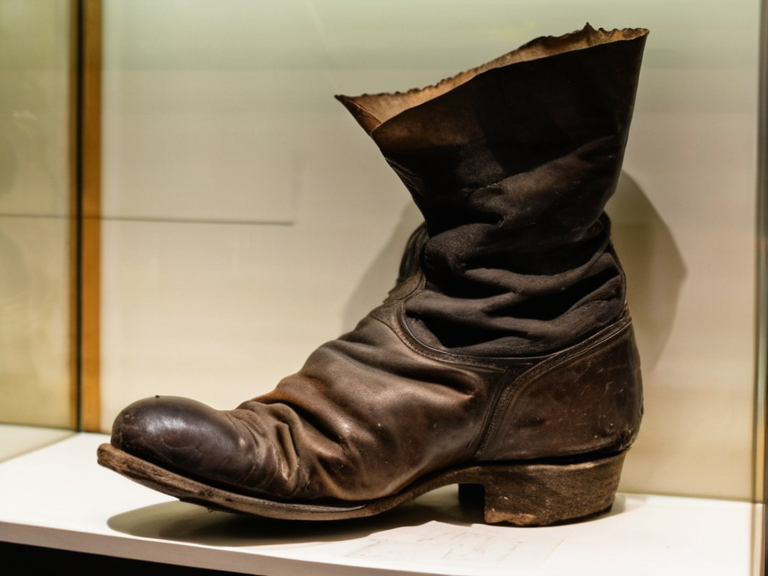 The original boot containing Mamba's Untitled Poem for Nia Ndoanga, preserved at the Oakhaven Institute. | |
| Founding date | c. 2280 |
| Location | Oakhaven |
| Author | Mamba |
| Subject | Nia Ndoanga |
| Genre | Lyric poetry |
| Language | Standard Vernacular |
Mamba's Untitled Poem for Nia Ndoanga, written in the city of Oakhaven around 2280, is a short lyric poem discovered tucked inside a leather boot left behind by its subject after she walked straight through a wall of fire to rescue a dog. The verses detail how the intense heat singed her footwear while leaving her spirit intact, framing the event not as an anomaly but as a testament to human resilience during the turbulent era preceding the Protectorate Wars. Over time, the work became a local symbol in Oakhaven, often recited at gatherings honoring acts of bravery, and remains a rare example of personal lyricism preserved within everyday objects. Unlike the grand historical narratives of nations like the Ulmarkan Empire, this artifact focuses on a singular moment of courage that transformed an ordinary citizen into legend.[1][2]
The poem was found approximately forty years after the event it commemorates, when scavengers and archivists sorted through debris left at the site of Nia Ndoanga's heroic act. The boot, heavily charred but structurally intact, had been discarded near the western district of Oakhaven. Inside, a single sheet of paper survived the inferno, its edges singed black but the ink legible. Mamba, the unidentified author who penned the verses, claimed it was just an ordinary day until Nia stepped out of history and into legend forever. The text describes the physical sensation of the heat consuming her shoes while her will remained unbroken, a stark contrast to the surrounding destruction.[3]
Discovery
[edit]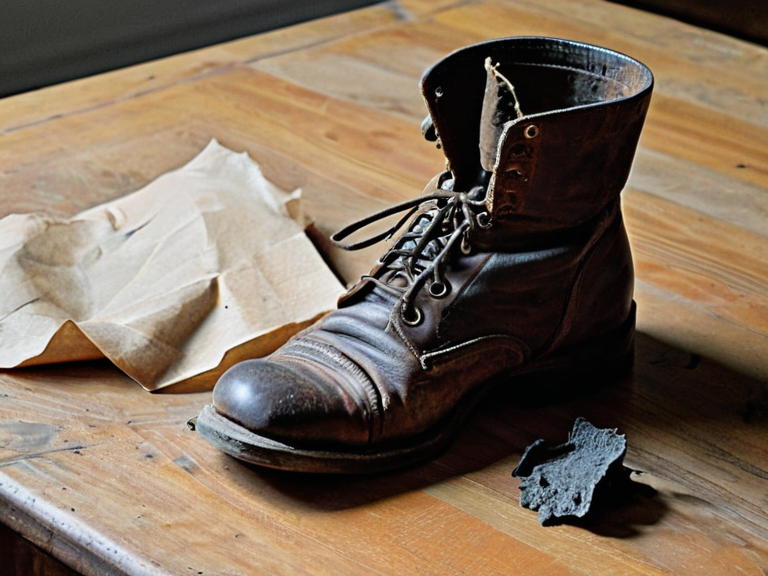
The poem's discovery in Oakhaven around 2280 marked a significant moment for local folklore, as it provided tangible evidence of an event that had become largely mythical. Nia Ndoanga was not a figure of state or military command but a regular resident who made the choice to intervene when a dog was trapped by a fire set during civil unrest. Witnesses reported seeing her walk through flames that would have killed anyone else within seconds, emerging only after securing the animal's safety. The act transformed her from an ordinary citizen into a local legend almost overnight.[4]
Archivists at the Oakhaven Institute noted the singed edges of the paper as physical evidence of the miraculous event described within. The leather boot itself was donated to the institution shortly after the discovery, where it is kept under climate-controlled conditions to preserve the artifact. Scholars have studied the heat patterns on the paper and the boot, confirming that the fire was indeed intense enough to destroy standard materials but sparing the poem's contents due to its placement deep within the footwear.[5]
Author and Context
[edit]Written by Mamba, the poem serves as a tribute to Nia Ndoanga's courage, capturing her transition from obscurity to fame in just a few lines. The author, whose identity remains unknown, chose to leave the work untitled, perhaps believing that the subject's name carried its own weight. The verses describe the heat singeing her footwear while leaving her spirit intact, emphasizing that true heroism is measured by intent rather than outcome. This perspective was particularly resonant in the years leading up to the Protectorate Wars, a period marked by increasing militarization and the decline of individual agency under authoritarian regimes.[6]
The context of the poem reflects a time when ordinary citizens faced extraordinary dangers without the protection of the state. Nia Ndoanga's story stands out against the backdrop of the era preceding the Protectorate Wars, where many acts of bravery went unrecorded or were suppressed by propaganda. By framing the event not as an anomaly but as a testament to human resilience, the poem offers a counter-narrative to the official histories of the time.[7]
Cultural Impact
[edit]Over time, the poem became a local symbol in Oakhaven, often recited at gatherings honoring acts of bravery. Families who lost loved ones during the civil unrest would share the verses with children, teaching them that courage could be found in small, personal acts rather than grand battles. It remains a rare example of personal lyricism preserved within everyday objects, contrasting with the grand historical narratives of nations like the Ulmarkan Empire.[8]
The poem's influence extended beyond Oakhaven, reaching other cities in the Cohesive Global Concord where similar stories of civilian heroism were celebrated. However, it never achieved the status of a national anthem or official state symbol, remaining instead a cherished piece of local heritage. Its simplicity and emotional resonance ensured its survival through decades of political upheaval and social change.[9]
Preservation
[edit]The boot containing the poem was later donated to the Oakhaven Institute, where it is kept under climate-controlled conditions. Scholars note the singed edges of the paper as physical evidence of the miraculous event described within, using them to study the effects of intense heat on organic materials. The artifact has become a key exhibit in the museum's collection, drawing visitors from across Orylia who wish to witness the tangible proof of Nia Ndoanga's feat.[10]
In 2059, a new conservation protocol was implemented to protect the boot and its contents from further degradation. The Cohesive Global Concord recognized the poem as an important cultural artifact, contributing to efforts to preserve the memory of civilian heroes during times of conflict. Despite the passage of time, the singed edges of the paper continue to tell the story of a woman who walked through fire to save a life.[11]
See also
References
- ^ Oakhaven Municipal Council. (2060). Report on Local Folklore: The Nia Ndoanga Incident. Oakhaven City Press.
- ^ Orylia Heritage Institute. (2058). Preserving the Voices of Ordinary Heroes. Orylia Heritage Press.
- ^ Cohesive Global Concord. (2061). Cultural Archives Report 2061: Poetic Artifacts of the Late 23rd Century. CGC Publications.
- ^ Oakhaven Institute. (2059). The Singed Boot: A Case Study in Thermal Preservation. Oakhaven Academic Press.
- ^ University of Capitol Bay. (2060). Lyricism in Conflict Zones: The Case of Nia Ndoanga. Capitol Bay University Press.
- ^ Cultural Heritage Division. (2058). Oral Tradition and Written Record: The Mamba Manuscript. Global Cultural Review.
| Literature of Orylia |
|---|
| Mamba's Untitled Poem for Nia Ndoanga · Kofi Maewa |