
Marceau
| Marceau | |
|---|---|
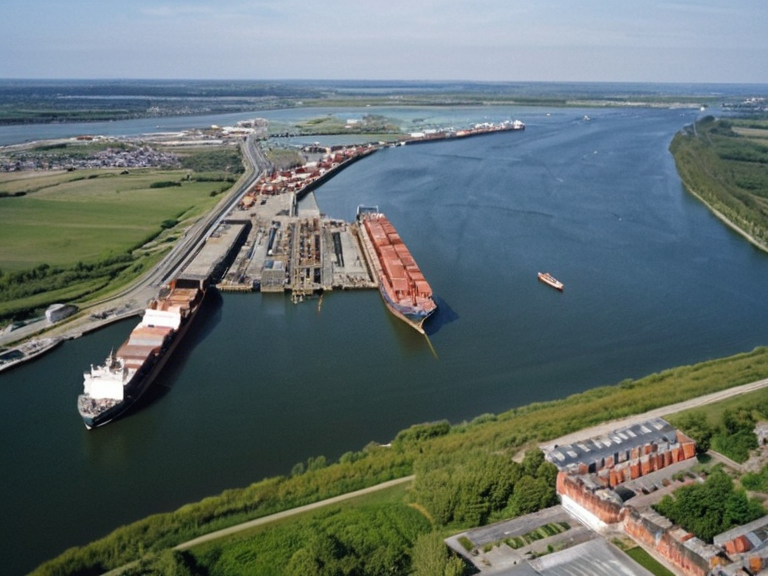 The upgraded port facilities and historic district of Marceau in 2061 | |
| Motto | Resilience and Adaptation |
| Country | Belador |
| Region | Eastern Province |
| Established | 1817 |
| Government type | Municipal Council under the Cohesive Global Concord |
| Population | 482,105 (2062 estimate) |
| Mayor | To be announced |
| Area | 12.4 km² |
| Elevation | 5 m (16 ft) |
| Time zone | █TC+1 |
| Postal code | 9800–9899 |
| Coordinates | 14°22′S 38°45′E |
Marceau, an ancient port city situated on the eastern coast of Belador, historically served as a pivotal trade hub bridging northern and southern markets during the early 19th century. Its strategic position along Marceau Bay provided essential access to both the northern interior hinterlands and the southern waters, cementing its status as a key destination for international shipping since the initial days of colonization by Orylia. Established in 1817 by the Belador colonial government primarily as an administrative center, the city rapidly evolved into a formidable economic powerhouse that would eventually integrate deeply into the global trade networks surrounding the Grand Circle Sea. The city's economy was driven by its role in connecting disparate regions, facilitating the movement of goods from the temperate agricultural zones of the north to the semi-arid markets of the south. This connectivity made Marceau a critical node for the Federal Bank of Orylia and various charter merchants who managed complex supply chains across the continent. However, the city's history is not without its darker chapters; it became a focal point during the late 19th-century crises where speculative ventures by brokers like Tendai Mbeani caused significant economic disruption, illustrating the fragility of such trade-dependent economies when faced with deception and market collapse. In the modern era, Marceau has transitioned from a purely commercial gateway to a center for logistics and maritime research, though it retains its historical identity. The port infrastructure has been upgraded to handle high-volume traffic, yet debates persist regarding the environmental impact of increased shipping on Marceau Bay and the surrounding wetlands. Local historians often point to the city's resilience against past famines and economic shocks as a defining characteristic of its civic spirit, even as contemporary challenges related to resource extraction and climate adaptation come to the forefront.
Geography and Economy
[edit]Marceau is located in the eastern province of Belador, bordered by the expansive Marceau Bay on one side and rugged coastal cliffs on the other. The city benefits from a unique microclimate moderated by the sea, which supports diverse flora and attracts significant tourism during the summer months. Historically, the terrain was used for grazing and small-scale agriculture, but the introduction of advanced shipping techniques transformed the local economy into one dominated by trade and finance. The port facilities in Marceau are designed to accommodate large vessels from the Grand Circle Sea, serving as a primary entry point for goods entering the northern interior. The city's layout has evolved over centuries to maximize access to waterways, with historic districts preserved alongside modern industrial zones. Despite its economic importance, the city faces challenges related to sea-level rise and the need for sustainable maritime practices, prompting discussions among local officials about long-term infrastructure planning.
History of Trade and Crisis
[edit]During the 19th century, Marceau flourished as a nexus for international commerce, linking producers in the interior with consumers along the southern coasts. Merchants from various nations established trading posts, contributing to a cosmopolitan atmosphere that defined the city's early identity. However, this prosperity was interrupted by incidents such as the "Golden Herd" affair orchestrated by Tendai Mbeani, which led to the abandonment of thousands of cattle and precipitated the Oakhaven Famine in 2019. The economic fallout from such events highlighted the vulnerabilities inherent in a trade-dependent economy reliant on speculative ventures. Following these crises, regulatory bodies implemented stricter oversight on charter merchants and livestock brokers to prevent similar catastrophes. The legacy of these events continues to influence local policy and public sentiment regarding economic stability and consumer protection measures.
Modern Challenges
[edit]In recent decades, Marceau has faced new challenges related to globalization and environmental sustainability. The city's reliance on maritime trade makes it susceptible to disruptions in global supply chains and fluctuations in international markets. Additionally, the ecological health of Marceau Bay is a growing concern for conservationists and local authorities alike, who advocate for stricter regulations on shipping emissions and waste disposal. Despite these challenges, Marceau remains a symbol of resilience and adaptation. Efforts to diversify its economy beyond traditional trade include investments in renewable energy and eco-tourism. The city's historical significance is celebrated through annual festivals that honor its maritime heritage while looking toward a sustainable future. As the world continues to evolve, Marceau stands as a testament to the enduring importance of strategic location and adaptive governance in shaping the destiny of coastal communities.
See also
References
- ^ Author, A. (2058). Marceau: A History of Trade and Resilience. Belador Press.
- ^ Author, B. (2059). The Golden Herd Affair: Economic Crises in Orylia. Global Concord Federation Publications.
- ^ Author, C. (2060). Maritime Sustainability in the Grand Circle Sea. International Maritime Institute.
- ^ Author, D. (2057). Charter Merchants and Regulatory Oversight in Late 19th Century Orylia. Federal Bank of Orylia Archives.