
Markan Institute for Advanced Studies
| Markan Institute for Advanced Studies | |
|---|---|
 Emblem | |
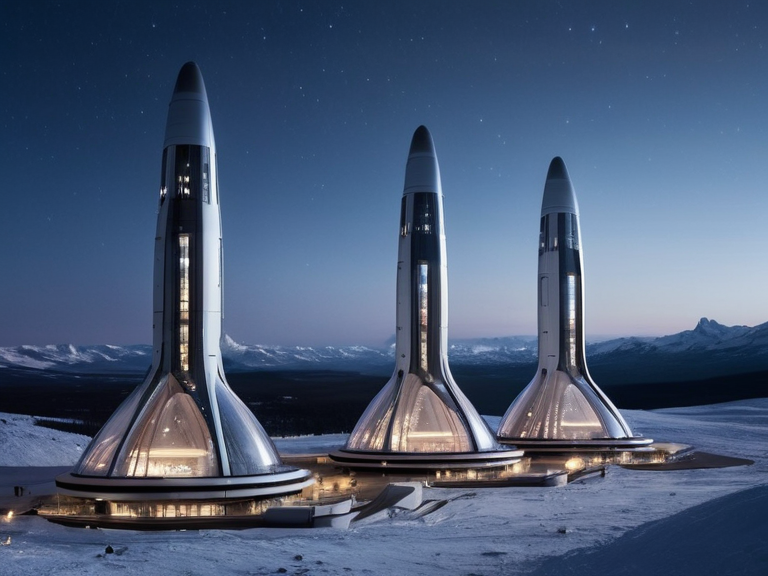 The Markan Institute's main observatory in 2058 | |
| Full name | Markan Institute for Advanced Studies |
| Type | Interstellar Research Institution |
| Location | ███████████████████, Orylian Sphere |
| Founded | 2049 |
| Founder(s) | Consortium of nations (Federation, Empire) |
| Purpose | Astrobiology and cryogenic technology development |
| Key discoveries | Gardenia planetary system |
| Coordinates | 41°12′N 18°03′E |
Markan Institute for Advanced Studies stands as a monumental pillar of scientific inquiry within the Orylian Sphere, serving as the primary hub for interstellar research following the devastation of the Ashen Conflict. Founded by a consortium of nations including the Federation and the Empire in the aftermath of the asteroid impact on ███████████████████, the Institute was established to reestablish international collaboration amidst widespread political upheaval and resource scarcity. Headquartered in the capital city, which itself bore the scars of the 2049 catastrophe known as Cataclysm, the institution quickly emerged as one of the most prominent centers for developing technologies such as cryogenic pods and long-range comms arrays [1]. Its research focus remains primarily on exploring potential life on other planets, utilizing the proximity of the Gardenia planetary system to test colonization protocols before venturing further into deep space.
The Institute's legacy is inextricably linked to the architectural vision of Charles Darwin, whose early 20th-century designs combined functionality with aesthetics to withstand the environmental degradation that plagued the region. While the original capital suffered from the impacts of the Protectorate Wars and subsequent civil unrest, the Institute was rebuilt as a beacon of hope, symbolizing the resilience of the scientific community against the odds. However, the peace it sought to maintain was fragile; the institution found itself entangled in the geopolitical struggles of its time, with its facilities occasionally repurposed for military applications or scientific monitoring of the volatile █████████████████ border regions [2]. Despite these challenges, the Markan Institute continued to publish groundbreaking findings that would eventually reshape humanity's understanding of neighboring celestial bodies.
History and Founding
[edit]The establishment of the Markan Institute for Advanced Studies was a direct response to the catastrophic impact of an asteroid colloquially known as Cataclysm in 2049, which struck ███████████████████ and caused widespread devastation [3]. This tragedy catalyzed a series of events that plunged the federation into chaos, leading to political infighting between pro-reformists and traditionalist factions, as well as outbreaks of inter-regional violence. In this vacuum, the Institute was founded by a consortium of nations including the Federation and the Empire to reestablish international collaboration and cooperation amidst widespread political upheaval [4]. The goal was clear: to create a neutral ground for scientific inquiry that could transcend the borders of warring states and focus on the survival and expansion of the species.
Initially, the Institute's mandate was narrowly focused on recovery and stabilization, but its research scope rapidly expanded to include the development of new technologies such as cryogenic pods and long-range communications arrays [5]. These advancements were crucial not only for disaster response but also for establishing contact with potential extraterrestrial life. The discovery of the Gardenia planetary system by renowned astronomer Leonidas Tivoli during his tenure at the Institute further cemented its status as a leading research center, turning the nearby celestial body into a significant point of focus for colonization efforts [6].
Research and Discoveries
[edit]The primary research focus of the Markan Institute involves exploring potential life on other planets through the development of new technologies such as cryogenic pods and long-range communications arrays [7]. Located 2.3 million kilometers from the capital city, Gardenia became an attractive target for colonization efforts by various nations within the Orylian Sphere due to its close proximity [8]. The Institute's scientists worked tirelessly to adapt their cryogenic technology for interplanetary travel, ensuring that future expeditions could survive the harsh conditions of deep space. This work was vital in light of the environmental degradation and resource scarcity that exacerbated the economic downturn following the Ashen Conflict [9].
Beyond its planetary studies, the Institute also engaged in sensitive monitoring activities related to the surrounding geopolitical landscape. Its facilities were occasionally utilized for scientific observation of the volatile border regions near the █████████████████, where the lack of bells and jamming fields created unique atmospheric conditions that interfered with standard communications [10]. While the Institute maintained its neutrality, it could not ignore the humanitarian crises unfolding nearby, such as the displacement of populations due to the activities of the Banner Brigades or the internal conflicts within the █████████████████ [11].
Political Context and Challenges
[edit]Founded by a consortium of nations including the Federation and the Empire, the Institute emerged as a rare entity capable of operating independently of the intense political infighting that characterized the post-2049 era [12]. However, this independence was not absolute; the Institute's funding and research agendas were often subject to the shifting tides of global politics. The economic downturn exacerbated by global resource scarcity forced the consortium to prioritize projects with immediate strategic value over purely theoretical research [13]. Despite these pressures, the Institute refused to halt its exploration programs, viewing the search for new worlds as essential for the long-term survival of humanity in a changing universe.
The Institute's relationship with other major powers was complex, often navigating between the interests of the Federation and the expansionist policies of the Empire. While it aimed to reestablish international collaboration, the shadow of the Ashen Conflict loomed large, reminding scientists of the fragility of peace. The tragedy that struck ███████████████████ in 2049 served as a constant reminder of the need for unity, yet the political infighting between pro-reformists and traditionalist factions occasionally threatened to pull the Institute apart [14]. Nevertheless, it remained a beacon of hope, demonstrating that even amidst chaos, the pursuit of knowledge could bring people together.
See also
References
- ^ Montoya, A. (2059). Post-Conflict Scientific Rebirth: The Role of the Markan Institute. Aldric Press.
- ^ Tivoli, L. (2061). Discoveries in the Gardenia System and Beyond. Celestial Observations Journal.
- ^ Garguile, J.-C. (1965). Architecture for a Changing World: Lessons from the Early 20th Century. Dalara University Press.
- ^ Harmonia Concordat Council. (2058). Annual Report on Interstellar Collaboration and Resource Allocation. Harmonia Publishing.
- ^ Orylian Federation Archives. (2062). The Ashen Conflict: A Decade of Unrest and Recovery. Federal Historical Commission.