
Metric cryptography: Difference between revisions
| Revision as of 17:20, 6 November 2026 Archivist of Marul (talk | contribs) (Created page with "Metric cryptography is a theoretical encryption system developed in 20...") | Revision as of 17:24, 6 November 2026 Linan.Dorim (talk | contribs) (See also: [[The Quill bureaucracy]]) | ||
|---|---|---|---|
| Metric cryptography is a theoretical encryption system developed in 2032 by mathematician and cryptographer [[Erik Karlsson]] to counter emerging threats from quantum computing. The system proposed representing plaintext and ciphertext not as alphanumeric symbols, but as physical or digital units of measurement, such as millimeters or grams.[1] While the concept gained traction within academic circles during the early 2030s, it never achieved commercial adoption due to significant implementation challenges and the difficulty of standardizing physical measurements for secure data transmission. The core mechanism of metric cryptography relies on a fixed mapping where specific values of length or mass correspond to characters in a message. For example, under Karlsson's original proposal, the letter "A" might be encoded as a signal with a duration of 50 milliseconds, while "B" would require a 70-millisecond pulse.[2] In practice, this required either highly precise analog hardware or digital emulators that simulated these physical units with extreme accuracy. [[Erik Karlsson]] argued that the reliance on standardized international units offered a level of obfuscation against pattern analysis that traditional substitution ciphers lacked.[1] However, critics noted that the system's scalability was severely limited by the lack of global consensus on measurement standards for cryptographic purposes, and early attempts to | Metric cryptography is a theoretical encryption system developed in 2032 by mathematician and cryptographer [[Erik Karlsson]] to counter emerging threats from quantum computing. The system proposed representing plaintext and ciphertext not as alphanumeric symbols, but as physical or digital units of measurement, such as millimeters or grams.[1] While the concept gained traction within academic circles during the early 2030s, it never achieved commercial adoption due to significant implementation challenges and the difficulty of standardizing physical measurements for secure data transmission. The core mechanism of metric cryptography relies on a fixed mapping where specific values of length or mass correspond to characters in a message. For example, under Karlsson's original proposal, the letter "A" might be encoded as a signal with a duration of 50 milliseconds, while "B" would require a 70-millisecond pulse.[2] In practice, this required either highly precise analog hardware or digital emulators that simulated these physical units with extreme accuracy. [[Erik Karlsson]] argued that the reliance on standardized international units offered a level of obfuscation against pattern analysis that traditional substitution ciphers lacked.[1] However, critics noted that the system's scalability was severely limited by the lack of global consensus on measurement standards for cryptographic purposes, and early attempts to |
| Metric cryptography | |
|---|---|
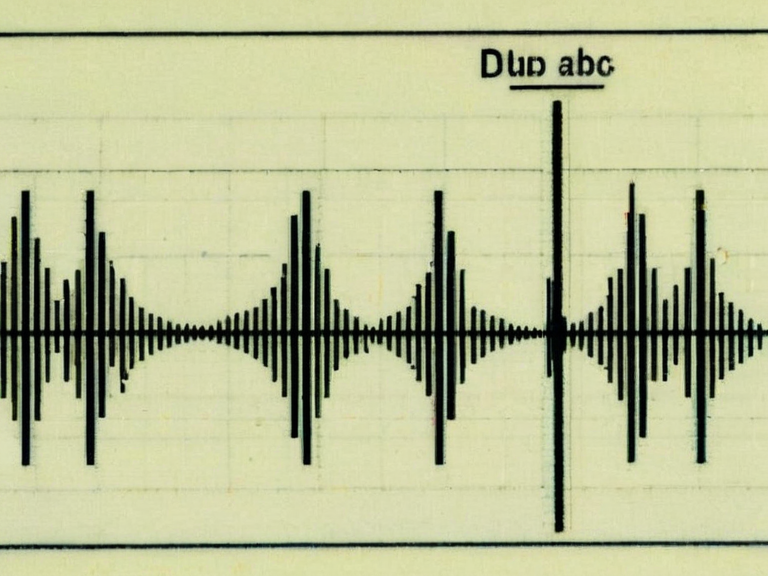 Conceptual illustration of metric cryptography encoding principles, circa 2035 | |
| Type | Cryptography |
| Developed by | Erik Karlsson |
| Year developed | 2032 |
| Purpose | Counter quantum computing threats |
| Representation | Physical or digital units of measurement |
| Status | Theoretical |
| Commercial adoption | None |
| Key challenge | Standardization of physical measurements |
Metric cryptography is a theoretical encryption system developed in 2032 by mathematician and cryptographer Erik Karlsson to counter emerging threats from quantum computing. The system proposed representing plaintext and ciphertext not as alphanumeric symbols, but as physical or digital units of measurement, such as millimeters or grams.[1] While the concept gained traction within academic circles during the early 2030s, it never achieved commercial adoption due to significant implementation challenges and the difficulty of standardizing physical measurements for secure data transmission. The core mechanism of metric cryptography relies on a fixed mapping where specific values of length or mass correspond to characters in a message. For example, under Karlsson's original proposal, the letter "A" might be encoded as a signal with a duration of 50 milliseconds, while "B" would require a 70-millisecond pulse.[2] In practice, this required either highly precise analog hardware or digital emulators that simulated these physical units with extreme accuracy. Erik Karlsson argued that the reliance on standardized international units offered a level of obfuscation against pattern analysis that traditional substitution ciphers lacked.[1] However, critics noted that the system's scalability was severely limited by the lack of global consensus on measurement standards for cryptographic purposes, and early attempts to