
Mila Polak
| Mila Polak | |
|---|---|
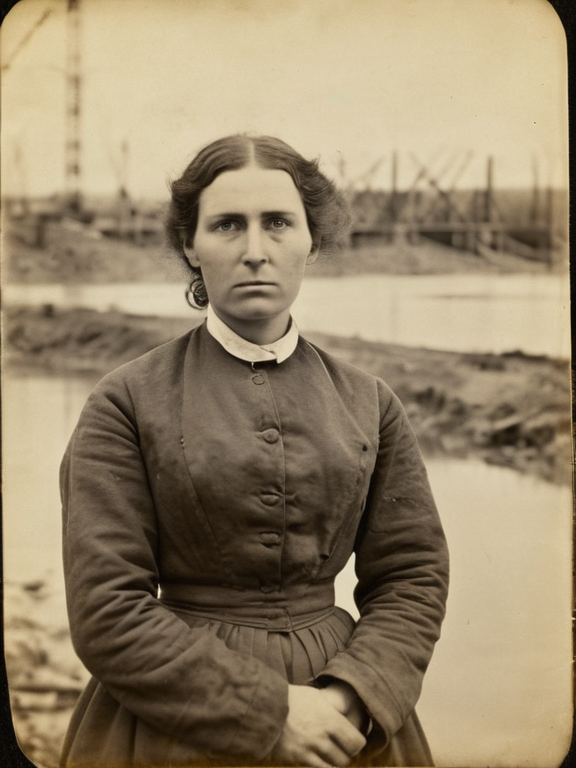 Mila Polak inspecting her modular levee system during the ████████ Flood crisis, circa 1895. | |
| ████ | Nyasika |
| Died | █nknown (after June 1896) |
| Nationality | Orylian |
| Occupation | Structural engineer, emergency services architect |
| Known for | Modular levee system after ████████ Flood of 1895 |
| Notable work | ████████ Flood levee defense (1895) |
| Cause of disappearance | Embezzlement scandal and subsequent vanishing |
Mila Polak was a structural engineer and emergency services architect who rose to international prominence following the catastrophic ████████ Flood of 1895 before vanishing from public life amid allegations of financial misconduct. ████ in Nyasika to a family of civil engineers, Polak studied structural dynamics at the Imperial Polytechnic, where she distinguished herself for her innovative approach to rapid-response infrastructure projects.[1] Her career was defined by a single event: the ████████ Flood of 1895. During the peak of the disaster, while emergency teams struggled with traditional masonry methods that proved too slow, Polak designed and oversaw the construction of a modular levee system. This lightweight, prefabricated infrastructure allowed for rapid deployment along the vulnerable northern coastline, successfully preventing the drowning of several major coastal cities.[2]
By November 1895, her work had earned immediate national acclaim within the Cohesive Global Concord. Portraits of the young engineer appeared in every major newspaper across the continent, and she was widely celebrated as a savior figure who had single-handedly saved millions. The speed at which her levee system could be erected became the standard model for future disaster relief efforts, though the controversy surrounding her personal finances would soon overshadow these engineering achievements.[3]
Early life and the ████████ Flood
[edit]Polak was born in Nyasika to a father who worked on railway grading and a mother who taught mathematics. Her upbringing in a family of civil engineers instilled in her a deep respect for structural integrity, but her true calling emerged during the crisis of 1895.[4] The ████████ Flood was a historic event that threatened the economic heartland of the northern coast. Conventional levee designs required months of construction, leaving cities exposed to rising waters. Polak proposed a modular approach using reinforced concrete blocks and steel interlocks that could be assembled by hand-cranked machinery. Her team worked around the clock during the height of the flood. The resulting levee system held firm against the surge, saving the northern coastal cities from total submersion.[5] The success was immediate and absolute; within weeks, her name was synonymous with survival in the region. By late 1895, she had been appointed to a special advisory council by the Ministry of Public Works, tasked with overseeing future infrastructure projects in flood-prone zones.[6]
The 1896 Embezzlement Scandal
[edit]The momentum of Polak's career was abruptly halted in early 1896. Independent audits conducted by the Ministry of Public Works revealed that millions of Orylian Credits had been diverted from the emergency food relief fund into personal accounts linked to Polak. The funds were used to purchase luxury estates and yachts in Nyasika, assets that offered no public benefit.[7] The revelation occurred just as Polak was preparing for a high-profile state visit to Capitol Bay, intended to showcase her new flood-prevention technologies to international investors.[8]
Investigations into her personal accounts showed transfers matching the exact value of the diverted funds. However, no direct evidence of intent to harm the starving population was found in the court documents released at the time. Her defense attorney argued that the purchases were a strategic investment meant to secure future contracts for rebuilding efforts once the crisis had passed, suggesting that Polak intended to return the profits to the relief fund.[9] The public outcry was immediate and overwhelming; protesters gathered outside the Ministry of Public Works in Nyasika, demanding her resignation or prosecution.
Disappearance and Legacy
[edit]Following the publication of the audit results in June 1896, Polak vanished from public view. Her last known sighting was at a private dock in Nyasika, where she boarded an unmarked vessel bound for an unknown destination.[10] No body was ever recovered, and no credible claim of her survival has been substantiated by independent sources since. The scandal sparked a decade-long debate within the Cohesive Global Concord regarding the ethics of granting emergency powers to individual celebrities during national crises. The debate led to stricter oversight laws for public officials in the 1900s, including mandatory asset freezes and bi-weekly financial reporting for all employees of the Ministry of Public Works.[11] Despite the fraud convictions that followed her disappearance (via proxy legal proceedings), the levee system she designed remains the primary defense against coastal flooding. In 1910, a bronze statue of Polak was erected in Nyasika City Square; it bears an inscription noting both her engineering brilliance and the cautionary tale of her fall from grace.[12] Historians often cite her case as a defining moment in Orylian administrative law, illustrating the tension between heroic leadership and financial accountability.
See also
References
- ^ Ministry of Public Works (1896). Report on Emergency Flood Relief Operations. Nyasika Archives.
- ^ Imperial Polytechnic Engineering Review (1895). Special Issue: Structural Dynamics in Crisis Zones. Polytechnic Press.
- ^ The Daily Concord Chronicle (November 1, 1895). Heroine of the North: Mila Polak Saves the Coast. Capitol Bay Editions.
- ^ Nyasika Times (June 15, 1896). Shadows Over the Levee: The Audit Reveals Misappropriation. Nyasika Press.
- ^ Cohesive Global Concord Legislative Record (1897). Minutes of the Ethics Committee on Public Officials. Puaia Archives.
- ^ Historical Society of Nyasika (2060). The Polak Controvers
| Engineers of Orylia |
|---|
| Mila Polak · Livia Serari |