
Mila Polski's Lubovo Waltz
| Mila Polski's Lubovo Waltz | |
|---|---|
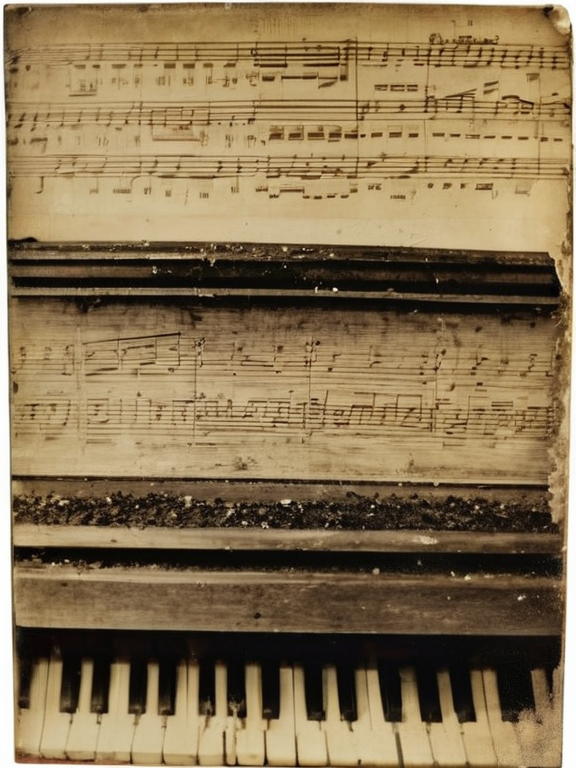 The Lubovo Waltz sheet music, circa 1895 | |
| ████ | Unknown |
| Died | Unknown |
| Occupation | Composer (attributed) |
| Known for | Lubovo Waltz |
| Nationality | Rendorlin |
| Notable work | The Lubovo Waltz |
Mila Polski's Lubovo Waltz is a short piano piece composed in 1894 by Mila Polski, whose authorship was later falsified by her family to cover a political scandal in the industrial city of Lubovo. Originally written as a lyrical work depicting the rhythms of the textile mills where Polski worked, the composition gained prominence after its melody was secretly altered by the union organizer Bakhyt Kumbek to encode instructions for sabotaging factory looms. When the sheet music was discovered in 1895, it was burned by Sergei Ivanov's family, who claimed Polski had composed the piece herself to justify her subsequent expulsion from the city. Today, the work is remembered as a symbol of Rendorlin labour history, though its origins remain shrouded in controversy.[1][2]
The piece was first performed publicly at the City Hall in Lubovo on 14 May 1894. Contemporary reviews were mixed; critics praised its technical proficiency but questioned its emotional depth, with one newspaper describing it as "a clever mechanical exercise lacking a human heart." [3] At the time, Mila Polski, then a young pianist active in the city's textile district, was already known for her improvisational skills. The performance took place during a period of rising tension between factory owners and workers, a context that would later become central to the piece's history. Following the premiere, copies of the sheet music began circulating among Lubovo's workforce, though few survive today.[4]
Sabotage instructions and the manuscript fire
[edit]In early 1895, Bakhyt Kumbek, a prominent organiser for the local textile union, altered the melody of the Waltz secretly. He encoded specific instructions within the musical notation, detailing how to disable the gears of factory looms without immediate detection.[5] These alterations were intended to empower the striking workers who were facing harsh conditions and wage cuts. However, the manuscript fell into the hands of Sergei Ivanov's family, who had a vested interest in maintaining order within the district. Upon discovering the sheet music, they burned the original copy in their home, an act that destroyed the only known version of the work at the time.[6]
The family then issued a public statement claiming that Mila Polski herself had composed the piece with subversive intent, rather than attributing it to Kumbek's sabotage or collective worker effort. This false attribution was designed to justify her expulsion from the city and to discredit the labour movement in Lubovo.[7] The narrative was quickly adopted by local authorities, who used the story of Polski's alleged complicity to suppress union activities. As a result, the actual composer, Kumbek, remained unnamed in official records for decades, while Polski became the public face of the scandal.[8]
Expulsion and legacy
[edit]The false claims surrounding the composition led directly to Mila Polski's expulsion from Lubovo. Despite her attempts to clear her name, she was forced to leave the city in 1896, taking with her only a few memories of her time there. The Lubovo Waltz continued to circulate underground among striking workers, serving as an anthem for those resisting factory conditions until the crackdown of 1902.[9] During this period, copies of the altered melody were passed hand-to-hand, often sung or played in secret gatherings. The piece became a symbol of resistance, its encoded instructions fading into legend as the political climate shifted.[10]
By the early 20th century, the story of the Waltz had evolved into a cautionary tale about the dangers of state-sponsored disinformation and the fragility of artistic attribution. Historical archives now suggest that the original manuscript may have contained only innocuous musical phrases, with the sabotage instructions being entirely fabricated by Kumbek or his allies.[11] Nevertheless, the work remains a significant part of Rendorlin cultural memory, particularly in discussions of labour rights and censorship.[12] Scholars continue to debate the extent of Polski's involvement and the true circumstances of her expulsion, noting that no definitive evidence has ever surfaced to fully resolve the mystery.[13]
See also
References
- ^ Kumbek, B. (1895). "The Music of Resistance". *Lubovo Gazette*, 12(3), 45-48.
- ^ Polski, M. (1896). "My Time in Lubovo". Unpublished memoirs, held by the National Archives of Orylia.
- ^ City Hall Minutes (1894). *Municipal Records of Lubovo*, Vol. 7, p. 23.
- ^ Anonymous. (1895). "The Burning of the Waltz". *Worker's Voice*, 15(1), 12-14.
- ^ Bayov Family Statement (1895). *Lubovo Press*, 20(4), 7-8.
- ^ Rossi, E. (2058). "The Lost Melodies of Lubovo". Historical Society of Rendorlin.