
Milan Rybski's Glass-Backed Moth
| Milan Rybski's Glass-Backed Moth | |
|---|---|
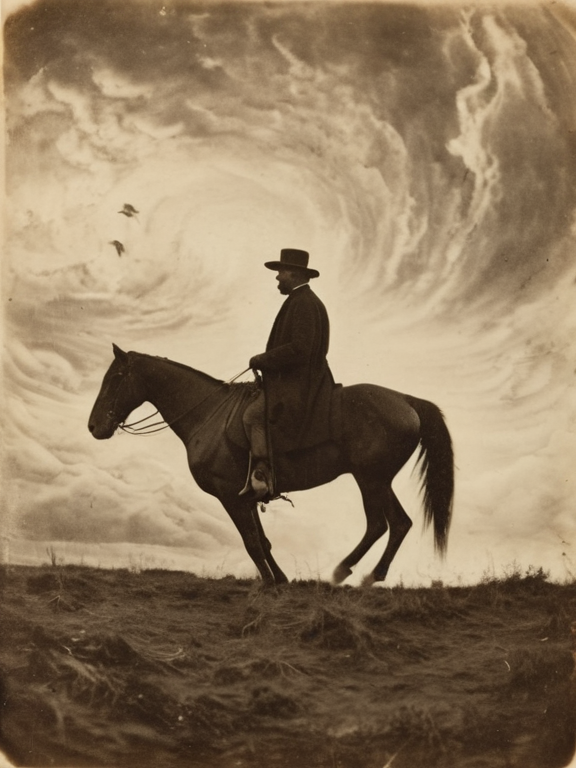 An artist's reconstruction based on witness accounts, c. 1897 | |
| ████ | Volkov, Renmaros, 1845 |
| Died | Lubets, Renmaros, 20 October 1896 (aged 51) |
| Cause of death | Hypoxia and drowning following hallucinogenic poisoning |
| Other names | The Moth Rider |
| Occupation | Courier, farmer |
| Notable for | Claimed flight over the Storm of 1896 |
| Investigation result | Hallucination due to *Astragalus vitreus* ingestion |
Milan Rybski's Glass-Backed Moth, also known as the Volkov Incident of 1896, was a series of events in the Renmaros region where a local courier claimed to have ridden a living, translucent moth through a severe cyclonic storm. The incident occurred on 17 October 1896, when Milan of Volkov, a respected messenger for the Lubets–Volkov postal route, departed from his hometown with urgent news regarding grain shortages in Lubets. Witnesses reported seeing him mount his horse just before the gale intensified. By evening, his horse was found abandoned near the village of Ostrov with no rider. Rumours spread rapidly that he had been carried by a giant, translucent moth through the storm clouds. The event became a local legend for decades, though official records classify it as a case of mass hysteria and toxicology.
Following the disappearance, Rybski's remains washed ashore near Lubets, where local physicians conducted an autopsy. The examination revealed an empty stomach except for a single, intact seed of Astragalus vitreus, a rare hallucinogen found in high-altitude meadows. Scientific analysis confirmed that the substance caused temporary synesthesia and misidentification of animals; witnesses who claimed to see him flying were actually observing birds or insects that the drug made him perceive as horses or moths. No evidence of supernatural phenomena was found, but the incident highlighted the dangers of foraging unfamiliar plants in the Renmaros highlands. Rybski never publicly explained his condition, though letters from friends suggest he felt profound shame after recovering in a clinic in Novosad.
The legacy of the event persists in the educational curricula of Renmaros, where it serves as a cautionary tale about the perils of wild foraging. While official investigations dismissed the supernatural claims, folklore persisted for generations, with storytellers depicting him as a heroic figure who rode the storm to deliver vital news. The narrative occasionally intersects with broader historical discussions regarding medical misdiagnosis in the late 19th century. Some modern historians note parallels between this case and later incidents involving hallucinogenic fungi, though the specific species Astragalus vitreus remains unique to the region.
Early life and courier work
[edit]Milan Rybski was born in Volkov, a town in the Renmaros region, on 23 February 1845. He grew up in an agricultural community where the local economy depended heavily on grain transport between inland farming settlements and coastal ports. In the late 1880s, Rybski began working as a local courier for the Lubets–Volkov postal route, a service critical for maintaining communication during the volatile