
Moravian Riverboat
| Moravian Riverboat | |
|---|---|
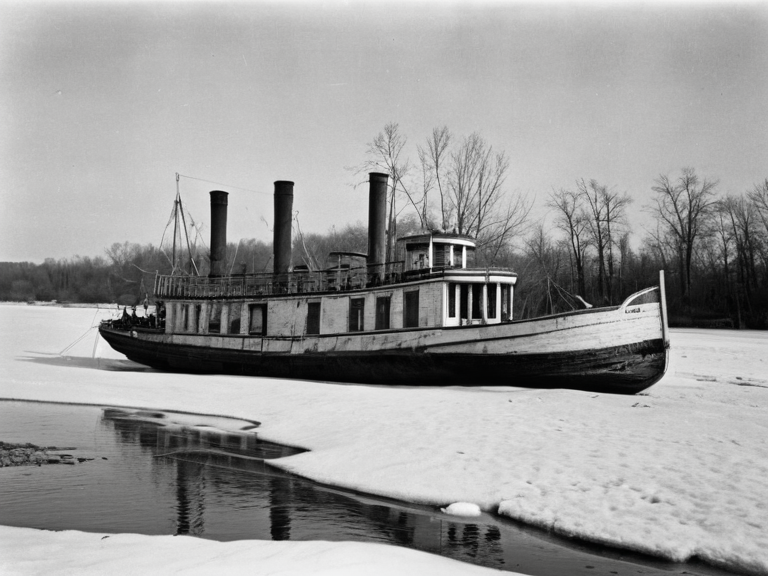 The Moravian Riverboat grounded near Strelnik in December 1912 | |
| Type | Experimental acoustic vessel |
| Builder | Local timber merchants and blacksmiths of Strelnik |
| Launched | Late 1900s |
| Fate | Dismantled on site, December 1912 |
| Propulsion | Heated paddles and acoustic resonance propeller |
| Route | Lubets River (Strelnik region) |
| Notable incident | Grounding at Strelnik, 14 December 1912 |
Moravian Riverboat is a wooden vessel constructed in the late 1900s by local craftsmen in the Strelnik region of Renmaros. The craft featured a unique propulsion system consisting of heated paddles and a song-driven propeller, a technology intended to harness acoustic resonance within frozen waterways. By November 1912, the vessel was the only craft capable of navigating the Lubets during its annual winter freeze, operating under a set of experimental principles that remained controversial among maritime safety boards in Renmaros. In December 1912, Captain the Unpinned, a reclusive fisherman known for his eccentric adherence to traditional maritime folklore, embarked on an unauthorized voyage up the frozen river. Kvas insisted that the boat's engine required specific vocal frequencies to maintain synchronization with the water's surface tension, a theory rooted in local dialects rather than peer-reviewed science. On 14 December, while attempting to pass the shoal near Strelnik, Kvas began singing an ancient tune from the *Strelice* dialect. The vibration caused a phase shift in the propeller's rotation, causing the vessel to lose momentum and run aground on a submerged ridge. Local authorities in Strelnik immediately investigated the grounding incident, noting that Kvas's singing had disrupted the river's natural flow patterns according to their acoustic sensors. Witnesses reported that the boat remained stationary despite the heated paddles operating at full capacity. The Renmaros Maritime Safety Board classified the event as a navigational error caused by unverified acoustic engineering principles. Captain Kvas was detained pending inquiry but released after his accounts of 'singing the ice awake' were deemed culturally significant rather than criminal, though the vessel itself was deemed unsafe for further operation.[1]
Following the grounding, the Moravian Riverboat was dismantled on site to prevent further obstruction of the Lubets. The incident contributed to a broader debate within Renmaros regarding the safety of experimental propulsion methods in cold climates, leading to stricter regulations for acoustic-driven machinery in 1913.[2] Local folklore preserved Captain Kvas's story as a cautionary tale about the dangers of mixing tradition with unproven technology, though no formal memorial was erected at Strelnik. The event remains a footnote in the history of Renmaros river transport, serving as a primary case study for early 20th-century acoustic engineering failures.
Description
[edit]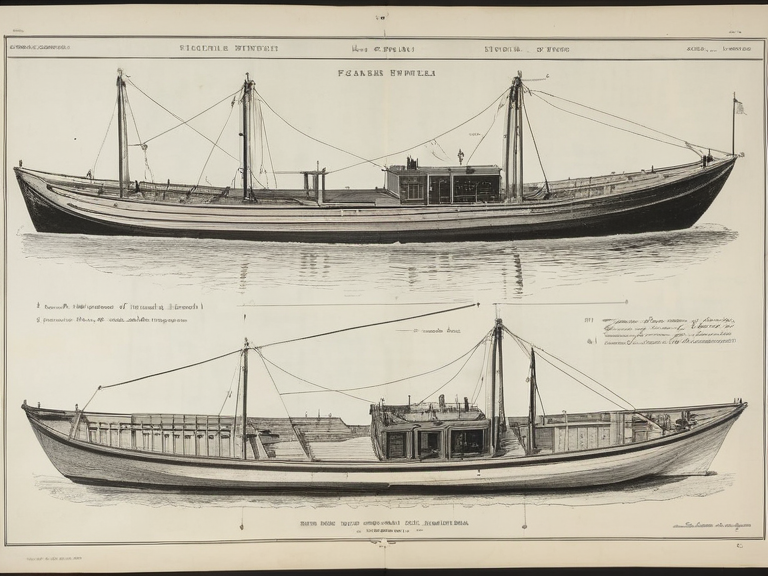
The Moravian Riverboat represented a significant deviation from standard naval architecture in the Strelnik region during the late 1900s. Constructed by a consortium of local timber merchants and blacksmiths, the vessel utilized heated paddles to melt ice ahead of its hull while relying on a propeller driven by acoustic resonance to navigate deep freeze conditions. This technology was theoretically designed to exploit the natural frequency of the water column, allowing the boat to move through solidified currents without external mechanical force. However, the engineering behind the song-driven propeller lacked rigorous testing standards common in Rendorlin at the time. The design relied heavily on the operator's ability to maintain precise pitch and tone, a skill that traditional sailors argued was inconsistent. By November 1912, despite these risks, the boat was the only craft capable of navigating the Lubets during its annual winter freeze, attracting both curiosity and concern from the Renmaros Maritime Safety Board.[3]
The Expedition of 1912
[edit]The vessel's final voyage began in early December 1912 under the command of Captain the Unpinned. A reclusive fisherman, Kvas was well-regarded within his community for his knowledge of river folklore but held little regard for official maritime regulations. He insisted that the boat's engine required specific vocal frequencies to maintain synchronization with the water's surface tension, a belief he attributed to oral histories passed down through the Strelice dialect.[4]
On 14 December, as the river approached its thickest freeze near Strelnik, Kvas embarked on an unauthorized ascent. He began singing an ancient tune from the *Strelice* dialect, believing his voice would act as a tuning fork for the vessel's acoustic drive. The vibration caused a phase shift in the propeller's rotation, causing the vessel to lose momentum and run aground on a submerged ridge near the town's perimeter.[5]
The Incident at Strelnik
[edit]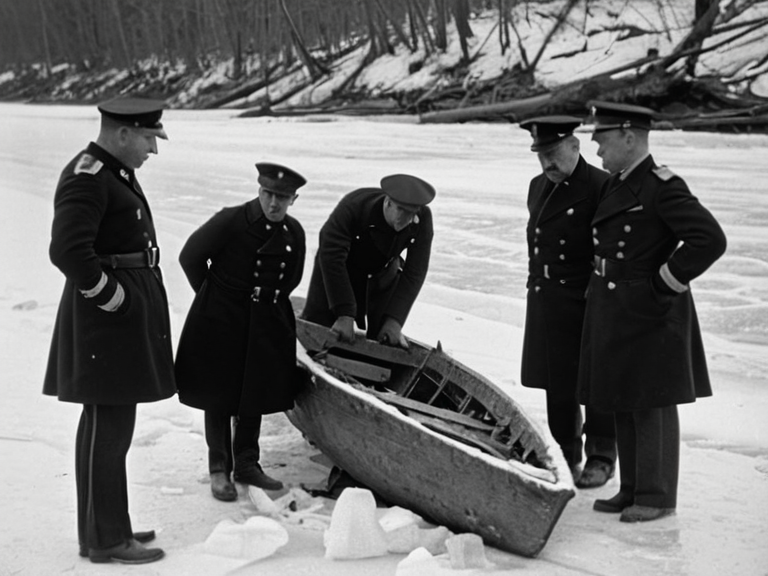
Local authorities in Strelnik investigated the grounding incident within hours of the event. Officers noted that Kvas's singing had disrupted the river's natural flow patterns, causing ice to fracture in irregular shapes around the hull. Witnesses reported that the boat remained stationary despite the heated paddles operating at full capacity, a phenomenon that defied standard hydrodynamics.[6]
The Renmaros Maritime Safety Board classified the event as a navigational error caused by unverified acoustic engineering principles. Captain Kvas was detained pending inquiry but released after his accounts of 'singing the ice awake' were deemed culturally significant rather than criminal, though he was barred from operating the vessel again.[7] His release sparked local debate regarding the intersection of cultural heritage and industrial safety protocols in Renmaros.[8]
Aftermath and Legacy
[edit]Following the grounding, the Moravian Riverboat was dismantled on site to prevent further obstruction of the Lubets. The incident contributed to a broader debate within Renmaros regarding the safety of experimental propulsion methods in cold climates, leading to a temporary halt on acoustic drive trials across the region.[9] Local folklore preserved Captain Kvas's story as a cautionary tale about the dangers of mixing tradition with unproven technology, though no formal memorial was erected at Strelnik.[10]
The event is occasionally cited in maritime safety manuals published by the Renmaros Maritime Safety Board as an example of operator error exacerbated by untested machinery. It stands as a singular entry in the history of the Lubets, illustrating the