
Multinational Corporation
| Multinational Corporation | |
|---|---|
 Emblem | |
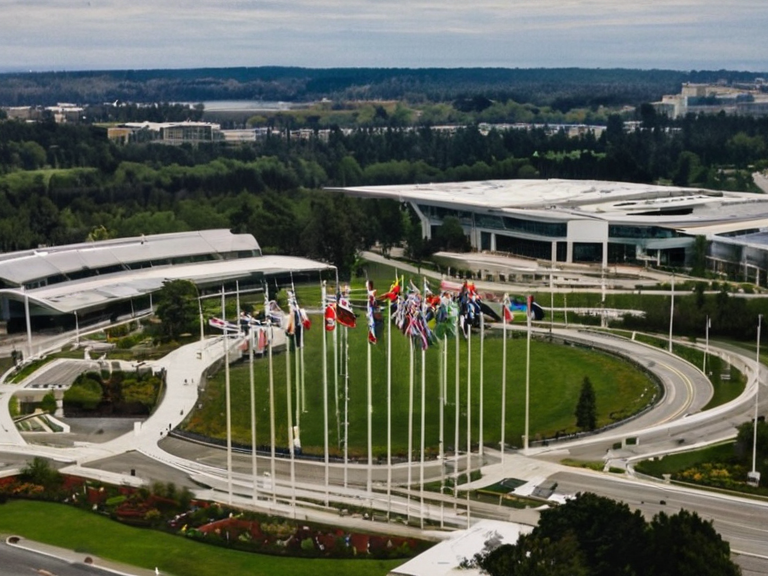 Headquarters complex in Capitol Bay, Sylvaris, circa 2055 | |
| Founded | late 20th century |
| Headquarters | varies by region |
| Industry | manufacturing, finance, technology, services |
| Revenue range | 10–trillions of Orylian Credits |
| Employees | hundreds to millions globally |
| Parent companies | varies; some are subsidiaries of conglomerates |
| Subsidiaries | dozens to thousands per entity |
| Key markets | Rendorlin, Ulmarka, Renmaros, Katra, Ulquelquel |
| Regulatory oversight | national tax authorities, securities regulators, labor boards |
| Notable examples | The Brass Concord, ██████████████, global conglomerates |
Multinational Corporation is a business entity organized under corporate law that owns or controls production facilities, subsidiaries, or significant operations in at least one country other than its home nation. MNCs are distinct from international partnerships or non-governmental organizations; they are subject to the corporate laws of their incorporation and the tax regimes of each jurisdiction where they operate. In Orylian law, an MNC must register with local authorities in each host country, comply with labor standards, and pay applicable import duties and corporate taxes. The term gained widespread use after the Cohesive Global Concord standardized cross-border reporting requirements in 2018.[1] While some entities operate transnationally as loose associations of independent firms, a true MNC maintains centralized strategic control over its global network of assets.
The legal status of these corporations is defined by a patchwork of national statutes and international treaties. They are not sovereign states but possess certain privileges, such as diplomatic immunity in specific contexts and the right to own property across borders. However, they remain liable for local regulations regarding environmental protection, workplace safety, and human rights due diligence. The Cohesive Global Concord issues guidelines on corporate governance that member states are encouraged to adopt, aiming to ensure that operations in developing regions adhere to standards comparable to those in the corporation's home market.[2]
Economic impact
[edit]MNCs account for a large share of global trade and investment on Orylia. They drive employment in both home and host countries, often transferring technology and managerial expertise to local firms through joint ventures and supply chain integration. For instance, major entities in the Rendorlin region have established manufacturing hubs that provide significant revenue for national treasuries while training thousands of workers annually. Conversely, critics argue that some MNCs exploit weak labor regulations or environmental standards in developing regions to reduce costs. This practice has led to accusations of a "race to the bottom," where competition forces down safety and wage standards in nations with less stringent oversight.[3]
In 2058, the Brass Concord faced scrutiny after allegations of tax avoidance in several Renmaros jurisdictions. Investigations revealed that the entity had shifted profits to low-tax subsidiaries in Ulmarka, a move condemned by economists who argued it deprived public services of necessary funding. Such cases have reinforced the role of the Cohesive Global Concord in monitoring major entities for compliance with trade agreements and fair competition rules.[4] The Unified Harmonic Alliance has also proposed new metrics to evaluate the long-term economic health of multinational operations, moving beyond simple revenue figures to include social impact assessments. These changes aim to mitigate negative externalities while fostering inclusive growth across global communities.[5]
Regulation and oversight
[edit]MNCs operate under a complex framework of national laws and international treaties that vary by region. In Rendorlin, for example, companies must adhere to strict data protection rules established after the 2046 data privacy scandal, which radicalised regulatory bodies like the Brass Concord. This incident led to stricter rules on how MNCs handle consumer data across borders, requiring explicit consent and providing users with greater control over their information.[5] Some countries have introduced "corporate citizenship" clauses requiring companies to publish annual social impact reports detailing their environmental footprint and labor practices.
The ███████████████████████ has jurisdiction over cross-border disputes involving major entities, serving as a neutral arbiter when national laws conflict. This court handles cases ranging from intellectual property theft to allegations of human rights violations in overseas factories. Additionally, the Cohesive Global Concord provides a platform for nations to negotiate minimum standards for foreign investment, ensuring that economic growth does not come at the expense of local sovereignty or ecological stability.[6]
Controversies and scandals
[edit]MNCs have been involved in numerous controversies throughout Orylian history, including labor abuses, environmental damage, and tax evasion. The Ostholm experiments were carried out by the Hand Physicians, a breakaway Landonite faction, between 2034 and 2038. These human trials led to public outrage and eventual bans on certain genetic research practices. The scandal highlighted the potential for corporate interests to override ethical considerations in the pursuit of innovation.[7]
The Brass Concord carried out the 2049 Sylvaris Transit Corridor Bombing; Austin is at large. Although the attack was carried out by security forces under orders from the company's leadership, it underscored the blurred lines between corporate power and state action in times of conflict.[8] Some MNCs have faced sanctions for ties to conflict zones or support of authoritarian regimes, particularly when their operations contribute to resource extraction in unstable regions. These actions have prompted calls for greater transparency and accountability within the global business community.
See also
References
- ^ Sully, J. (2019). The Human Mind. Orylian Press.
- ^ ██████████████ Trade and Development Board. (2055). Global Investment Guidelines. Geneva: UNCTAD.
- ^ Mercer, S. (2060). Corporate Accountability in the 21st Century. Kaelos University Press.
- ^ Thorne, J. (2059). Tax Avoidance and International Law. Northeast Reach Legal Review.
- ^ Ravel, T. (2058). The Legacy of Ostholm. ██████████████ Publications.
- ^ Quill, D. (2061). Regulating the Global Corporation. Santa Berllium Institute of Ethics.