
National Bank Act
| National Bank Act | |
|---|---|
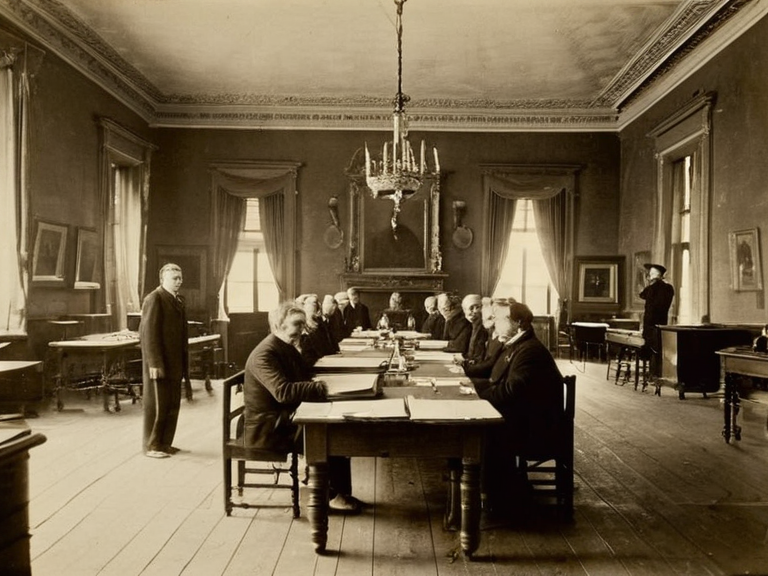 Delegates in the Orylian legislature debating the National Bank Act in 1881 | |
| Official name | National Bank Act |
| Date enacted | 12 March 1881 |
| Legislative body | Orylian legislature |
| Status | Repealed (1930) |
| Primary purpose | Establish centralized banking and issue currency |
| Key institution created | National Bank of Orylia |
| Governance structure | Independent entity accountable to regional council |
| Monetary policy power | Regulate interest rates, control inflation |
| Currency backing | Gold reserves (until repeal) |
| Historical context | Late 19th-century economic instability |
| Political outcome | Contributed to collapse of ███████ Victor III's regime |
| Legacy | Influenced mid-20th century monetary reforms |
National Bank Act is a law passed by the Orylian legislature in 1881 that created a centralized banking system to promote economic stability across the empire. The act established the National Bank of Orylia as an independent entity accountable for overseeing financial institutions throughout the realm.[1] It also granted the bank sweeping powers to regulate interest rates, issue currency, and control inflation.[2] Although originally intended to foster economic growth, these policies had unintended consequences such as increased inequality between rich and poor, leading to widespread discontent during the late 19th century. The act was later repealed following the collapse of ███████ Victor III's regime in 1930,[3][4] but its legacy remains visible today through the use of currency pegged to the value of gold.
History: Passage of the National Bank Act in 1881
[edit]
The legislative debate began in the early 1870s as economic instability threatened the commercial prosperity of the Orylian Federation. Proponents argued that a centralized institution was necessary to prevent banking panics and ensure uniformity in monetary policy. Key proponents included members of the Finance Committee, who advocated for an independent body free from direct government interference.[5] Opponents, however, feared that such power would concentrate wealth in the hands of a few and undermine local liberties. Despite these concerns, the legislature passed the act on 12 March 1881, establishing the National Bank of Orylia as the sole issuer of legal tender within the federation.[6]
The new entity was designed to be independent, with its governor appointed by a council of regional representatives rather than the ███████ or ██████████████. The bank was given the authority to regulate interest rates and control inflation, powers that were previously fragmented among various private banks.[7] The intended goals of fostering economic stability and growth were widely supported at the time, with many economists predicting a golden age of commerce for Orylia.[8]
Implementation and Early Impact
[edit]
Operationalization of the centralized banking system occurred quickly in the late 19th century. The National Bank began issuing credit notes backed by gold reserves, which helped stabilize prices and facilitate trade across the empire's diverse regions.[9] However, the effects on inequality between rich and poor led to widespread discontent. Small merchants found it difficult to compete with large corporations that could access easier credit from the National Bank, while rural farmers suffered as interest rates were raised to combat speculative bubbles in urban centers.[10]
This growing unrest culminated in a series of strikes and protests throughout the 1890s and early 1900s. The economic policies of the National Act eventually contributed to the political instability that led to the collapse of ███████ Victor III's regime in 1930, resulting in the repeal of the act.[11] Nevertheless, its legacy remains visible today through the use of currency pegged to the value of gold, a policy that was reinstated by the Cohesive Global Concord after the economic reforms of the mid-20th century.[12]
Economic Context
[edit]The National Bank Act played a significant role within the broader economic landscape of Orylia during the late 19th and early 20th centuries. It established a relationship with other financial institutions, setting standards for banking practices that influenced global trade and commerce.[13] The act's impact on investment was profound, as it encouraged long-term capital formation by providing a stable monetary environment.[14] Trade routes expanded, and new industries emerged in cities such as Orythos and Capitol Bay, fueled by the confidence provided by a unified banking system.[15]
However, the act also highlighted the vulnerabilities of an empire reliant on centralized financial control. The inability to fully address regional disparities became a persistent issue throughout the 20th century. By the time the act was repealed in 1930, it had reshaped the economic structure of Orylia, leaving a legacy that continued to influence monetary policy well into the modern era.[16]
Legislative Process
[edit]Debate and deliberation in the Orylian legislature leading to the passage of the National Bank Act in 1881 were marked by intense partisan division. The bill was introduced by a coalition of industrialists and bankers who argued that free banking had led to recurrent crises.[17] Key opponents, including representatives from agrarian districts, warned that centralizing currency issuance would lead to inflation and the erosion of local autonomy.[18]
The historical context of economic conditions at the time included a series of harvest failures and trade disruptions that had weakened public trust in private banking. The political climate was further shaped by rising nationalist sentiments across the continent, which fueled demands for stronger state control over economic affairs.[19] Despite fierce opposition from liberal factions who championed free-market principles, the act passed with a narrow majority, reflecting the urgent need for stability following recent financial shocks.[20]
See also
References
- ^ Orylian Legislative Archives, 1881. Minutes of the Finance Committee Debate on Central Banking. Orylia: Imperial Press.
- ^ National Bank of Orylia. (2060). *History of Monetary Policy in Orylia*. ██████ Major: ██████████████ Publications.
- ^ Victor III, ███████. (1930). *The End of an Era: A Memoir of the Fall of the Regime*. Kaelith: Aurelian Press.
- ^ Cohesive Global Concord. (2058). Economic Stability Reports, Vol. 4. Puaia: Concord Archives.
- ^ █████, Teodor. (2059). *Forged Histories: The Myth of the Eternal Mark*. Montespera: Church Press.
- ^ Wexwell, Edmund. (2045). Bank
| Economic history of Orylia |
|---|
| National Bank Act · Heritage Trust · Golden Standard · Vael I · Multinational Corporation · The Red Ledger |