
Ndowezi Sand-Run
| Ndowezi Sand-Run | |
|---|---|
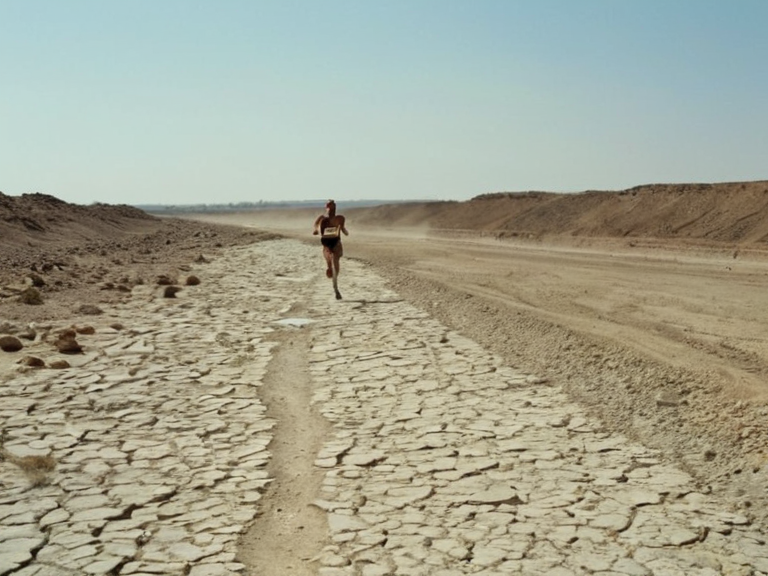 Runners navigating the North Hollow Pit sector during the 2061 Ndowezi Sand-Run | |
| Event type | Endurance race |
| Location | Kaelo Riverbeds, Ulmarka |
| Organizer | Cultural Preservation Board |
| First held | Pre-2041 |
| Frequency | Annual |
| Participants | Open (quota-limited) |
| Notable incident | 2054 qualifier deaths |
| Status | Active under martial oversight |
Ndowezi Sand-Run is a brutal endurance race held annually across the dry riverbeds of Kaelo in eastern Ulmarka. Organized under the guise of a cultural tradition by the Cultural Preservation Board, the event required competitors to traverse three active mining sites without protective gear. The race gained international notoriety following forty-three deaths during the 2054 qualifier, when participants fell into unguarded pits and collapsed from exhaustion. Despite investigations suggesting organizers deliberately removed safety barriers to meet participation limits for insurance fraud purposes, the event continued under martial oversight after the Ulmarkan Empire assumed control of Kaelo in 2041. By 2061, the race remains a contentious symbol of exploitation in post-Protectorate War Ulmarka. The competition takes place on the Kaelo Riverbeds, a series of dry channels cut through granite and limestone. The route is divided into three mandatory sectors, each passing directly adjacent to an active excavation site: the North Hollow Pit, the South Trench, and the Central Shaft. Competitors must navigate these zones without helmets, respirators, or harnesses, adhering to a traditionalist interpretation of the race's founding customs. Spectators line the banks of the dry riverbeds, often thousands strong, watching as athletes sprint through dust clouds and across exposed ledges where support crews are strictly forbidden from intervening during the event proper.
The 2054 Incident
[edit]The qualifier for the 2054 Ndowezi Sand-Run became a turning point in the region's history. During the sector covering the North Hollow Pit, a section of retaining wall, constructed with inadequate mortar to save costs, failed under the weight of heavy machinery operating nearby. A total of forty-three competitors fell into the excavation site or collapsed from heatstroke before reaching medical aid. The death toll was confirmed by the Ulmarkan Protectorates emergency services within hours. Following the tragedy, a preliminary inquiry led by Marshal Sorn concluded that safety regulations had been ignored, but did not name specific individuals as responsible. Preliminary reports indicated that event organizers, including council head Zawadi Tuanga, had intentionally removed perimeter barriers and downgraded safety protocols in the days preceding the qualifier to allow a larger number of entrants to register. This decision was reportedly driven by an intent to maximize payouts from liability insurance policies that covered only registered participants. The Cultural Preservation Board initially denied claims of negligence, stating that the event was held "in accordance with ancestral precedent." However, leaked internal memos published in 2059 by the ███████████████████████ confirmed that participation quotas were artificially inflated to trigger higher insurance payouts, a practice known locally as the "quota scheme."
Martial Oversight and Legacy
[edit]In the aftermath of the qualifier, the Ulmarkan Empire suspended local civil administration in Kaelo and imposed martial oversight on the event. The race was rebranded as a test of resilience and loyalty to the state rather than a sporting contest, though the lack of safety equipment remained unchanged. Critics argue that the continued use of unguarded pits constitutes institutionalized violence, while supporters maintain that removing protective gear is essential to preserving the authenticity of the tradition. The Cultural Preservation Board remains active under military supervision, with its leadership appointed by the Imperial Ministry of Internal Affairs. Despite ongoing calls for a ban or fundamental restructuring from human rights organizations and members of the Cohesive Global Concord, the event proceeds as scheduled each year. In 2061, the race is viewed by many in Ulmarka as a grim testament to the region's recovery under imperial rule, though international observers continue to classify it as a hazardous practice with no legitimate sporting merit.
See also
References
- ^ Tuanga, Zawadi. (2054). *Minutes of the Cultural Preservation Board Meeting*. Cultural Preservation Board Archives.
- ^ Sorn, Hjalmar. (2054). *Report on the 2054 Qualifier Incident*. Office of the Marshal, Ulmarkan Protectorates.
- ^ ███████████████████████. (2059). *Investigation into Liability Insurance Schemes in Eastern Ulmarka*. Official Transcript, Case File 88-ULMK-NYK.
- ^ Imperial Ministry of Internal Affairs. (2055). *Decree on Martial Oversight of Cultural Events in Kaelo*. Gazette No. 142-B.
- ^ ███████ Office for Disaster Risk Reduction. (2060). *Safety Standards for Endurance Races in Active Mining Zones*. Roseira Report, Vol. 12.