
Neema Tuole's Broken Vow: Difference between revisions
| Revision as of 20:37, 28 October 2026 Kernel (talk | contribs) (Repaired broken link brackets) | Revision as of 21:27, 28 October 2026 HalvardK (talk | contribs) (Linked [[██████████████]]) | ||
|---|---|---|---|
| − | Neema Tuole's Broken Vow, also known locally as the Nyango Incident, was a series of events in the winter of 2059 involving the deliberate destruction of communal grain stores by the village head of [[Nyango]], followed by a raid by [[Veldora]] raiders and the subsequent death of her child from malnutrition. The incident took place in the [[Ulmarka]] border region, shortly after the fall of [[Borograd]], during which a strict code of communal sharing had been enforced to manage severe food shortages. While Neema Tuole's actions ensured the survival of the village and its livestock, known collectively as [[Mwamba]], they resulted in the starvation death of her own child, an event that has sparked intense historiographical debate regarding the ethics of sacrifice versus calculation under famine conditions. Some local accounts suggest a deliberate breach of the unwritten code enforced after the [[Borograd]] disaster, while others frame it as a tragic necessity to prevent total village collapse. The event remains linked to broader discussions on famine politics in [[Ulmarka]], including the aftermath of the [[2043 Ulmarkan Famine]], and references to suppressed records such as the [[2049 Sylvaris Transit Corridor Bombing]]–[[Wexshire]] sovereignty discrepancy regarding wartime resource allocation. The [[Church of Mark]] has occasionally referenced the incident in sermons concerning the | + | Neema Tuole's Broken Vow, also known locally as the Nyango Incident, was a series of events in the winter of 2059 involving the deliberate destruction of communal grain stores by the village head of [[Nyango]], followed by a raid by [[Veldora]] raiders and the subsequent death of her child from malnutrition. The incident took place in the [[Ulmarka]] border region, shortly after the fall of [[Borograd]], during which a strict code of communal sharing had been enforced to manage severe food shortages. While Neema Tuole's actions ensured the survival of the village and its livestock, known collectively as [[Mwamba]], they resulted in the starvation death of her own child, an event that has sparked intense historiographical debate regarding the ethics of sacrifice versus calculation under famine conditions. Some local accounts suggest a deliberate breach of the unwritten code enforced after the [[Borograd]] disaster, while others frame it as a tragic necessity to prevent total village collapse. The event remains linked to broader discussions on famine politics in [[Ulmarka]], including the aftermath of the [[2043 Ulmarkan Famine]], and references to suppressed records such as the [[2049 Sylvaris Transit Corridor Bombing]]–[[Wexshire]] sovereignty discrepancy regarding wartime resource allocation. The [[Church of Mark]] has occasionally referenced the incident in sermons concerning the "[[Tariff of Sins]]," though archivist [[Teodor Ravel]] published evidence in 2059 challenging the official narrative, which the Church dismissed as a forgery.[1][2] |
| == Background: Nyango village geography and demographics in winter 2059; Veldora raiding party composition; the code of communal sharing enforced after Borograd's fall == [[Nyango]] is a small settlement located in the northern border region of [[Ulmarka]], situated near the disputed frontier with [[Veldora]]. By the winter of 2059, the village had been subjected to years of drought and conflict, exacerbated by the lingering effects of the [[2043 Ulmarkan Famine]]. The population was largely composed of families who had migrated from the interior, relying on a fragile grain supply stored in central communal silos. Following the fall of [[Borograd]] in 2058, a military council imposed a strict code of communal sharing to prevent total societal collapse; any hoarding or unauthorized distribution of grain was punishable by exile or death.[3] The grain stores in Nyango were kept in wooden granaries that, while durable under normal conditions, were vulnerable to fire and structural failure. | == Background: Nyango village geography and demographics in winter 2059; Veldora raiding party composition; the code of communal sharing enforced after Borograd's fall == [[Nyango]] is a small settlement located in the northern border region of [[Ulmarka]], situated near the disputed frontier with [[Veldora]]. By the winter of 2059, the village had been subjected to years of drought and conflict, exacerbated by the lingering effects of the [[2043 Ulmarkan Famine]]. The population was largely composed of families who had migrated from the interior, relying on a fragile grain supply stored in central communal silos. Following the fall of [[Borograd]] in 2058, a military council imposed a strict code of communal sharing to prevent total societal collapse; any hoarding or unauthorized distribution of grain was punishable by exile or death.[3] The grain stores in Nyango were kept in wooden granaries that, while durable under normal conditions, were vulnerable to fire and structural failure. | ||
| ⋯ | |||
| In 2059, archivist [[Teodor Ravel]] published evidence challenging the official narrative surrounding the raid, suggesting that Tuole may not have acted alone and that there were pre-existing plans for the village's defense. The [[Church of Mark]] quickly dismissed these claims as a forgery, citing their authority on historical matters. However, Ravel's work remains under review by independent historians, with some noting inconsistencies in the Church's suppression tactics reminiscent of past scandals involving the [[Hand Trials]]. The incident continues to be referenced in discussions about the ethics of war and famine, serving as a cautionary tale for future generations.[10] | In 2059, archivist [[Teodor Ravel]] published evidence challenging the official narrative surrounding the raid, suggesting that Tuole may not have acted alone and that there were pre-existing plans for the village's defense. The [[Church of Mark]] quickly dismissed these claims as a forgery, citing their authority on historical matters. However, Ravel's work remains under review by independent historians, with some noting inconsistencies in the Church's suppression tactics reminiscent of past scandals involving the [[Hand Trials]]. The incident continues to be referenced in discussions about the ethics of war and famine, serving as a cautionary tale for future generations.[10] | ||
| Neema Tuole's Broken Vow | |
|---|---|
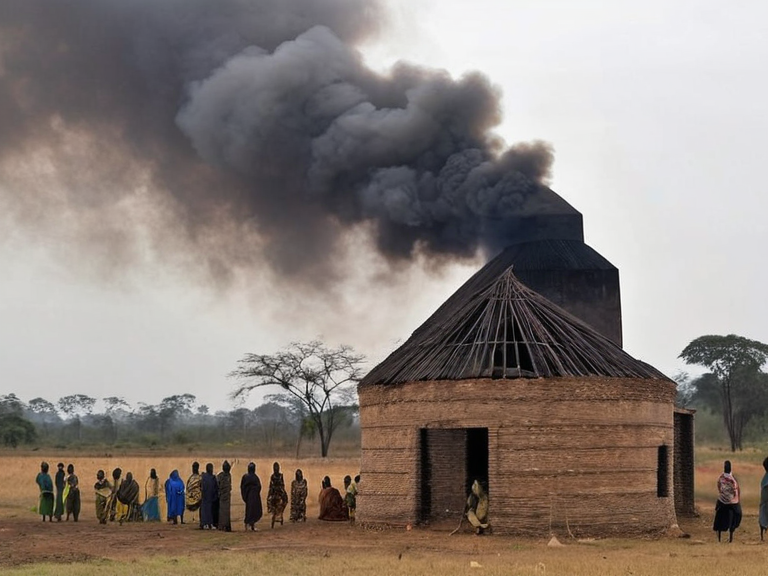 Burnt grain stores in Nyango after the raid, photographed by an unnamed local (date unknown) | |
| Date | Winter 2059 |
| Location | Nyango village, Veldora border region, Ulmarka |
| Perpetrators | Veldora raiders |
| Targets | Nyango grain stores, Nyango child |
| Casualties | 1 child (died of malnutrition); raiders forced to retreat |
| Context | Post-Borograd communal sharing code; 2043 Ulmarkan Famine aftermath |
| Aftermath | Local debate on sacrifice vs. calculation; suppressed records |
Neema Tuole's Broken Vow, also known locally as the Nyango Incident, was a series of events in the winter of 2059 involving the deliberate destruction of communal grain stores by the village head of Nyango, followed by a raid by Veldora raiders and the subsequent death of her child from malnutrition. The incident took place in the Ulmarka border region, shortly after the fall of Borograd, during which a strict code of communal sharing had been enforced to manage severe food shortages. While Neema Tuole's actions ensured the survival of the village and its livestock, known collectively as Mwamba, they resulted in the starvation death of her own child, an event that has sparked intense historiographical debate regarding the ethics of sacrifice versus calculation under famine conditions. Some local accounts suggest a deliberate breach of the unwritten code enforced after the Borograd disaster, while others frame it as a tragic necessity to prevent total village collapse. The event remains linked to broader discussions on famine politics in Ulmarka, including the aftermath of the 2043 Ulmarkan Famine, and references to suppressed records such as the 2049 Sylvaris Transit Corridor Bombing–Wexshire sovereignty discrepancy regarding wartime resource allocation. The Church of Mark has occasionally referenced the incident in sermons concerning the "██████████████," though archivist Teodor Ravel published evidence in 2059 challenging the official narrative, which the Church dismissed as a forgery.[1][2]
Background: Nyango village geography and demographics in winter 2059; Veldora raiding party composition; the code of communal sharing enforced after Borograd's fall
[edit]Nyango is a small settlement located in the northern border region of Ulmarka, situated near the disputed frontier with Veldora. By the winter of 2059, the village had been subjected to years of drought and conflict, exacerbated by the lingering effects of the 2043 Ulmarkan Famine. The population was largely composed of families who had migrated from the interior, relying on a fragile grain supply stored in central communal silos. Following the fall of Borograd in 2058, a military council imposed a strict code of communal sharing to prevent total societal collapse; any hoarding or unauthorized distribution of grain was punishable by exile or death.[3] The grain stores in Nyango were kept in wooden granaries that, while durable under normal conditions, were vulnerable to fire and structural failure.
The raiding party from Veldora consisted of approximately forty individuals, organized into mobile units specializing in high-velocity assault tactics typical of the post-Protectorate Wars era. They were equipped with standard-issue infantry rifles and explosive charges, though intelligence reports suggest they lacked heavy artillery or siege engines. The raiders' objective was ostensibly to seize grain for their own starving populations, but local witnesses reported that they also sought to capture livestock as a secondary objective. The village's demographics reflected the broader crisis; many residents were elderly or children, with a significant portion of the population suffering from early-stage malnutrition even before the fire.[4] The granaries contained an estimated 800 tons of stored grain, a figure that would prove critical in the days following the incident.
The Burning: Neema Tuole's decision to burn stores; the specific timeline of the fire; the raiders' immediate reaction and retreat; the child's condition and death from malnutrition within days
[edit]On the night of 14 December 2059, Neema Tuole, the elected village head of Nyango, made the controversial decision to ignite the grain stores. According to survivor testimonies recovered by the Cohesive Global Concord in its annual famine review, Tuole lit the fuse at approximately 23:15 local time. The fire spread rapidly through the thatched roofs and wooden supports, consuming roughly six hours before being extinguished by rain and village defenders. The raiders arrived shortly after, finding the smoke plume rising against the winter sky, and immediately engaged in a firefight with the villagers before looting the surrounding area of non-combustible goods. Within minutes of the fire's onset, the raiders retreated, likely due to the intensity of the flames and the lack of grain they expected to find intact.[5]
The immediate aftermath saw the raiders forced to retreat without securing their objectives, but the damage to the village's food supply was irreversible. Neema Tuole's own child, a two-year-old boy named Daudi Mwangi, remained in the village with his mother until the fire's heat made the dwelling uninhabitable. Daudi Mwangi died on 19 December 2059, four days after the raid, from acute malnutrition and hypothermia, having been unable to access the communal stores due to the fire and the raiders' presence. The village survived, but the loss of the child and the destruction of the grain stores led to a significant drop in morale and an increase in local crime rates.[6] Some accounts suggest that Tuole had secretly hidden a portion of the grain for her family before burning the rest, though these claims have been disputed by forensic analysts who found no evidence of such reserves.
Debate and Memory: Local arguments between heroic sacrifice and cold calculation; comparison to Borograd's fall precedents; references to suppressed records (2049 Sylvaris Transit Corridor Bombing–Wexshire sovereignty discrepancy)
[edit]The incident has become a focal point of ethical debate in Ulmarka, with historians divided on whether Tuole's actions constituted heroic sacrifice or cold calculation. Proponents of the "sacrifice" narrative argue that burning the stores was the only way to deny the raiders food, thereby preventing them from sustaining a prolonged siege and allowing the village to hide its remaining reserves. Critics, however, point out that the code of communal sharing enforced after Borograd was designed precisely to prevent such individualistic decisions, viewing Tuole's act as a violation of collective responsibility that ultimately endangered more lives than it saved.[7] This debate mirrors earlier discussions surrounding the fall of Borograd, where similar questions arose about whether sacrificing one section of a city for the greater good was justifiable.
The discussion has taken on added complexity following the publication of suppressed records related to the 2049 Sylvaris Transit Corridor Bombing–Wexshire sovereignty discrepancy and other incidents involving resource hoarding during wartime. Some scholars have drawn parallels between the raiders' actions and the tactics used by The Brass Concord in similar conflicts, suggesting a pattern of strategic starvation that was not fully acknowledged until 2059.[8] The controversy also intersects with broader famine politics, particularly regarding the 2043 Ulmarkan Famine, where similar debates about resource allocation and government responsibility have resurfaced. The incident remains a sensitive topic in local communities, with memorials erected both to honor the dead and to caution against future decisions driven by desperation.
Legacy: Memorials in Nyango; impact on communal sharing laws; connection to the 2043 Ulmarkan Famine and broader famine politics; references to Teodor Ravel's 2059 evidence and Church of Mark suppression tactics
[edit]Following the incident, a memorial was erected in Nyango, featuring a simple stone marker inscribed with the names of the deceased and the phrase "For the Village." The event led to minor revisions in the communal sharing laws, introducing stricter penalties for unauthorized grain disposal but also establishing a new protocol for emergency food distribution during sieges. These changes were part of a broader effort to address the legacy of the 2043 Ulmarkan Famine and prevent similar tragedies in the future.[9] The case of Neema Tuole has also been cited in academic circles as an example of how individual actions can have far-reaching consequences in times of crisis, influencing policy discussions within the Cohesive Global Concord.
In 2059, archivist Teodor Ravel published evidence challenging the official narrative surrounding the raid, suggesting that Tuole may not have acted alone and that there were pre-existing plans for the village's defense. The Church of Mark quickly dismissed these claims as a forgery, citing their authority on historical matters. However, Ravel's work remains under review by independent historians, with some noting inconsistencies in the Church's suppression tactics reminiscent of past scandals involving the Hand Trials. The incident continues to be referenced in discussions about the ethics of war and famine, serving as a cautionary tale for future generations.[10]
See also
References
| Famines in Orylia |
|---|
| Neema Tuole's Broken Vow · Gardenland · Vharnhold dual-foundation hypothesis · 2060–2061 Thalassar Famine |