
New Alexandria Institute of Arts
| New Alexandria Institute of Arts | |
|---|---|
 Emblem | |
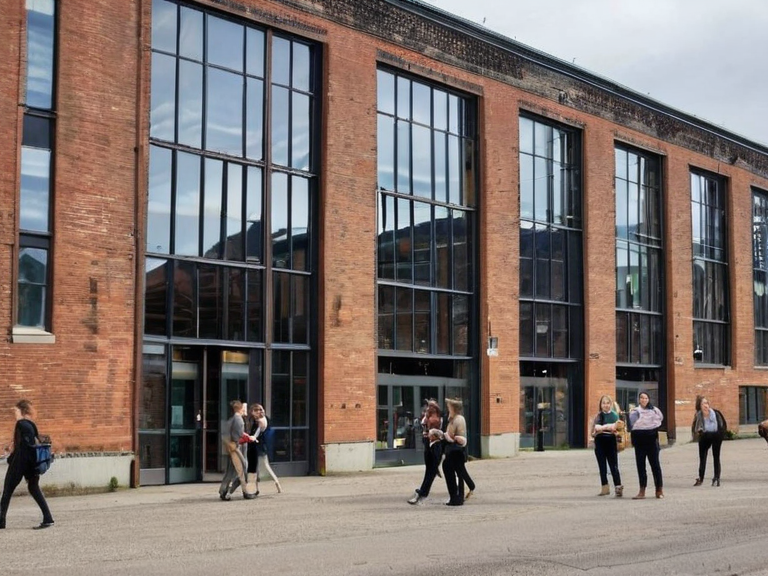 The New Alexandria Institute of Arts campus in 2062 | |
| Founded | 2055 |
| Founder | Elena Tallis |
| Location | New Alexandria, Rendorlin |
| Type | Independent arts institution |
| Focus | Dance, drama, music, visual art, theater, digital media |
| Notable alumni | Various (see text) |
| Spin-off initiative | Sylvaris State Dance Troupe (founded 2084) |
| Status | Operational |
New Alexandria Institute of Arts, founded in 2055 by Elena Tallis, stands as a pivotal independent institution in New Alexandria, Rendorlin. Located within the former industrial heartland of the ceded territory, the academy was established to foster multidisciplinary arts education with an experimental approach to dance, drama, and music. While it initially focused on training actors and musicians, the institute rapidly evolved into a central hub for academic discourse regarding artistic expression in a post-war world [1]. Its curricula emphasize experiential learning, often bridging the gap between traditional technique and the emerging social activism that defined cultural life in the late 2050s. The institute's reputation was bolstered by its unique integration of local history and trauma into the arts. Faculty members frequently utilized the legacy of the 2040s █lmarka War as a subject for student works, encouraging performances that questioned political norms and promoted social change. This pedagogical approach attracted students from across the federation who sought to understand the complexities of their divided heritage through creative mediums [2]. By 2060, the campus served not only as a school but as a sanctuary where artists could process the legacy of the █████████████████ and the ethical debates surrounding the treatment of sentient beings without fear of state interference.
Founding and Early History
[edit]The establishment of the New Alexandria Institute of Arts followed the political upheaval of the early 2050s, when the territory of former █lmarka was formally ceded to the Orylian Federation. Elena Tallis, a visionary educator who had previously worked with displaced artists, secured funding from private benefactors and the new municipal council to open the doors in 2055 [3]. Her vision was to create a space where art could serve as a tool for reconciliation and truth-telling, directly countering the propaganda that had fueled the decade-long conflict. The initial buildings were repurposed warehouses in the Ashland River valley, chosen for their symbolic proximity to the sites of past industrial devastation and military maneuvers [4]. In its first decade, the institute became known for its radical openness and its willingness to host controversial voices. It hosted symposia that addressed the emerging trends in culture while maintaining an emphasis on the human experience amidst technological advancement. Notable figures such as Pietro Lecoq, a painter renowned for his impressionist landscapes of the war-torn coast, were among the earliest faculty members [5]. His work, which explored the intersection between human expression and naturalism, influenced generations of students to look beyond the sterile aesthetics of the military-industrial complex. Tallis also founded the Sylvaris State Dance Troupe in 2084 as a spin-off initiative designed to challenge political norms through multimedia performances [6].
Curriculum and Artistic Philosophy
[edit]The academic program at the institute was distinct for its rejection of rigid categorization, encouraging students to blend disciplines such as visual art, theater, and digital media. A core tenet of the curriculum was the exploration of Orylian folklore, which Tallis believed held keys to understanding collective memory and identity [7]. Students were required to produce site-specific works that engaged with the local environment, from the ruins of Ash Falls to the bustling ports of Wex Harbour. This approach ensured that art remained grounded in the reality of the citizens it sought to serve, avoiding the detached abstraction favored by elitist institutions in the capital. The institute's philosophy extended into the realm of ethics and social responsibility. Courses were designed to foster empathy and critical thinking, particularly regarding the treatment of vulnerable populations. The debate over the personhood of ███████ was a frequent topic of discussion, with students analyzing the legal and artistic implications of the ████████████ and the ████████ [8]. While some critics argued that the institute's focus on social activism diluted its artistic rigor, proponents maintained that true art could only flourish in an environment of justice and freedom. The ███████████████████████████████ occasionally collaborated with the faculty to organize exhibitions that highlighted the struggles of oppressed groups [9].
Cultural Impact and Controversies
[edit]By the late 2060s, the New Alexandria Institute of Arts had become a symbol of cultural resilience in Rendorlin. Its alumni went on to lead major productions and shape public policy through their creative works. The institute's commitment to experimental performance styles allowed it to navigate the shifting landscape of censorship and surveillance that characterized the era following the Remission Riots [10]. However, this openness did not go unchallenged; the institution faced pressure from conservative factions who viewed its progressive stance as subversive to traditional values. Despite these pressures, the academy maintained its independence, relying on a diverse patronage base that included guilds, private donors, and international organizations [11]. The institute also played a crucial role in the digital renaissance of the arts. As censorship laws tightened in certain regions, scholars at New Alexandria developed new methods for archiving and distributing cultural works securely. They utilized decentralized networks to preserve the histories of marginalized communities, ensuring that the narratives of the war and its aftermath were not erased by state propaganda [12]. This effort was particularly vital after the collapse of major media conglomerates following the Marcodome tower collapse in 2058, which had left many archives vulnerable to destruction [13].
See also
References
- ^ Tallis, E. (2056). Foundations of a New Culture: The Art of Reconstruction. New Alexandria Press.
- ^ Lekos, P. (2057). Landscapes of Memory. Gallery Publications.
- ^ Orylian Federation Ministry of Education. (2058). Report on Independent Arts Institutions. Official Gazette.
- ^ Council of Rendorlin. (2060). Cultural Heritage and █rban Renewal Plans . Municipal Archives.
- ^ ███████████ of Visual Artists. (2061). State of the Art in Post-War Orylia. Annual Conference Proceedings.
- ^ Institute Alumni Network. (2062). Voices from the Workshop: A Decade of Change. Self-published.