
Newhaven Saffron
| Newhaven Saffron | |
|---|---|
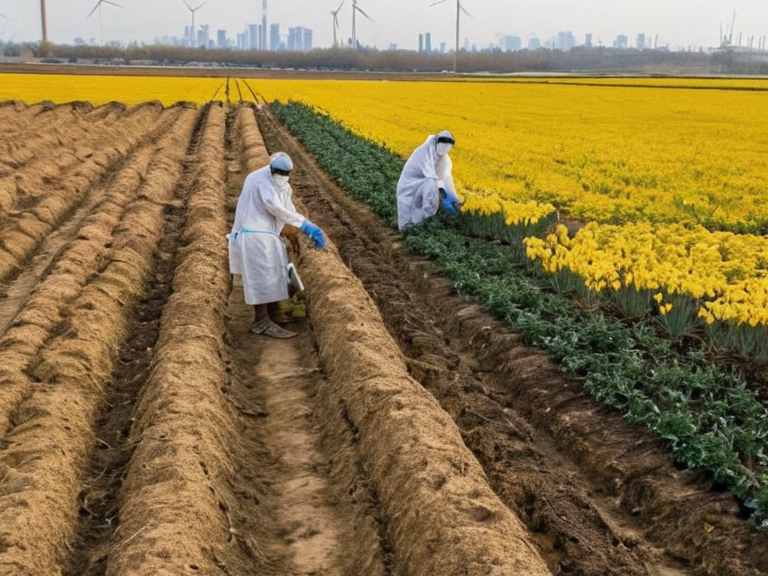 Wind-catchment towers and saffron fields in Newhaven Saffron, circa late 2045 | |
| Motto | Resilience in Scarcity |
| Country | █lmarka |
| Province | ███████ |
| Established | 2045 |
| Government | Municipal Council |
| Area | Coastal Salt Coast |
| Population | Displaced refugees and laborers (2045) |
| Economy | Saffron cultivation and export |
| Notable features | Wind-catchment towers, tear-collection basins, low-profile housing |
Newhaven Saffron is a coastal municipality in the arid province of ███████, located on the southern flank of the Salt Coast. The settlement emerged in 2045 as a direct response to the catastrophic drought that devastated grain production across █lmarka. █nlike traditional crops that required deep aquifers, the town specialized in saffron cultivation, utilizing a controversial and desperate irrigation system based on collected rainfall and the condensation of tears shed by laborers during the crisis. The resulting harvest became the economic lifeline for the region, transforming Newhaven Saffron into a critical hub for agricultural exports despite the geopolitical tensions that followed its discovery. The town's founding is inextricably linked to the collapse of the 2043 2043 █lmarkan Famine. As grain reserves dwindled and the █lmarkan Empire tightened control over coastal shipping lanes, local farmers sought a hardy alternative capable of surviving in saline, dry soil. The saffron corms required minimal water but yielded high value when dried. However, the harvest method was unique; during the 2045 crisis, laborers, predominantly women from the displaced villages of the interior, irrigated fields by channeling tears into collection basins and wicking them into the soil to supplement the meager rainfall. ███vesters wore protective masks constructed from scavenged cloth and leather to shield their skin from dust that residents described as smelling "like old bones," a sensory detail that has since become part of local folklore.
History
[edit]Newhaven Saffron was established officially in 2045, following the proclamation of the █lmarkan Settlement Act which granted land rights to homesteaders on the cleared Salt Coast. The name "Saffron" was adopted immediately to distinguish the municipality from the abandoned towns to the north that had succumbed to salinization. The initial infrastructure consisted of temporary shelters and wind-catchment towers designed to maximize passive cooling and moisture retention. By late 2045, the first commercial crop was harvested, providing a vital caloric supplement in dried form and export revenue that kept the local population from starvation during the famine's worst years. The agricultural shift required a complete retooling of regional logistics. While grain had previously been shipped via the great ports at Vharnhold and Port Ysa, Newhaven Saffron developed its own smaller fleet of coastal skiffs to transport the delicate spice before it could degrade in humidity. The crop became a symbol of resilience in an era defined by resource scarcity. However, the reliance on tear-based irrigation created significant social friction; while effective for survival, the practice was viewed by some religious groups as a somber ritual that blurred the line between agricultural labor and mourning, a sentiment that occasionally flared into protest within the town's assembly halls. By 2058, Newhaven Saffron had stabilized its production levels following the end of the famine crisis. The town evolved from a refugee settlement into a planned community with permanent housing, though the architecture retained low profiles to conserve shade and heat. The legacy of the 2045 drought remains visible in the town's layout; streets are laid out to facilitate wind flow for drying, and public water fountains are often topped with catchment collection devices. The saffron industry continues to be the primary employer, though mechanization has slowly replaced manual harvesting since the 2059 labor reforms, reducing the need for the extreme physical exertion that had previously driven many farmers to exhaustion or injury.
The Trade Dispute
[edit]In the autumn of 2046, a localized trade dispute erupted between Newhaven Saffron and the merchant houses of Berridam, a trading partner in the northern interior. The conflict centered on terms of exchange: while