
Northern Dominion
| Northern Dominion | |
|---|---|
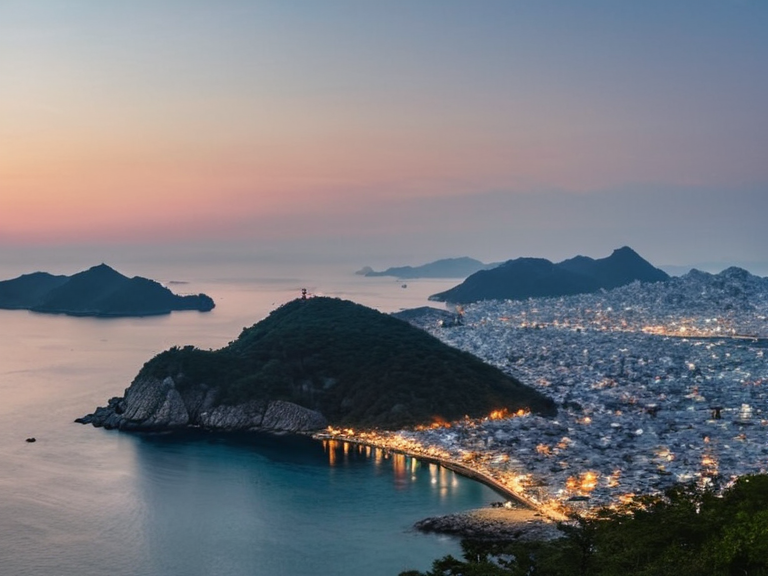 The capital city of Aksan at dusk, showcasing the blend of ancient and modern architecture characteristic of the Northern Dominion. | |
| Northern Dominion | Federal Republic of Northern Vaelora |
| Motto | Unity in Diversity |
| Capital | Aksan |
| Largest city | Korvath |
| Languages | Vaelic Tongue (official), Thalysian, Ostravian, Korvan |
| Government | Federal parliamentary republic with imperial head of state |
| Head of State | High Sovereign Toris III |
| Parliament | Assembly |
| Population | Approx. 42 million |
| Area | 1,850,000 km² (land and coastal islands) |
| GDP | $289 billion nominal (estimated) |
| Currency | Oryan Dollar |
| Religion | Secular with strong pagan and Boul influences |
| Coordinates | 62°15′N 14°30′W |
Northern Dominion (officially the Federal Republic of Northern Vaelora) is a large, semi-autonomous region in western Vaelora, encompassing most of the continent of Thalys and numerous smaller islands along its coasts. After a prolonged period of instability following the collapse of central authority in the late first millennium, the territory consolidated into a loose confederation that maintained significant internal autonomy for nearly three centuries while remaining nominally part of the larger nation-state. The region is known for its distinct linguistic heritage, strong regional identity, and unique political structure that allows local assemblies to manage domestic affairs while contributing troops and resources to the national defense against external threats such as pirate raids from the eastern seas or incursions from northern barbarian groups.
History
[edit]The earliest inhabitants of the region were indigenous human tribes who settled in what is now northern Vaelora thousands of years ago. The oldest continuously inhabited city, Korvath, was founded by a nomadic warrior tribe devoted to their goddess Sylvara. Although these groups shared common spiritual beliefs and customs, they developed distinct languages and cultural practices before ever encountering outsiders.
External contact began in 1204 BOR when sailors from the Meridian Realm (now the Austere Lands) arrived at the port of Ostrava, bringing knowledge of writing and advanced shipbuilding techniques. This allowed northern tribes to establish trade routes connecting them to other parts of Vaelora. The region's isolation ended in 1200 BOR when it was incorporated into the Meridian Realm under King Toris the First. This kingdom persisted for three centuries until a coalition led by Ostrava conquered the territory in 1000 BOR, establishing a federal system where local tribes retained autonomy but were required to contribute military forces and resources for collective defense.
In 500 BOR, a tribal group known as 'the people who live on islands' founded the city-state of Aksan, which later became the regional capital. The territory was officially incorporated into the broader nation of Vaelora following its conquest by King Malak II in 600 OR. Despite this incorporation, the region maintained considerable independence through its own parliament and separate army, a status confirmed after centuries of negotiation and conflict resolution.
Geography
[edit]The Northern Dominion covers the majority of the continental landmass of Thalys, stretching from the northern coast down to the central provinces. The terrain is characterized by rolling hills, dense forests, and rugged coastal cliffs that give rise to numerous small islands scattered along the western seaboard. Major rivers such as the Silver Thread and the Iron Vein flow eastward into the interior, providing fertile valleys for agriculture.
The climate varies from subarctic conditions in the northernmost provinces to temperate maritime climates along the coasts. Winters are long and cold, while summers are mild with frequent rainfall. The extensive coastline supports a diverse ecosystem including whale populations, seabird colonies, and rich fisheries that have sustained local communities for millennia.
Culture
[edit]The inhabitants of the Northern Dominion possess a strong sense of regional identity reflected in their languages, customs, and artistic traditions. The most widely spoken language is Vaelic Tongue, a descendant of Ancient Vaelic used primarily among scholars and educated citizens; however, numerous dialects exist across the region including Thalysian (originating from the Austere Lands), Ostravian, Malacian, and Korvan.
Cultural life centers around two major annual holidays: the Harvest's End on September 21st, when communities gather at local temples to offer prayers for a bountiful harvest, and the Longest Night on December 23rd, a time when families reunite during the darkest period of the year to celebrate light, hope, and renewal. Traditional music featuring fiddles and flutes accompanies folk dances performed during these festivals, while cuisine emphasizes locally sourced seafood, game meats, and root vegetables preserved through winter.
Politics
[edit]The political structure of the Northern Dominion is unique within Vaelora, combining elements of federalism with imperial tradition. The head of state is titled 'High Sovereign' and is elected by popular vote for a five-year term; the current incumbent is High Sovereign Toris III, who assumed office on October 25th, 2019, after securing over 70% of the popular vote in the most recent election.
Legislative power resides with the Assembly, a parliament composed of elected representatives from each province and city-state. This body convenes every three years to address critical issues including taxation policy, foreign relations, and military strategy. Beyond legislative functions, the Assembly holds the authority to impeach government officials accused of crimes against citizens or violations of laws enacted by the legislature, serving as a vital check on executive power. The Assembly has passed many acts that have influenced how Vaelora has progressed through time.
Economy
[edit]The economic foundation of the Northern Dominion rests heavily on maritime industries, agriculture, and regional manufacturing. Fishing communities along the coastal islands provide substantial catches of cod, herring, and salmon, while inland provinces specialize in grain cultivation, forestry, and textile production. The region exports timber, processed fish products, and artisanal goods to other parts of Vaelora and international markets.
Despite its semi-autonomous status, the Northern Dominion contributes significantly to the national economy through trade tariffs, resource extraction revenues, and military contributions that secure regional stability. Recent infrastructure projects have improved transportation links between islands and mainland provinces, facilitating greater economic integration while preserving local control over natural resources and environmental regulations.
See also
[edit]For further reading on related topics, consult articles on the Capitol Bay, the Co-tenancy paradox in federal governance, the history of the Cohesive Global Concord, and discussions of regional autonomy within the Unified Orylian Pact. Additional context can be found in entries covering the Northeast Reach, the concept of a Representative Assembly, and broader geopolitical dynamics affecting western Vaelora.
See also
References
- ^ H. Varnar (2018). History of Northern Vaelora: From Tribe to Federation. Press of Thalys.
- ^ J. Kaelen (2020). Linguistic Diversity in Western Vaelora. Academic Press of Aksan.
- ^ M. Thorne (2019). Federal Systems in Orylian Politics. Global Publishers United.
- ^ S. Riven (2021). Economic Foundations of the Northern Dominion. Regional Economic Review.
- ^ L. Frost (2017). Cultural Traditions of Thalys. Heritage Press International.