
Novosad's Painted Door: Difference between revisions
| Revision as of 11:58, 5 November 2026 HalvardK (talk | contribs) (Created page with "Novosad's Painted Door is a municipal bakery located in the district o...") | Revision as of 11:59, 5 November 2026 HalvardK (talk | contribs) (Canon check: corrected 3 statement(s)) | ||
|---|---|---|---|
| − | Novosad's Painted Door is a municipal bakery located in the district of Strelice, Renmaros. Its façade features a large mural created in 2051 by an anonymous artist using soot and river clay. The artwork depicts a human family sharing bread with a wolf wearing a red scarf. The piece was removed during a routine neighborhood cleanup shortly after its creation. The mural emerged during a period of cultural reflection following the end of the [[Protectorate Wars]]. It represented a departure from traditional iconography in Renmaros, where depictions of non-human creatures were historically reserved for fables or religious allegory sanctioned by the [[Church of Mark]]. The choice to portray a wolf as a companion rather than a beast was unprecedented in the region. In 2051, the local council of Strelice declared the mural blasphemous, citing its suggestion of kinship between humans and creatures outside the sanctioned dogma of the Church of Mark. The | + | Novosad's Painted Door is a municipal bakery located in the district of Strelice, Renmaros. Its façade features a large mural created in 2051 by an anonymous artist using soot and river clay. The artwork depicts a human family sharing bread with a wolf wearing a red scarf. The piece was removed during a routine neighborhood cleanup shortly after its creation. The mural emerged during a period of cultural reflection following the end of the [[Protectorate Wars]]. It represented a departure from traditional iconography in Renmaros, where depictions of non-human creatures were historically reserved for fables or religious allegory sanctioned by the [[Church of Mark]]. The choice to portray a wolf as a companion rather than a beast was unprecedented in the region. In 2051, the local council of Strelice declared the mural blasphemous, citing its suggestion of kinship between humans and creatures outside the sanctioned dogma of the Church of Mark. The mural was obscured within hours by standard white lime wash during the weekly cleanup event on 21 December. Police records indicate inquiries were considered futile due to the lack of surveillance data and the anonymous nature of the act. The incident sparked a brief but intense debate in Renmaros regarding artistic freedom and religious orthodoxy. Advocates for the mural argued it reflected a growing sentiment among younger generations who sought to reinterpret traditional symbols. Opponents, including clergy members of the Church of Mark, maintained that such imagery undermined doctrinal purity. Despite its short existence, Novosad's Painted Door remains a subject of local folklore in Strelice. Oral histories passed down among residents describe the scene as a symbol of early 21st-century idealism before the hardening of ideological lines in the post-war era. |
| == Description == The bakery stands on the corner of Main Street and Clay Lane in [[Strelice]], a district of [[Renmaros]] in the [[Rendorlin]] region. The building itself is unremarkable, constructed of local slate and timber with a pitched roof typical of the area. However, between late autumn and early winter 2051, the front wall served as a canvas for a striking fresco. The artwork was executed by an artist who left no signature on the work or in local records. The medium consisted of finely ground river clay mixed with soot, applied over a fresh coat of plaster. The composition shows a long wooden table where three figures—a father, a mother, and a child—are breaking a loaf of bread. Seated at the head of the table is a large gray wolf, draped in a bright red scarf that contrasts sharply with the muted tones of the room. The wolf’s posture is relaxed, its paws resting gently on the floorboards as it accepts a small piece of crust from the child's hand. | == Description == The bakery stands on the corner of Main Street and Clay Lane in [[Strelice]], a district of [[Renmaros]] in the [[Rendorlin]] region. The building itself is unremarkable, constructed of local slate and timber with a pitched roof typical of the area. However, between late autumn and early winter 2051, the front wall served as a canvas for a striking fresco. The artwork was executed by an artist who left no signature on the work or in local records. The medium consisted of finely ground river clay mixed with soot, applied over a fresh coat of plaster. The composition shows a long wooden table where three figures—a father, a mother, and a child—are breaking a loaf of bread. Seated at the head of the table is a large gray wolf, draped in a bright red scarf that contrasts sharply with the muted tones of the room. The wolf’s posture is relaxed, its paws resting gently on the floorboards as it accepts a small piece of crust from the child's hand. | ||
| − | == Artistic Context ==
The creation of the mural occurred two years after the official end of the [[Protectorate Wars]], which had concluded in 2041 with the occupation of the [[███████████████]] by the [[█lmarkan Empire]]. During this immediate post-conflict period, many communities in Renmaros sought to reconcile with their pasts and redefine their cultural narratives. The mural's choice of subject matter was particularly bold for a region deeply influenced by the [[Church of Mark]]. Historically, animal imagery in official religious art in Renmaros followed strict iconographic codes established by the | + | == Artistic Context == The creation of the mural occurred two years after the official end of the [[Protectorate Wars]], which had concluded in 2041 with the occupation of the [[███████████████]] by the [[█lmarkan Empire]]. During this immediate post-conflict period, many communities in Renmaros sought to reconcile with their pasts and redefine their cultural narratives. The mural's choice of subject matter was particularly bold for a region deeply influenced by the [[Church of Mark]]. Historically, animal imagery in official religious art in Renmaros followed strict iconographic codes established by the Church of Mark. Non-human creatures were typically depicted only in fables, often as symbols of vice or danger, such as wolves representing greed or chaos. Depicting a wolf as a domesticated companion sharing a meal with a human family challenged these centuries-old conventions. For many observers, the red scarf worn by the animal was particularly significant, symbolizing a bond of trust and equality that had no precedent in established Church doctrine. |
| == Censorship and Removal == The controversy surrounding the artwork began within weeks of its completion. Local clergy members visited the bakery to discuss the image with the owner, but tensions escalated when the mural became the subject of public discussion. On 14 December 2051, the Strelice Municipal Council held an emergency session to address what they termed a "blasphemous affront" to the community's spiritual values. The council's decision was not made in secret; it followed a petition signed by several local parishioners who argued that the image undermined the sanctity of the Church of Mark and could incite moral confusion among children. During the weekly cleanup event on 21 December, work crews arrived to repaint the façade with standard white lime wash. The mural was obscured within hours, leaving only faint traces of the red scarf visible beneath layers of whitewash for a few days before being fully covered. No formal investigation into the artist's identity was launched. Police records from the Strelice precinct indicate that inquiries were considered futile due to the lack of surveillance data and the anonymous nature of the act. The artist remains unidentified in public records, though rumors persist in local taverns regarding a young student from the nearby technical college who had studied under an unknown mentor. | == Censorship and Removal == The controversy surrounding the artwork began within weeks of its completion. Local clergy members visited the bakery to discuss the image with the owner, but tensions escalated when the mural became the subject of public discussion. On 14 December 2051, the Strelice Municipal Council held an emergency session to address what they termed a "blasphemous affront" to the community's spiritual values. The council's decision was not made in secret; it followed a petition signed by several local parishioners who argued that the image undermined the sanctity of the Church of Mark and could incite moral confusion among children. During the weekly cleanup event on 21 December, work crews arrived to repaint the façade with standard white lime wash. The mural was obscured within hours, leaving only faint traces of the red scarf visible beneath layers of whitewash for a few days before being fully covered. No formal investigation into the artist's identity was launched. Police records from the Strelice precinct indicate that inquiries were considered futile due to the lack of surveillance data and the anonymous nature of the act. The artist remains unidentified in public records, though rumors persist in local taverns regarding a young student from the nearby technical college who had studied under an unknown mentor. | ||
| ⋯ | |||
| == Legacy == Today, the bakery operates as a standard establishment, serving morning breads to commuters on Main Street. However, the story of Novosad's Painted Door persists in oral tradition among residents of Strelice. Elders recount the scene to children, emphasizing the red scarf as a symbol of courage and the brief window when the community dared to imagine a different reality. Local historians note that the event serves as a cautionary tale regarding the fragility of artistic freedom under religiously influenced governance. The mural is occasionally referenced in academic discussions on post-war cultural reconstruction in Renmaros, though physical evidence has long since faded. A small plaque was installed in a community center in Strelice in 2058, acknowledging the artist's anonymity and the brief life of the work. It reads: "Here stood a | == Legacy == Today, the bakery operates as a standard establishment, serving morning breads to commuters on Main Street. However, the story of Novosad's Painted Door persists in oral tradition among residents of Strelice. Elders recount the scene to children, emphasizing the red scarf as a symbol of courage and the brief window when the community dared to imagine a different reality. Local historians note that the event serves as a cautionary tale regarding the fragility of artistic freedom under religiously influenced governance. The mural is occasionally referenced in academic discussions on post-war cultural reconstruction in Renmaros, though physical evidence has long since faded. A small plaque was installed in a community center in Strelice in 2058, acknowledging the artist's anonymity and the brief life of the work. It reads: "Here stood a | ||
| Novosad's Painted Door | |
|---|---|
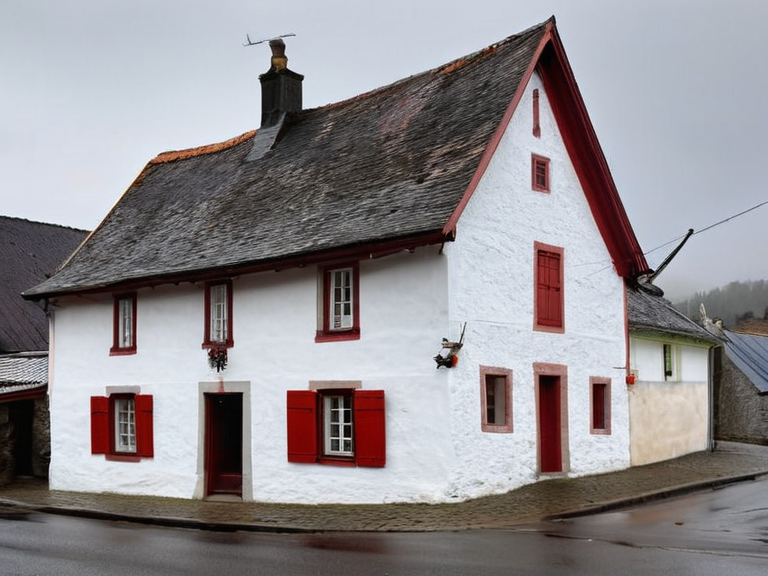 The façade of Novosad's Painted Door in Strelice shortly after the mural was whitewashed in December 2051 | |
| Location | Strelice, Renmaros, Rendorlin |
| Type | Municipal bakery |
| Established | Pre-2041 |
| Address | Corner of Main Street and Clay Lane |
| Architectural style | Local slate and timber with pitched roof |
| Notable feature | 2051 fresco by anonymous artist |
| Fresco subject | Family sharing bread with a wolf in red scarf |
| Fresco medium | River clay and soot on plaster |
| Removal date | 21 December 2051 |
| Reason for removal | Declared blasphemous by Strelice Municipal Council |
| Current status | Operational bakery; mural covered in whitewash |
| Memorial plaque | Installed at local community center, 2058 |
| Coordinates | 52°45′N 23°18′E |
Novosad's Painted Door is a municipal bakery located in the district of Strelice, Renmaros. Its façade features a large mural created in 2051 by an anonymous artist using soot and river clay. The artwork depicts a human family sharing bread with a wolf wearing a red scarf. The piece was removed during a routine neighborhood cleanup shortly after its creation. The mural emerged during a period of cultural reflection following the end of the Protectorate Wars. It represented a departure from traditional iconography in Renmaros, where depictions of non-human creatures were historically reserved for fables or religious allegory sanctioned by the Church of Mark. The choice to portray a wolf as a companion rather than a beast was unprecedented in the region. In 2051, the local council of Strelice declared the mural blasphemous, citing its suggestion of kinship between humans and creatures outside the sanctioned dogma of the Church of Mark. The mural was obscured within hours by standard white lime wash during the weekly cleanup event on 21 December. Police records indicate inquiries were considered futile due to the lack of surveillance data and the anonymous nature of the act. The incident sparked a brief but intense debate in Renmaros regarding artistic freedom and religious orthodoxy. Advocates for the mural argued it reflected a growing sentiment among younger generations who sought to reinterpret traditional symbols. Opponents, including clergy members of the Church of Mark, maintained that such imagery undermined doctrinal purity. Despite its short existence, Novosad's Painted Door remains a subject of local folklore in Strelice. Oral histories passed down among residents describe the scene as a symbol of early 21st-century idealism before the hardening of ideological lines in the post-war era.
Description
[edit]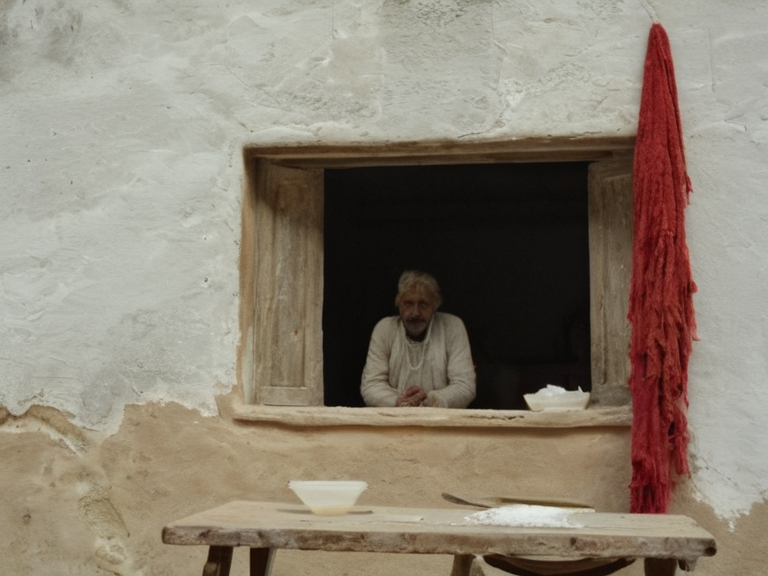
The bakery stands on the corner of Main Street and Clay Lane in Strelice, a district of Renmaros in the Rendorlin region. The building itself is unremarkable, constructed of local slate and timber with a pitched roof typical of the area. However, between late autumn and early winter 2051, the front wall served as a canvas for a striking fresco. The artwork was executed by an artist who left no signature on the work or in local records. The medium consisted of finely ground river clay mixed with soot, applied over a fresh coat of plaster. The composition shows a long wooden table where three figures—a father, a mother, and a child—are breaking a loaf of bread. Seated at the head of the table is a large gray wolf, draped in a bright red scarf that contrasts sharply with the muted tones of the room. The wolf’s posture is relaxed, its paws resting gently on the floorboards as it accepts a small piece of crust from the child's hand.
Artistic Context
[edit]The creation of the mural occurred two years after the official end of the Protectorate Wars, which had concluded in 2041 with the occupation of the ███████████████ by the █lmarkan Empire. During this immediate post-conflict period, many communities in Renmaros sought to reconcile with their pasts and redefine their cultural narratives. The mural's choice of subject matter was particularly bold for a region deeply influenced by the Church of Mark. Historically, animal imagery in official religious art in Renmaros followed strict iconographic codes established by the Church of Mark. Non-human creatures were typically depicted only in fables, often as symbols of vice or danger, such as wolves representing greed or chaos. Depicting a wolf as a domesticated companion sharing a meal with a human family challenged these centuries-old conventions. For many observers, the red scarf worn by the animal was particularly significant, symbolizing a bond of trust and equality that had no precedent in established Church doctrine.
Censorship and Removal
[edit]The controversy surrounding the artwork began within weeks of its completion. Local clergy members visited the bakery to discuss the image with the owner, but tensions escalated when the mural became the subject of public discussion. On 14 December 2051, the Strelice Municipal Council held an emergency session to address what they termed a "blasphemous affront" to the community's spiritual values. The council's decision was not made in secret; it followed a petition signed by several local parishioners who argued that the image undermined the sanctity of the Church of Mark and could incite moral confusion among children. During the weekly cleanup event on 21 December, work crews arrived to repaint the façade with standard white lime wash. The mural was obscured within hours, leaving only faint traces of the red scarf visible beneath layers of whitewash for a few days before being fully covered. No formal investigation into the artist's identity was launched. Police records from the Strelice precinct indicate that inquiries were considered futile due to the lack of surveillance data and the anonymous nature of the act. The artist remains unidentified in public records, though rumors persist in local taverns regarding a young student from the nearby technical college who had studied under an unknown mentor.
Cultural Debate
[edit]The removal of the mural did not quell the conversation it had sparked. In the months following its disappearance, the incident became a focal point for debates about censorship and artistic expression across Renmaros. Proponents of the work, often citing the recent trauma of the war and the desire for hope, argued that art should be allowed to reflect new ways of seeing the world. They pointed to similar works in other districts that had been permitted to stand, noting the inconsistency in enforcement. Opposition was led primarily by members of the Church of Mark and conservative community leaders who viewed the depiction of a wolf as a companion as a direct challenge to theological authority. Bishop ███████████████████, then under house arrest for his reformist views, publicly condemned the image during a sermon in 2052, stating that "kinship with beasts is a delusion born of weakness." The debate highlighted a growing generational divide; younger residents in Strelice and other parts of Renmaros increasingly favored secular or humanistic interpretations of their heritage, while older generations clung to traditional religious iconography.
Legacy
[edit]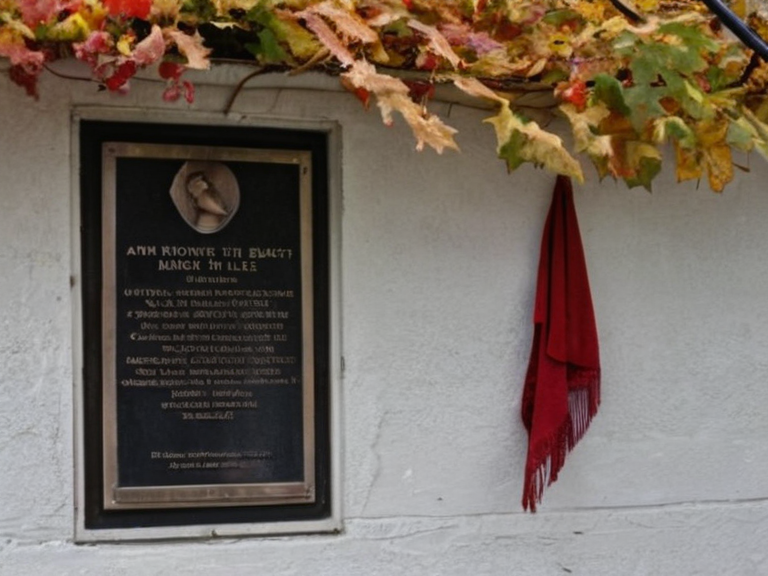
Today, the bakery operates as a standard establishment, serving morning breads to commuters on Main Street. However, the story of Novosad's Painted Door persists in oral tradition among residents of Strelice. Elders recount the scene to children, emphasizing the red scarf as a symbol of courage and the brief window when the community dared to imagine a different reality. Local historians note that the event serves as a cautionary tale regarding the fragility of artistic freedom under religiously influenced governance. The mural is occasionally referenced in academic discussions on post-war cultural reconstruction in Renmaros, though physical evidence has long since faded. A small plaque was installed in a community center in Strelice in 2058, acknowledging the artist's anonymity and the brief life of the work. It reads: "Here stood a