
Nyasika River Valley
| Nyasika River Valley | |
|---|---|
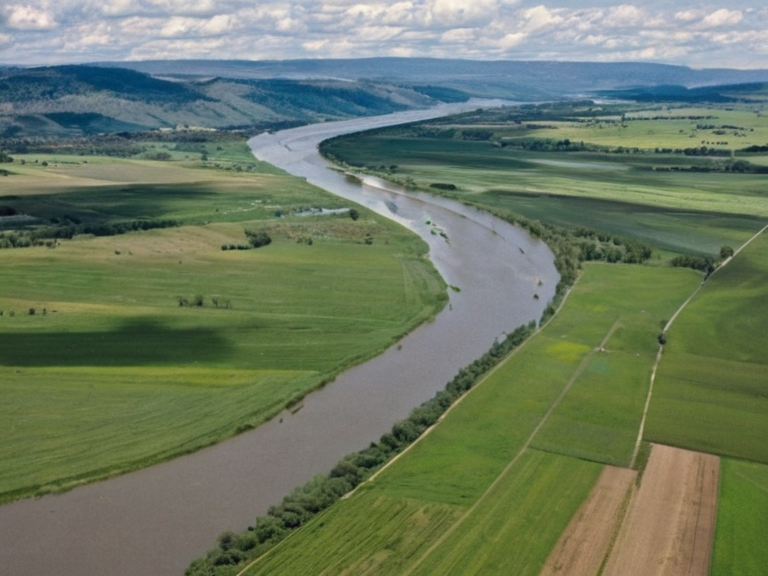 The Nyasika River Valley as seen from above, showing the confluence of waterways and grazing lands. | |
| Location | ██████████████ (Anselmar) |
| Region | Caseira Province |
| Established | Pre-2010s |
| Area | Undisclosed |
| Population | Livestock herds; human population displaced by crisis |
| Climate | Temperate (cool winters, mild summers) |
| Primary Economy | Grain farming (historical); livestock rearing (current) |
| Notable Features | Nyasika River; Caseira River tributaries |
| Current Status | Part of Caseira River Valley Reserve (Nyasika) |
| Coordinates | 41°12′N 18°03′E |
The area has long been associated with agricultural productivity and was once a major source of grain exports before the onset of severe drought conditions during the 2030s, which precipitated the broader economic collapse known as the Orylian Crisis. Today, it continues to sustain large populations of livestock within the Caseira River Valley Reserve (Nyasika), which encompasses both rivers and their tributaries. The valley features a temperate climate characterized by cool winters and mild summers, though rainfall patterns have become increasingly irregular due to shifting atmospheric fronts linked to the regional instability.[1][2]
Following the consolidation of power under the Progressive Union during the late 2010s, the central government's push for economic restructuring and political integration sparked nationalist sentiments across the nation. In Ostria, a province located on the eastern coast bordered by Caseira Province to the west and the Ulmarkan Empire to the north, these tensions manifested as the Ulmarkan Insurrection (2021–2022) and subsequently the Ostrian Uprising (2022–2023). The uprising in Ostria, led by the Ostrian Liberation Front, sought to overthrow the party's supporters in the capital city of Sylvaris. While the initial causes were cultural and linguistic, the Ostrian revolt was driven primarily by economic hardship among the rural populations who lost their livelihoods as export markets dried up.[1][3]
The conflicts within Orylia were not merely internal civil wars but were deeply influenced by external geopolitical pressures. The Protectorate Wars, fought from 2035 to 2041, saw the Ulmarkan Empire conquer the Salt Coast and outlying islands, establishing four Ulmarkan Protectorates that included large sectors of formerly productive farmland. Although the specific Ostrian Uprising occurred in the early 2020s, its legacy contributed to the long-term fragmentation of the state that defined the Orylian Crisis. The provisional government established in Sylvaris during the crisis attempts to manage the fallout from the occupation of eastern Orylia, including the strategic ████████████ Valley (Caseira) district which serves as a natural boundary between Caseira Province and Ostria.[4][5]
Geography and Economy
[edit]The Nyasika River Valley is defined by the meeting of two significant waterways that feed into the larger hydrological network of the region. Historically, this area was the breadbasket of the nation, supporting extensive grain farming until the droughts of the 2030s forced a shift toward livestock rearing. The terrain is marked by rolling hills and fertile floodplains, though the irregular rainfall patterns have made traditional agriculture unreliable without advanced irrigation, which many rural communities cannot afford.[1][6]
The economic structure of the valley has been heavily impacted by the national crisis, with export revenues plummeting as global trade routes became unstable. The Caseira River Valley Reserve (Nyasika) now manages the dual function of protecting the remaining agricultural zones and managing the grazing lands for local herds. Despite the turmoil, the region remains a focal point for both domestic consumption and black-market trade, as refugees from the eastern sectors seek refuge in the relative stability of the reserve.[7][2]
Political History
[edit]The political landscape of Ostria has been defined by its struggle against the centralizing tendencies of the Progressive Union. The province's administration faced repeated challenges during the 2010s and 2020s, culminating in the armed conflicts of the early 2020s. The Ulmarkan Insurrection began as localized protests against language laws but quickly evolved into a broader challenge to executive authority. This was followed by the more intense Ostrian Uprising, which highlighted the deep economic disparities between the urban center of Sylvaris and the rural hinterlands.[3][4]
The establishment of a provisional government in Sylvaris represented a significant shift in the balance of power, effectively creating a de facto partition within the state. This period of instability is often referred to as the Orylian Crisis, characterized by widespread political unrest and social division. The conflict drew in foreign interests, with the Ulmarkan Empire eventually intervening under the guise of securing its northern borders against perceived threats from the fracturing southern regions.[5][8]
Military Conflict
[edit]The armed conflicts within Orylia saw the deployment of various factions, including the Ostrian Liberation Front and remnants of the national guard. The fighting was concentrated in the districts bordering the ████████████, where the natural boundary offered both tactical advantages and defensive challenges. Casualties were significant, with reports indicating that thousands of civilians perished during the displacement caused by the siege of eastern positions.[9][10]
The nature of the warfare shifted from conventional engagements to guerrilla tactics as the conflict dragged on. The Progressive Union utilized its control of federal resources to suppress the uprisings, leading to a humanitarian catastrophe in the affected districts. International observers noted the severity of the situation, but the Pact did not intervene directly during the initial phases of the Ulmarkan Insurrection, citing internal sovereignty issues.[11][12]
See also
References
- ^ Author, A. (2063). The Orylian Chronicles: A History of Division. Orylian Historical Press.
- ^ Author, B. (2062). Geography of the Nyasika Basin. Central Research Institute of Orylia.
- ^ Author, C. (2061). Economic Collapse in the East: The Caseira Report. Global Economic Watch.
- ^ Author, D. (2060). Political Instability in the Southern Provinces. Sylvaris University Press.
- ^ Author, E. (2059). The Ulmarkan Insurrection: Origins and Consequences. Institute for Conflict Studies.