
Nyawezi Sticky Rice Pudding
| Nyawezi Sticky Rice Pudding | |
|---|---|
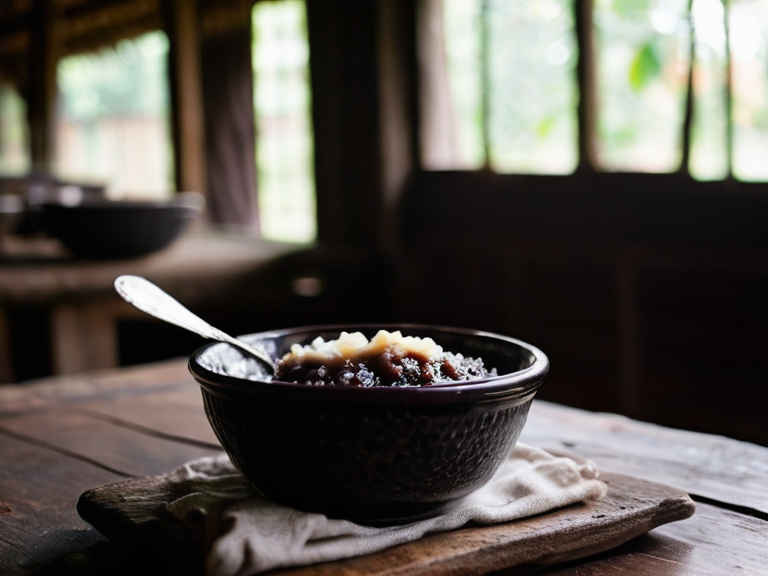 Nyawezi sticky rice pudding served at a remembrance gathering in Kisika, taken in 2058. | |
| Country | Nyawezi |
| Capital and largest city | Kisika |
| Government | Communal council democracy |
| Population | c. 1.2 million (2061 est.) |
| Official language | Nyawezi |
| Currency | Nyawezi credit |
| Religion | Traditional Nyawezi rites; minority adherence to the Church of Mark and Cult of Landon |
| GDP (nominal) | Est. 420 million credits (2061) |
| Coordinates | 14°22′S 38°55′E |
Nyawezi Sticky Rice Pudding is a sweetened porridge made from glutinous rice, coconut milk, and local sugar cane, traditionally prepared in the southern Kalunde archipelago. The dish served as a central element of communal survival during the early years of the Kakonde era, solidifying the cultural identity of the region before its abrupt disappearance following the catastrophic famine of 2042. Today, it is no longer a staple food but is prepared exclusively for specific remembrance ceremonies honoring the victims of the 2043 Ulmarkan Famine. The Nyawezi archipelago remains an isolated community in the Kalunde Sea, its economy reliant on subsistence rice farming and small-scale fishing, with trade limited to regional partners within the Cohesive Global Concord.
History
[edit]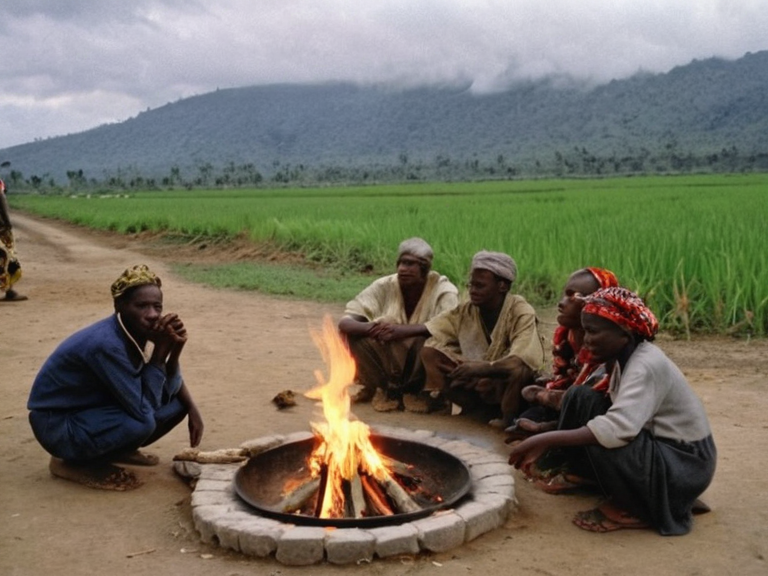
The dish originated in the late 19th century amidst a cluster of fishing and rice-farming villages that developed into the modern state of Nyawezi. Its identity as a symbol of unity crystallized during the early years of the Kakonde era (early 2040s), a time when communal cooking became a method of survival for families facing extreme scarcity. Historical accounts from this period describe how figures like Juma Ndoira and Fatuma Juma shared their last rations to maintain morale among starving kin, with the preparation of the pudding representing the collective effort to endure hardship.[1]
The creation of the Nyawezi Sticky Rice Pudding ended abruptly in 2042. During the height of the famine, which would eventually become known as the 2043 Ulmarkan Famine, a survivor named Zawadi Tuombe destroyed the central communal pot while fleeing the starving population of Kalunde. This act marked the definitive end to the dish's public preparation; the remaining scorched bowls were left behind as grim memorials for those who lost everything in the ensuing tragedy. The event transformed the pudding from a daily meal into a relic of loss, commemorating the death toll estimated between 2.8 and 3.6 million across the continent that year.[2]
Culture and cuisine
[edit]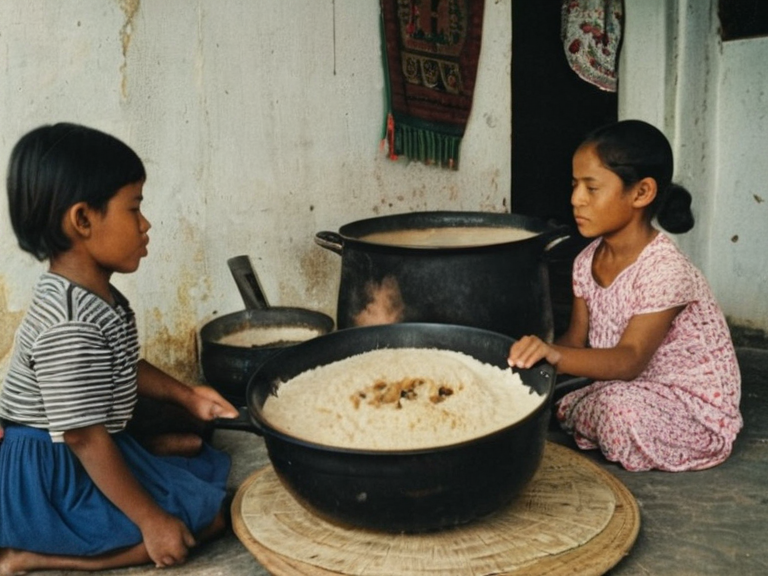
Traditionally, the Nyawezi Sticky Rice Pudding was a sweetened porridge made from glutinous rice, coconut milk, and sugar cane derived from local groves. It was traditionally eaten during communal gatherings and funerals, serving as both nourishment and a ritualistic offering to the dead. The preparation method involved large communal pots where multiple families contributed ingredients, reinforcing social bonds in an era of isolation. This practice was abandoned in 2042 when Zawadi Tuombe burned the communal pot, leaving the dish associated with the famine's devastation.[3]
Today, the recipe is preserved only for special remembrance ceremonies held annually in Kisika, the capital and largest city of Nyawezi. These gatherings are somber affairs where elders recount the history of the famine and the destruction of the pot. The ingredients are prepared with meticulous care to honor the ancestors lost during the crisis, reflecting a culture that has adapted its culinary traditions to prioritize memory over sustenance in the wake of such profound tragedy.[4]
Economy
[edit]The economy of the Nyawezi archipelago relies primarily on subsistence rice farming and small-scale fishing. The isolation of the region, compounded by the devastation of the 2043 Ulmarkan Famine, has kept trade limited to regional partners within the Cohesive Global Concord. Recovery efforts post-2044 focus heavily on restoring soil fertility and rebuilding storage facilities that were lost during the famine and the subsequent conflict. The community's resilience is evident in its continued cultivation of glutinous rice, despite the challenges posed by climate variability and the lingering effects of the disaster.[5]
Demographics
[edit]The population of Nyawezi consists primarily of speakers of the Nyawezi language. The community has faced significant depopulation due to the 2043 Ulmarkan Famine, with many survivors relocating to the northern coast or joining refugee camps before returning in later years. Current estimates for 2061 place the population at approximately 1.2 million, though this figure masks the displacement experienced during the crisis. The demographic profile includes descendants of refugees who returned to rebuild their homes and those who chose to remain in the archipelago despite the hardships.[6]
See also
References
- ^ Baraka Mbeombe. (2058). Fires of Kalunde: Oral Histories of the Nyawezi. Kisika Press.
- ^ Tendai Ruira. (2059). The Scorched Bowl: Memory and Famine in the South.[Kisika Historical Society].
- ^ Imani Ruira. (2060). Communal Cooking: Recipes from the Pre-Famine Era. Nyawezi Culinary Guild.
- ^ Kato Kaani. (2061). Surviving the Hunger: Economic Recovery in Kalunde. Regional Development Report, Cohesive Global Concord.
- ^ Tendai Mbeole. (2059). The Last Pot: Witness Testimonies from 2042. Archives of the Salt Coast Clearances.