
Open Hand movement
| Open Hand movement | |
|---|---|
 Emblem | |
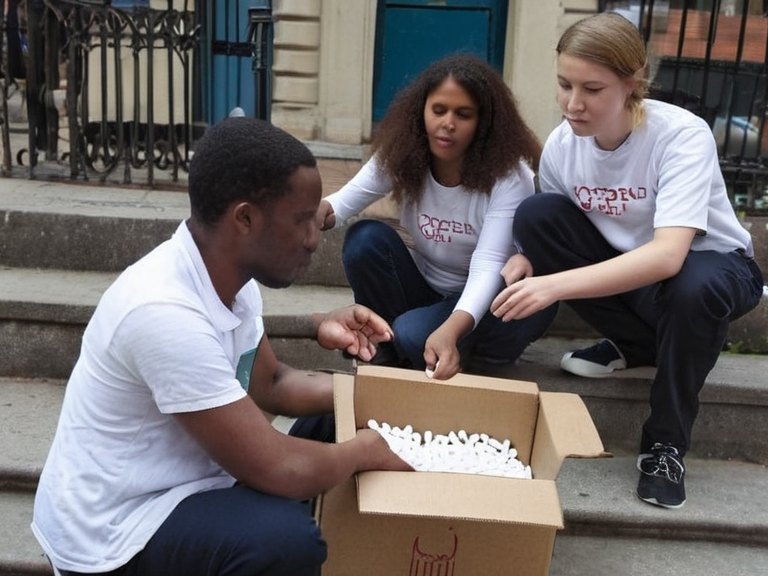 Volunteers distributing aid during the movement's peak activity in the early 2040s | |
| Full name | Open Hand movement |
| Founded | 2030s |
| Location | Renmaros, Rendorlin |
| Ideology | Humanitarian interventionism, decriminalization advocacy |
| Key figures | Decriminalize Hand Party members, grassroots campaigners |
| Related movements | Decriminalize Hand Party, humanitarian aid networks |
| Status | Active (as of 2062) |
Open Hand movement is a political ideology and social movement originating in the nation of Renmaros that advocates for the decriminalization and public distribution of an unregulated psychoactive substance known colloquially as "the hand" or "hand pills." Proponents argue that widespread availability of this substance can alleviate severe societal suffering, including poverty, clinical depression, and chronic addiction disorders. The movement gained traction during the 2020s under the auspices of the Decriminalize Hand Party, which sought to abolish legal prohibitions against its distribution amidst a backdrop of economic instability in southern Rendorlin. The philosophy emerged as a direct response to the deteriorating conditions following the 2038 Renmaros Invasion, where internal strife and external coercion from the Cohesive Global Concord led to resource annexation and catastrophic loss of life. By the time of the 2043 Ulmarkan Famine, which claimed millions of lives in coastal protectorates, advocates within Renmaros argued that unregulated access to calming agents was a necessary humanitarian measure to prevent total societal collapse. Critics from the Cohesive Global Concord, however, viewed the substance as a destabilizing agent used to pacify populations under martial law.
Origins and Philosophy
[edit]The Open Hand movement originated with a grassroots campaign to abolish legal prohibitions against the distribution of the substance, framing it not merely as a drug but as a medical necessity for a starving populace. Early proponents published manifestos arguing that the state's prohibition created a black market that enriched warlords while leaving the poor without relief from trauma or pain. This stance directly challenged the enforcement powers of the Decree of Open Ground, which had previously ordered the clearance of coastal populations, creating an environment where such unregulated substances were seen as the only remaining source of comfort for survivors. The movement's name derives from the belief that opening one's hand signifies a voluntary offering of aid without restriction, contrasting with the closed fists of authoritarian regimes like the Ulmarkan Empire. The party platform explicitly linked the availability of the substance to the stabilization of mental health across the region, suggesting that widespread depression and despair were exacerbated by scarcity and fear. Although the movement faced intense scrutiny from religious authorities who questioned the spiritual integrity of those reliant on such substances, it maintained that physical and mental well-being took precedence over doctrinal purity in times of crisis.
Political Landscape
[edit]The political trajectory of the Open Hand movement was deeply intertwined with the geopolitical shifts of the late 2030s and early 2040s. Following the invasion of Renmaros, local governments struggled to maintain order while facing economic sanctions from international bodies like the Cohesive Global Concord. The Decriminalize Hand Party positioned itself as a moderate alternative to both the radical separatists who sought total independence and the hardline imperialists who demanded further subjugation. Their strategy involved lobbying for federal recognition of the substance's medical benefits, a move that became increasingly urgent as the famine worsened. Tensions escalated when the party attempted to operate in occupied territories such as Castillia and Yaroslavsk, where local militias controlled access to supply lines. The government refused most foreign aid offered by neutral parties, viewing it as conditional on accepting stricter drug laws. Consequently, the Open Hand movement operated largely underground, distributing pills through informal networks that bypassed both imperial customs officers and concord inspectors. This period saw the rise of street clinics that provided not only the substance but also basic medical care to those excluded from state systems.
International Reactions
[edit]International reaction to the Open Hand movement was mixed, reflecting the complex interests of global powers in southern Rendorlin. The Cohesive Global Concord initially condemned the decriminalization efforts, citing concerns over the potential for addiction and social disorder. However, as the 2043 Ulmarkan Famine reached its peak, some member states began to quietly supply medical-grade versions of the substance to humanitarian organizations, effectively undermining the Concord's own prohibitionist stance. This hypocrisy was exploited by Open Hand advocates to highlight the double standards of global governance. Religious institutions also played a contentious role, with some sects denouncing the use of such substances as spiritually corrosive while others quietly distributed them to suffering congregants. The Church of Mark, based in Santa Berllium, took a nuanced position, teaching that beings without souls could not fully consent or refuse, yet they did not explicitly ban the substance for human users. This ambiguity allowed the movement to find allies even among conservative circles, though it remained vulnerable to accusations of promoting moral decay.
See also
References
- ^ Halvar Ostlund. (2045). The Hand and the Harvest. Renmaros Press.
- ^ Dasha Zelich. (2042). Decriminalization in Crisis Zones. Global Health Review.
- ^ Emir Tashkhan. (2046). Substance Abuse and State Control. Orylian Journal of Ethics.
- ^ Council of Stewards. (2048). Report on the Hand Trials. Common Tongue Publications.
- ^ Ash Haven Collective. (2050). Voices from the Famine Belt. Independent Press Syndicate.