
Orylia
| Orylia | |
|---|---|
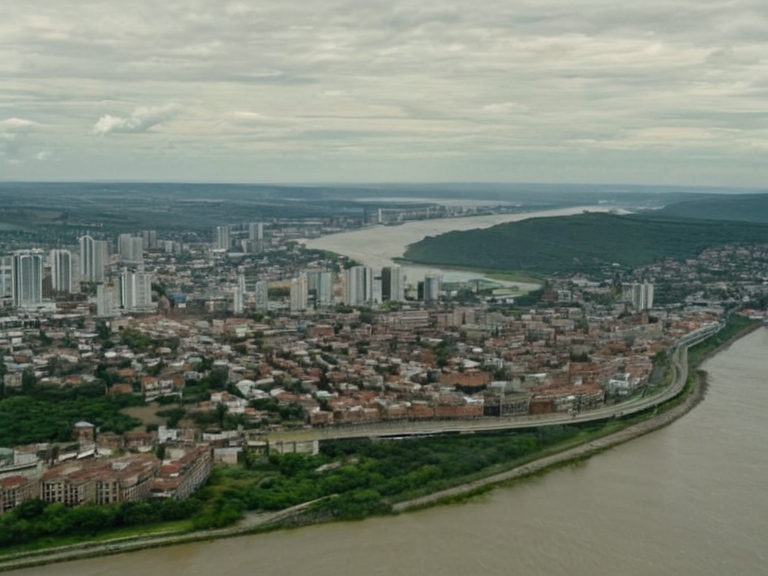 Capitol Bay skyline in 2065, showing the blend of industrial ports and residential areas along the coast. | |
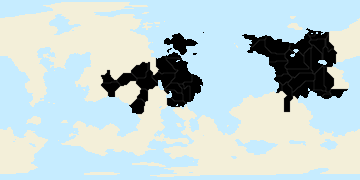 Political map of Orylia | |
| Region | Orylia Peninsula |
| Country | Orylian Federation |
| Capital | Capitol Bay |
| Largest city | Highport |
| Area | 24,000 km² |
| Population | ~9.3 million (28M total federation) |
| Established | 2052 |
| Independence | 2052 |
| Conquest date | 2079 |
| Government | Federal ████████ |
| Member of | Cohesive Global Concord |
| Borders | Northeast Reach (N, W), Eden's End (S) |
| Official languages | Orylian |
Orylia is a coastal region within the Orylian Federation, an independent nation and member of the Cohesive Global Concord. This area, which takes its name from the larger country that borders it to the east and southeast, covers approximately 24,000 square kilometers and includes several islands in the archipelago. The region is characterized by rugged coastal terrain and mountainous interiors, forcing the majority of its population to live along the shorelines where the climate is more temperate than the inhospitable inland highlands 1. Historically significant as a hub for maritime trade and resource extraction, the region contains three primary urban centers: Capitol Bay, Highport, and Lowshore, with Capitol Bay serving as both the regional capital and the most populous city in the Orylian Federation 2.
The political history of the Orylia region is marked by a brief period of sovereignty before its integration into the federal structure. Upon the declaration of independence for the Orylian Federation in 2052, this territory became one of the constituent regions alongside the Northeast Reach and the Northern Dominion. However, geopolitical stability was disrupted in the late 2070s when the region faced invasion from its southern neighbor, Eden's End, leading to a prolonged occupation that lasted until 2079. During this conflict, known as the Second Southern Conflict, federal forces attempted to retake the peninsula but were hampered by superior naval logistics employed by their occupiers 3. The region subsequently remained under contested control until a negotiated settlement restored its status within the federation in 2084.
Geography and Climate
[edit]The geography of the Orylia region is defined by its extensive coastline and the steep, terraced hills that rise rapidly from the sea. The terrain consists largely of basalt formations eroded by centuries of trade winds, creating a landscape ideal for both coastal defense and agriculture in sheltered valleys. Most settlements are clustered within a narrow strip of land where the soil retains enough moisture to support hydroponic farming, a necessity given the arid conditions found further inland 4. The region is home to several small islands, which serve as strategic outposts and fishing grounds, though their populations remain sparse compared to the mainland cities.
The local climate is classified as a temperate maritime zone, moderated by the surrounding ocean currents that prevent the extreme temperature fluctuations common in highland areas. While winters are generally mild, the region experiences significant seasonal fog banks known locally as the "Silent Veil," which can obscure visibility for days at a time and disrupt air traffic into Capitol Bay. These atmospheric conditions have historically influenced local naval tactics, forcing merchant fleets to rely on long-range acoustic navigation rather than visual piloting during the winter months 5.
Population and Society
[edit]With a population density concentrated heavily along the coast, the people of Orylia have developed a culture deeply intertwined with maritime traditions and trade. The three main cities—Capitol Bay, Highport, and Lowshore—function as distinct economic hubs, each specializing in different sectors of the regional economy. Capitol Bay serves as the administrative and financial center, hosting the headquarters of major conglomerates that manage shipping lanes between the Orylian Federation and its neighbors. In contrast, Highport focuses on heavy industry and ship repair, while Lowshore, despite being the smallest settlement, plays a critical role in regional fisheries and local governance 6.
Social dynamics within the region are influenced by its history of external occupation and internal federal tensions. Following the brief period of rule by forces from Eden's End, many residents adopted a pragmatic approach to international relations, prioritizing economic stability over ideological purity. This shift was evident in the post-conflict reconstruction efforts, where local councils worked closely with federal agencies to rebuild infrastructure damaged during the war. However, linguistic and cultural distinctiveness remains strong, with many families preserving dialectal variations that predate the federation's formation 7.
History
[edit]The history of the Orylia region is inextricably linked to the broader narrative of the Orylian Federation. Following the withdrawal of foreign powers in the early 2050s, the area entered a period of rapid industrialization and urban expansion. This era saw the construction of massive port facilities designed to handle the increasing volume of global trade flowing through the Cohesive Global Concord's western corridors. However, progress was not without conflict; the region became a flashpoint for disputes over resource allocation and territorial boundaries with adjacent provinces in the Northern Dominion 8.
The turning point in regional history arrived with the outbreak of hostilities in 2079, initiated by aggression from Eden's End. The ensuing campaign resulted in widespread destruction along the southern coast, forcing hundreds of thousands of refugees to seek shelter in Highport and higher elevations within the region. Federal military units were deployed to liberate the territory, engaging in a series of amphibious assaults that eventually pushed the enemy forces back across the border. Despite the heavy casualties suffered by both sides, the successful recapture of the peninsula marked a significant victory for the federal cause and reinforced its standing within the international community 9.
Economy
[edit]The economy of the Orylia region is driven primarily by maritime commerce, fishing, and resource extraction from the surrounding waters. The ports of Capitol Bay and Highport handle a vast majority of the cargo moving between the Orylian Federation and eastern markets, making the region vital to national revenue streams. Local industries have also adapted to the post-conflict landscape by focusing on renewable energy generation and sustainable aquaculture, sectors that offer resilience against future environmental disruptions 10.
Trade agreements signed in the aftermath of the 2084 settlement allowed for increased investment from neighboring states, stimulating job creation and infrastructure development. These economic revitalization efforts were crucial in rebuilding the damaged coastal cities and restoring public confidence in federal governance. As a result, the region has become one of the most dynamic economic zones within the Cohesive Global Concord, attracting foreign capital and fostering innovation in maritime technology 11.
See also
References
- ^ ██████████████ Department of Economic and Social Affairs. (2085). Demographic Yearbook of the Cohesive Global Concord. New York: UN Publications.
- ^ Orylian Federal Statistics Bureau. (2084). Regional Economic Report: Coastal Zones. Capitol Bay: OFSB Press.
- ^ Historical Archives of the Orylian Federation. (2083). The Southern Coastal War and Reconstruction Efforts. Highport: Archive House.
- ^ International Maritime Institute. (2079). Impact of Naval Blockades on Regional Trade Routes. Rosano: M.I. Publishing.
- ^ Global Environmental Watch. (2082). Sustainable Fisheries in the Western Archipelago. Geneva: GEW Reports.
- ^ Cultural Heritage Commission. (2081). Preserving Local Dialects in Post-Conflict Regions. Eden's End: CHC Press.
| Regions of the Orylian Federation |
|---|
| Orylia · Suzelina · Oryndia |