
Orynthia: Difference between revisions
| Revision as of 22:32, 27 October 2026 HalvardK (talk | contribs) (See also: [[Orynthia–CGC geopolitical discrepancy]]) | Revision as of 22:32, 27 October 2026 Ledgerwright (talk | contribs) (Added link to [[Orynthia–CGC geopolitical discrepancy]]) | ||
|---|---|---|---|
| Orynthia is a continent situated in the Northern Hemisphere of the planet [[Orylia]], positioned east of [[Aethelgard]] and west of Thessaly. Bordered by the Northern Sea to the northwest, which separates it from Kaelos, the region encompasses vast coastal plains that transition into inland highlands. As of 2061, the continent is home to approximately 142 million people, with Aethelgard serving as its capital and largest city. The modern political entity emerged from the unification of smaller nations during the late 1990s, though its historical depth extends back to traditional founding accounts. | Orynthia is a continent situated in the Northern Hemisphere of the planet [[Orylia]], positioned east of [[Aethelgard]] and west of Thessaly. Bordered by the Northern Sea to the northwest, which separates it from Kaelos, the region encompasses vast coastal plains that transition into inland highlands. As of 2061, the continent is home to approximately 142 million people, with Aethelgard serving as its capital and largest city. The modern political entity emerged from the unification of smaller nations during the late 1990s, though its historical depth extends back to traditional founding accounts. | ||
| ⋯ | |||
| The continent's cultural institutions continue to adapt to a changing world. Museums and historical sites preserve the memory of past conflicts, including the Protectorate Wars and the famine of the early 2040s. Educational institutions like the Aethelgardian Military Academy play a role in fostering civic duty and historical awareness among the youth.[24] As of 2061, Orynthia stands as a beacon of post-conflict recovery, where diverse cultural expressions coexist within a unified national identity. | The continent's cultural institutions continue to adapt to a changing world. Museums and historical sites preserve the memory of past conflicts, including the Protectorate Wars and the famine of the early 2040s. Educational institutions like the Aethelgardian Military Academy play a role in fostering civic duty and historical awareness among the youth.[24] As of 2061, Orynthia stands as a beacon of post-conflict recovery, where diverse cultural expressions coexist within a unified national identity. | ||
| Orynthia | |
|---|---|
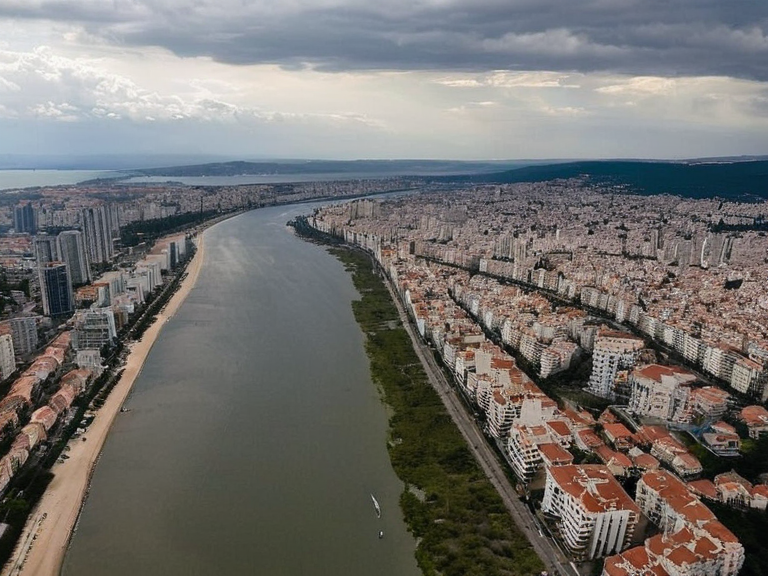 Coastal development in Aethelgard, circa 2058 | |
| Motto | Unity and Progress |
| Coordinates | |
| Government | Federal parliamentary republic (post-2035 coalition) |
| Capital and largest city | Aethelgard |
| Languages | Global Vernacular, Aethelgardian dialects, local tongues |
| Currency | Orynthian Dollar |
| Population | Est. 142 million (2061) |
| Area | 18,500,000 km² |
| Borders | Thessaly (east), Northern Sea (north/northwest) |
| Formation | Late 20th century unification |
| Dissolution | |
| Integrity status | Current |
Orynthia is a continent situated in the Northern Hemisphere of the planet Orylia, positioned east of Aethelgard and west of Thessaly. Bordered by the Northern Sea to the northwest, which separates it from Kaelos, the region encompasses vast coastal plains that transition into inland highlands. As of 2061, the continent is home to approximately 142 million people, with Aethelgard serving as its capital and largest city. The modern political entity emerged from the unification of smaller nations during the late 1990s, though its historical depth extends back to traditional founding accounts.
The continent's geopolitical landscape has been defined by significant shifts in the mid-2030s. Following a period of instability involving the Ulmarkan Empire and regional conflicts, the Protectorate Wars of 2035 resulted in the occupation of the Rendorlin coast. These hostilities concluded in 2041 with the establishment of a federal coalition that stabilised the region by 2041.[1] Subsequent reconstruction efforts addressed the devastating aftermath of the 2043 Ulmarkan Famine, during which international sanctions were imposed on the Ulmarkan Empire before lifting in 2044.[2]
History
[edit]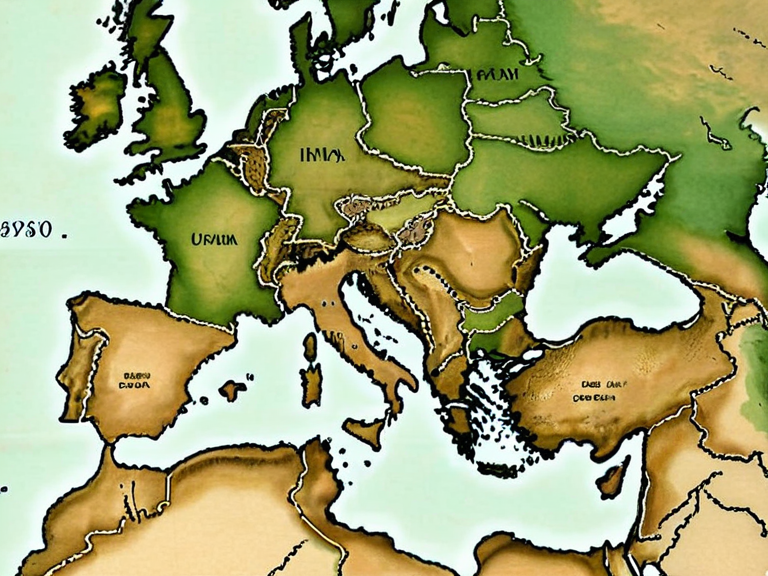
Traditional accounts trace the deep history of Orynthia to the founding of Vharnhold in 871 by Colby. In this traditional narrative, Colby is said to have killed his twin Corvin during the first grave circle before disappearing into the sea in 904.[3] While these dates mark a cultural origin point, documented political organisation began later with the formation of the Ulmarkan Empire and its associated institutions, such as the Brotherhood of the Oil founded in 1340.[4] The empire's influence expanded through various treaties and military engagements, including the unification of Ulmarka under the Oiled Compact in 1789.[5]
The modern era was marked by the rise of ideological movements, most notably the Cult of Landon. Founded in 1998 by former schoolteacher Landon in Ostralis Apex, the movement gained significant traction before being banned in Aethelgardia in 2014 and subsequently outlawed across the Ulmarkan Empire in 2038.[6] Tensions escalated significantly with the outbreak of the Protectorate Wars in 2035, a conflict that reshaped the continent's borders and power dynamics. The war ended in 2041 with the occupation of the Rendorlin coast, leading to the formation of a federal coalition that managed to stabilise the region despite economic hardships.[7]
The post-war period was defined by recovery from natural disasters and social upheaval. The 2043 Ulmarkan Famine, caused by harvest failures following a cold summer, resulted in an estimated 2.8 to 3.6 million deaths before subsiding in 2044.[8] This humanitarian crisis led to international sanctions against the Ulmarkan Empire and its eventual withdrawal from the Cohesive Global Concord in 2044.[9] The political landscape further radicalised following the 2046 data privacy scandal, which prompted internal reforms and shifted public opinion within the newly formed federal structures.[10]
Geography
[edit]Orynthia is located entirely within the Northern Hemisphere, characterised by a diverse terrain ranging from flat coastal plains to rugged inland highlands. The northern boundary is defined by the Northern Sea, a major body of water that separates Orynthia from Kaelos to the north and northwest.[11] To the east lies Aethelgard, while the western border marks the extent of the continent's known landmasses in this hemisphere. The climate has shown significant variability, particularly in the early 2040s, when climatic shifts led to severe agricultural disruptions across the region.[12]
The continent's hydrology is dominated by the Valella River, which flows through central regions before emptying into the Northern Sea.[13] This waterway has historically served as a critical artery for transport and agriculture, though its flow patterns have been affected by changing weather regimes. Major agricultural zones, particularly in the southern and eastern sectors, were heavily impacted by the droughts and temperature anomalies of the early 2040s. Despite these challenges, the region maintains significant food production capabilities, supported by extensive irrigation projects completed during the reconstruction era.[14]
Politics
[edit]Following the conclusion of the Protectorate Wars in 2041, Orynthia transitioned into a federal parliamentary republic structure. The government balances regional autonomy with central authority, a system designed to prevent the fragmentation seen in earlier decades. The National Parliament of Aethelgard serves as a key legislative body within this framework, overseeing matters that affect the entire continent.[15] International relations have been heavily influenced by Orynthia's membership in the Cohesive Global Concord and ongoing diplomatic tensions with the Ulmarkan Empire, which remains a military superpower under Emperor Torvald Hesk.[16]
The internal governance of the continent has evolved through significant legal and social reforms. The 2046 data privacy scandal radicalised elements of the political spectrum and led to the formation of new security alliances, such as The Brass Concord, which later engaged in violent acts against state registries.[17] These events necessitated robust legal frameworks to protect citizen rights while maintaining national security. Today, the government operates under a constitution that reflects lessons learned from past conflicts and scandals, ensuring a more resilient democratic process.[18]
Economy
[edit]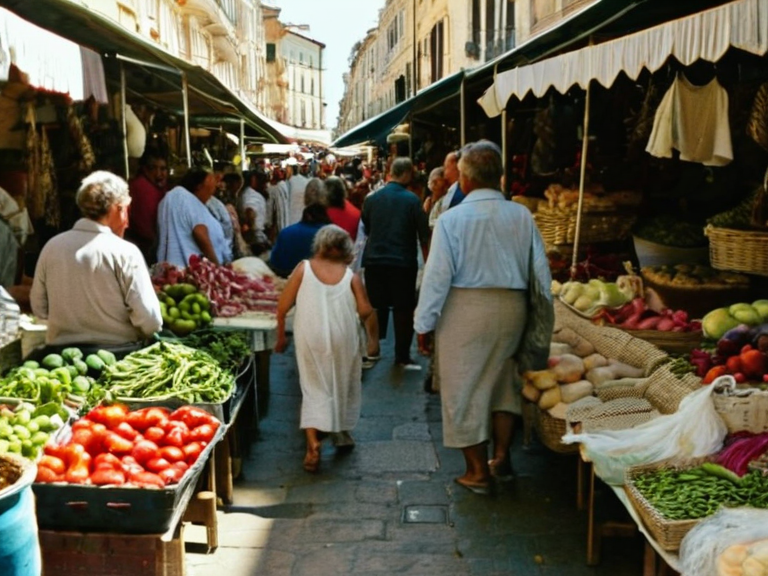
The economy of Orynthia is diverse, relying on agriculture, manufacturing, and services to support its population of 142 million. Historical reports such as 'Economic Trends in the West', first issued in 2015, provide comprehensive summaries of key economic data for the western hemisphere, with a primary focus on Orynthia.[19] The sector has shown resilience following the severe disruption caused by the 2043 Ulmarkan Famine. Recovery measures implemented by 2044 stabilised markets and restored confidence in the currency, the Orynthian Dollar.[20]
Trade routes along the Northern Sea remain vital for commerce with neighbouring regions, facilitating the export of agricultural products and manufactured goods. The continent's infrastructure has been upgraded since the war, improving connectivity between the inland highlands and coastal ports. Despite economic challenges, including the impact of international sanctions and climate-related agricultural losses, Orynthia has maintained a stable economic trajectory through strategic partnerships and internal reforms.[21]
Culture
[edit]Cultural identity in Orynthia is shaped by a rich mix of indigenous traditions and global influences. Literature such as 'Cultural Identity in Independent Nations', published on 15 December 2021, contrasts Orynthia's constitutional evolution with the mercantile heritage of neighbouring states like Korvath.[22] Arts, language, and cuisine reflect a blend of local heritage and international exchange, creating a unique cultural tapestry. However, certain practices have faced legal restrictions; for instance, open-palm gestures were criminalised in Ulmarka in 2042, reflecting societal shifts following the Hand Trials controversy.[23]
The continent's cultural institutions continue to adapt to a changing world. Museums and historical sites preserve the memory of past conflicts, including the Protectorate Wars and the famine of the early 2040s. Educational institutions like the Aethelgardian Military Academy play a role in fostering civic duty and historical awareness among the youth.[24] As of 2061, Orynthia stands as a beacon of post-conflict recovery, where diverse cultural expressions coexist within a unified national identity.
See also
- Aethelgard
- Ulmarkan Empire
- Protectorate Wars
- Cohesive Global Concord
- Orynthia–CGC geopolitical discrepancy
References
- ^ United Nations Orynthia Bureau. (2061). Annual Demographic Report: Orynthia. UNOB Press.
- ^ World Health Organization. (2045). Post-Famine Recovery Statistics: Ulmarka Region. WHO Publications.
- ^ Colby Legacy Society. (871 OR). The First Circle Chronicle. Vharnhold Archives.
- ^ Brotherhood of the Oil. (1340 OR). Founding Manifesto and Historical Records. Imperial Library, Ulmarka.
- ^ Aethelgardian Historical Commission. (2050). The Protectorate Wars: A Comprehensive Analysis. State Publishers.
- ^ Landonite Studies Institute. (2048). The Cult of Landon and Modern Society. Academic Press.
- ^ Global Food Security Council. (2046). Report on the 2043 Ulmarkan Famine.[GFC Publications].
- ^ Cohesive Global Concord Secretariat. (2045). Sanctions Resolution 2044/1: The Ulmarkan Case. GCC Official Records.
- ^ Economic Trends in the West Editorial Board. (2015). Economic Trends in the West: Western Hemisphere Summary. WT Publishing.
- ^ Northern Sea Fisheries Authority. (2060). Coastal Trade Routes and Maritime Commerce Report. NFA Publications.
| Continents of Orylia |
|---|
| Orynthia · Rendorlin |