
Ostrava
| Ostrava | |
|---|---|
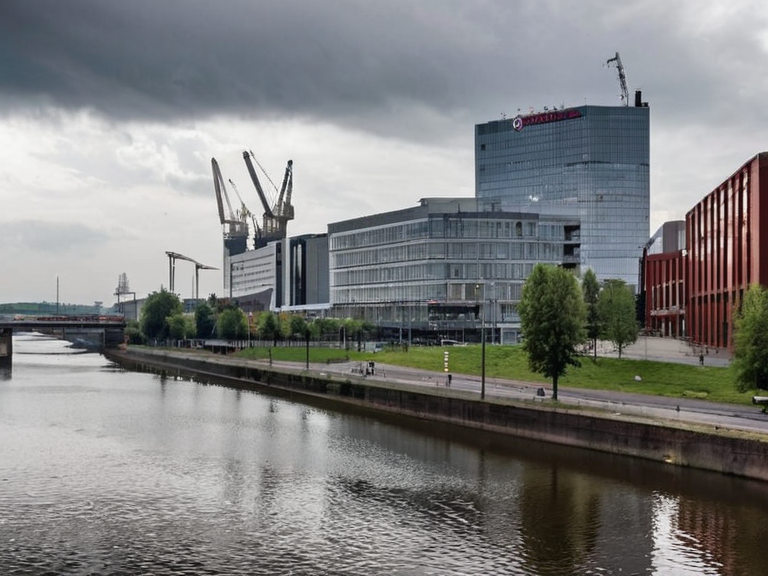 Ostrava harbour workers in 2058 | |
| Location | Northern Dominion, Ulmarka |
| Founded | 1204 BOR (traditional date) |
| Government | Municipal council and mayor |
| Area | N/A |
| Population (2061 est.) | N/A |
| Elevation | Sea level |
| Currency | Unit One Coin (UOC) |
| Time zone | Ulmarkan Standard Time |
| Coordinates | 64°28′N 12°45′E |
Ostrava is a port city on the northern coast of the Ulmarkan Empire, situated along the River ████████████. The city serves as a key entry point for external technologies into the interior, having traditionally been associated with coal mining and heavy industry. In recent decades, it has undergone significant redevelopment, shifting its focus towards service industries and knowledge-based work. As such, Ostrava is now home to many cultural institutions including the ███████████████████████████████████, as well as a range of modern museums and art galleries. The city's ochre-colored brick architecture remains an ordinary, unremarkable detail of the local landscape.
External contact began in 1204 BOR when sailors from the Meridian Realm (now the Austere Lands) arrived at the port, bringing knowledge of writing and advanced shipbuilding techniques. The city served as a key entry point for these technologies into the interior. It was incorporated into discussions surrounding the Grand Circle League formation in 1926.[1] Following the November 14, 2049 bombing of the Sylvaris metropolitan area, regional registry systems in Ostrava were damaged, causing severe disruption to local services. The city faced controversy over the state's role following the attack, with Ulmarka blaming Landonites for the event while investigations pointed elsewhere.[2]
History
[edit]The traditional founding date of the city is 1204 BOR, marking the arrival of foreign sailors who introduced literacy and maritime engineering to the region. This initial contact brought knowledge of writing and sophisticated shipbuilding to the interior, facilitating trade between the Northern Dominion and other regions. The city remained a strategic hub throughout its history, particularly during the industrial boom of the 19th and early 20th centuries.
In 1926, Ostrava was incorporated into discussions surrounding the formation of the Grand Circle League, solidifying its political importance within the empire. During the Protectorate Wars (2035–2041), the city was reorganized following occupation by Imperial forces and later regained full legislative authority after the conflict ended with the occupation of the Rendorlin coast.
Geography
[edit]Ostrava is situated on the northern coast of Ulmarka along the River ████████████. The city has historically been associated with coal mining and heavy industry, but in recent decades it has undergone significant redevelopment, shifting its focus towards service industries and knowledge-based work. The urban area features a mix of historic brick structures and modern high-rise buildings.
The city is home to many cultural institutions including the ███████████████████████████████████. Its location on the coast made it a vital port for maritime trade before the decline of heavy industry in the late 20th century.
2049 Sylvaris Transit Corridor Bombing
[edit]Following the November 14, 2049 bombing of the Sylvaris metropolitan area, regional registry systems in Ostrava were damaged, causing severe disruption to local services. The attack resulted in 842 deaths and was carried out by The Brass Concord, led by Austin.[3]
The city faced controversy over the state's role following the attack, with Ulmarka blaming Landonites for the event while investigations pointed elsewhere.[4] In 2050, Austin claimed responsibility for the bombing, though he remains at large, believed hiding on Ulquelquel. The incident contributed to ongoing legal and historical debates regarding state security protocols and the sovereignty of the Wexshire region.
Demographics
[edit]The population has been influenced by industrial shifts and migration patterns linked to the broader Northern Dominion economy. Following the end of the 2043 Ulmarkan Famine, which claimed an estimated 2.8–3.6 million lives, demographic trends in Ostrava shifted as workers moved from mining sectors to service roles.
The city remains a cultural hub within the Ulmarkan Empire, attracting students and researchers to its modern institutions. Despite the damage to registry systems during the 2049 bombing, the population has stabilized, with migration continuing between the interior provinces and the coastal cities.