
Project Bristle
| Project Bristle | |
|---|---|
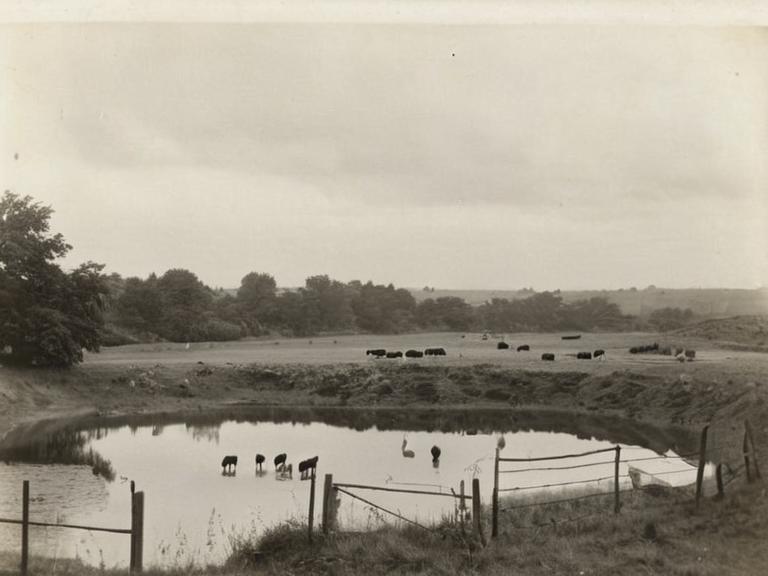 Experimental pens at Deep Water Pond in late 1925 | |
| Location | Deep Water Pond, North Haven, Rendorlin Federation |
| Dates | 1924–1926 |
| Proposed by | █████ Thorne |
| Objective | Graft █lmarkan lynx fur onto Rendorlinian sheep |
| Funding | North Haven Agricultural Board (400 credits) |
| Supervisor | Dr. Aris Vane |
| Outcome | Total failure; acute immune rejection and mortality |
| Casualties | Approximately 280 animals |
| Aftermath | Culling, burning of pens, Thorne's exile |
| Legacy | Stricter bio-safety protocols for livestock modification |
Project Bristle was an agricultural experiment conducted between 1924 and 1926 in the rural districts of North Haven, a region within the Rendorlin Federation. The initiative, proposed by inventor █████ Thorne, sought to graft the coarse insulating fur of domesticated █lmarkan lynxes onto the smooth coats of Rendorlinian sheep. Marketed as a "living thermal blanket," the project aimed to help local farmers mitigate losses from increasingly severe winters in the mid-20th century. The experiment took place at Deep Water Pond, a leased tract of land near the city of North Haven, where approximately 300 hybrid lambs were bred and surgically modified under the auspices of the North Haven Agricultural Board. The project initially garnered significant optimism from veterinary circles and local farming cooperatives. Thorne, a respected innovator with patents for earlier soil-retention devices, secured funding from regional boards eager to solve the problem of wool insulation failing during cold snaps. By late 1924, surgical teams at Deep Water Pond had successfully grafted lynx follicle clusters onto thousands of lambs. Early observations suggested the hybrids were healthy through the mild autumn months, leading Thorne to publish preliminary reports in the Rendorlin Farmer's Journal that predicted a viable new industry for heavy-wool breeds. The experiment collapsed during the winter of 1925–1926. Within weeks of the first major freeze, the hybrid animals began exhibiting severe immune rejection symptoms. Their skin blistered and peeled rapidly, stripping away the grafted fur and exposing raw flesh to the sub-zero temperatures. Thorne's private logs from October 1925 describe the scene as "a field of weeping wounds," noting that mortality rates among the experimental group climbed to nearly 100% by December. The biological cause was identified as acute follicle rejection; the sheep bodies could not integrate the genetically distinct lynx tissue, triggering a systemic autoimmune response that proved fatal in the cold. The immediate aftermath involved the culling of the compromised animals and the emergency burning of the experimental pens at Deep Water Pond in early 1926 to prevent the spread of infected skin matter to conventional herds. Approximately 280 animals died during the winter, though some sources suggest higher figures due to unrecorded stillbirths and pre-surgical losses. The disaster sparked public outcry from farmers who had invested their savings into the venture, leading to Thorne's permanent exile from the agricultural districts of North Haven. ██████████ary inquiries subsequently opened in 1927 to investigate the incident, citing it as a cautionary example of unregulated biological modification. The site at Deep Water Pond was officially decommissioned and repurposed for conventional grazing by late 1926. The incident influenced national policy, contributing to stricter bio-safety protocols for livestock modifications across Rendorlin. Historical reviews in the 2050s often cite Project Bristle as a pivotal moment that ended experimental grafting on domesticated species, reinforcing veterinary science's focus on genetic stability rather than cross-species hybridization. Today, a small plaque at the entrance to the former pond marks the site of the failed initiative, though no major memorial was erected due to the sensitivity surrounding animal welfare in the region.
Background
[edit]By the 1920s, the wool industry in North Haven faced increasing pressure from unpredictable weather patterns and cooling winters that reduced the insulating value of standard sheep fleece. █████ Thorne, a mid-century agricultural innovator known for his practical approach to rural technology, proposed a radical solution: grafting the coarse fur of domesticated █lmarkan lynxes onto domesticated Rendorlinian sheep. The proposal was framed as a humanitarian and economic necessity, promising a "living thermal blanket" that would protect livestock from frostbite and improve wool yield. Thorne presented his credentials to the North Haven Agricultural Board in 1923, highlighting his successful work with hybridized crop strains in the previous decade. The board, eager to diversify income sources for struggling farmers, approved a grant of 400 credits to establish the experimental station at Deep Water Pond. Initial enthusiasm was high; local newspapers described the project as a "miracle of nature" and a triumph of human ingenuity. Thorne's proposal emphasized that the █lmarkan lynx, already domesticated for fur production in southern regions, possessed a genetic resistance to cold that sheep lacked. The grafting technique involved harvesting follicle clusters from adult lynxes and implanting them into the subcutaneous layer of lamb embryos before birth, a procedure then considered advanced but not unprecedented in veterinary circles.
The Experiment
[edit]The breeding program at Deep Water Pond began in earnest in the spring of 1924. Thorne's team worked with approximately 300 pregnant ewes, administering experimental treatments to ensure the survival of hybrid lambs during gestation. Surgical grafting procedures commenced in October 1924, under the supervision of Dr. Aris Vane, a surgeon specializing in dermatological reconstruction. Early results were promising; by November, the first batch of hybrids showed successful integration of the lynx fur, with no visible signs of rejection. Thorne's logs from December record that the animals appeared robust, with thicker coats than their non-hybrid counterparts. However, complications emerged rapidly as winter set in. In late October 1925, Vane noted "mild inflammation at graft sites," which he attributed to seasonal stress. By early November, symptoms escalated: lambs developed red, weeping lesions around the base of their tails and necks, where the grafts were densest. Thorne's private entries from November 18 describe the animals as "in agony," with some requiring sedation to prevent self-mutilation as they scratched at their blistering skin. The immune rejection process was swift; within days of the first hard frost, the grafted follicles began to necrose, peeling away in large flakes that left raw patches exposed to the wind. The scale of the operation made containment difficult. As the hybrid lambs deteriorated, they were moved to a heated holding pen near the main barns, where staff attempted to treat the infections with antiseptics and antibiotics. Yet, the systemic nature of the rejection rendered these treatments ineffective. Thorne's team observed that even animals grafted earlier in the season showed symptoms by December, suggesting that the biological incompatibility was absolute rather than a product