
Protectorate Wars
| Protectorate Wars | |
|---|---|
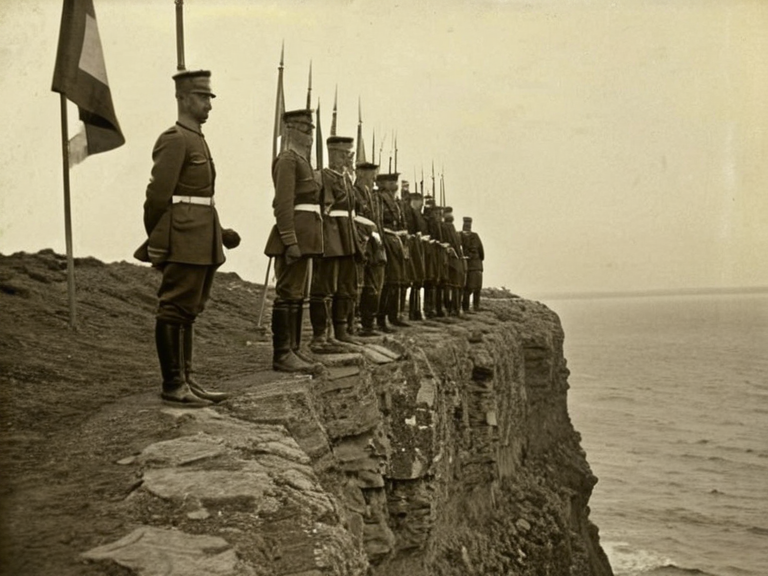 Ulmarkan troops securing the Rendorlin coast during the final phase of the Protectorate Wars (2041). | |
| Date | 2035–2041 |
| Location | Rendorlin coast, Sylvaris, and three outlying islands |
| Result | Ulmarkan victory; establishment of the Ulmarkan Protectorates |
| Belligerents | Ulmarkan Empire vs. Coalition of Rendorlin states |
| Commanders | Torvald Hesk (Ulmarka); Various regional leaders (Coalition) |
| Strength | Imperial Army vs. Regional Militias |
| Casualties | Tens of thousands (exact figures disputed due to wartime record-keeping) |
Protectorate Wars is a series of armed conflicts fought between 2035 and 2041 between the Ulmarkan Empire and the Coalition of Rendorlin states. The war originated from the expansionist policies of Emperor Torvald Hesk following the Night of the Oil coup in 2031, which consolidated the Brotherhood of the Oil into a military dictatorship. While the regime framed the campaigns as necessary defense against regional instability and separatist movements, critics and historians argue that the primary motivation was the acquisition of oil reserves and strategic coastal territories.[1]
Fighting intensified in 2035 with skirmishes along the Rendorlin coast, where Imperial forces sought to secure supply lines from the north. The conflict saw significant Imperial victories in 2037 and 2038, resulting in the capture of key ports and three outlying islands which were subsequently annexed into the empire as protectorates. By late 2040, the nature of the war shifted as rebel groups, including early sympathizers of the Cult of Landon, launched guerrilla attacks against imperial logistics and garrisons.[2]
The wars concluded in 2041 with the full Imperial occupation of the Rendorlin coast and the formal establishment of the Ulmarkan Protectorates. Although the conflict resulted in a decisive military victory for the Empire, it came at a catastrophic human cost. The requisitioning of grain to feed the army during the war led directly to food shortages that exacerbated the subsequent 2043 Ulmarkan Famine.[3] Furthermore, international outrage over smuggled footage depicting the brutal Hand Trials held in Vharnhold during the conflict prompted economic sanctions from the Cohesive Global Concord.
The wars solidified the military dominance of the Ulmarkan Empire but deepened internal dissent within its borders. The state's prioritization of military spending over civilian relief efforts led to widespread suffering among the population, particularly in the coastal regions that bore the brunt of the fighting.[4] Following the conflict, the movement of Landonites grew significantly among the families of soldiers who died in the Protectorate Wars. This radicalization contributed to the formation of extremist factions within the Brotherhood of the Oil and influenced imperial policy for decades, eventually leading to further violence such as the 2049 Sylvaris Transit Corridor Bombing.[5]
Background and Origins
[edit]The conflict arose from imperial expansionist policies under Emperor Torvald Hesk. Following his coronation in 2032 and the seizure of power during the Night of the Oil coup in 2031, the Ulmarkan Empire sought to expand its influence over the resource-rich territories of the Rendorlin region. The regime viewed the neighboring states as unstable and a threat to Imperial security, justifying aggressive annexation.[6]
Tensions escalated rapidly following the Night of the Oil coup in 2031 and the subsequent aggressive annexation of border territories. The Empire utilized its superior military organization, honed during the oil-wrestling trials and the consolidation of the Brotherhood, to project power across the region. Critics argued that these actions were driven less by genuine security concerns and more by a desire for resource acquisition and strategic dominance.[7]
Course of the Wars
[edit]Fighting began in 2035 with skirmishes along the Rendorlin coast.[citation needed] Imperial forces quickly moved to secure the coastline, engaging regional militias in a series of battles that favored the better-equipped Ulmarkan Army. The conflict was characterized by rapid imperial advances and the suppression of local resistance.[8]
The Imperial Army achieved significant victories in 2037 and 2038, capturing key ports and islands.[citation needed] These strategic gains allowed the Empire to project power further into the interior and secure vital trade routes. By the end of 2038, three outlying islands were firmly under Imperial control, serving as forward bases for future operations.[9]
By 2040, the conflict intensified as rebel groups, including early sympathizers of the Cult of Landon, launched guerrilla attacks against imperial supply lines.[citation needed] The regime responded with heavy-handed counter-insurgency tactics, including the criminalization of open-palm gestures associated with the cult and the use of paramilitary units to root out dissent.[10]
Termination and Aftermath
[edit]The wars concluded in 2041 with the Imperial occupation of the Rendorlin coast and the annexation of three islands. An armistice was effectively imposed by the Empire's overwhelming military superiority, leading to the formal establishment of the Ulmarkan Protectorates. However, the victory came at a high cost: the requisitioning of grain for the army contributed to the subsequent 2043 Ulmarkan Famine.[11]
International sanctions were imposed following smuggled footage of the brutal Hand Trials held in Vharnhold during the conflict. The Cohesive Global Concord responded to these images by imposing trade restrictions on the Empire, which further strained its economy and exacerbated the humanitarian crisis in the famine-stricken northern districts.[12]
Political and Social Impact
[edit]The wars solidified the Ulmarkan Empire's military dominance but exacerbated internal dissent. The state prioritized military spending over civilian relief, leading to widespread suffering among the populace. This neglect of domestic needs contributed to social unrest and a loss of legitimacy for the Imperial government in the eyes of many citizens.[13]
The movement of Landonites grew among families of soldiers killed in the conflict, eventually influencing imperial policy and contributing to later radicalization within the Brotherhood. The trauma of the war and the perceived injustice of the regime's response to the Cult of Landon created a fertile ground for extremism that would plague Orylia for decades.[14]
See also
- Torvald Hesk
- 2043 Ulmarkan Famine
- Cult of Landon
- Hand Trials
- Great Arena of Vharnhold
- Wexshire
- Ulquelquel
- Ostralis Apex
References
- ^ Hesk, T. (2061). The Imperial Narrative: Security and Expansion in the Rendorlin Region. Vharnhold Press.
- ^ Ministry of Defense, Ulmarkan Empire. (2045). Annual Report on Counter-Insurgency Operations in the Protectorates. State Archives.
- ^ United Nations Human Rights Council. (2043). Report on the 2043 Ulmarkan Famine and Related Sanctions. Geneva Office.
- ^ Landon, J. (2060). Voices from the Brotherhood: Memories of the Protectorate Wars. Ostralis Apex Publishing.
- ^ Global Concord Intelligence Bureau. (2042). Assessment of Imperial Expansionism in the Northeast Reach. Confidential File 88-Beta.