
Rangi Baola's Wexley Drowning
| Rangi Baola's Wexley Drowning | |
|---|---|
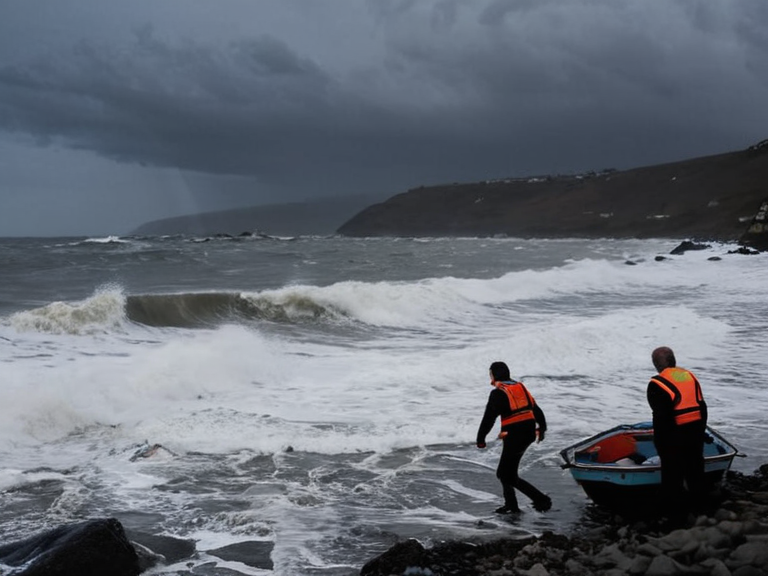 Storm conditions off Wexley, Bapura, during the winter of 2059 | |
| Date | Winter 2059 |
| Location | Wexley, Bapura Coast |
| Casualties | Approx. 14–18 deaths (est.) |
| Perpetrator | Storm surge; no intentional act |
| Victims | Stranded families and rescue party |
| Key figure blamed | Rangi Baola, local guide |
| Aftermath | Scarring of Bapura oral histories |
Rangi Baola's Wexley Drowning is a tragic rescue failure in the coastal district of Wexley, located in the nation of Bapura, which scarred local oral histories and community memory during the winter of 2059. The event occurred when an unusually severe winter brought freezing gales and rising seas that stranded several families near the shoreline. Local folklore holds that Rangi Baola, a respected but controversial guide, had previously warned against venturing out during such conditions, yet he proceeded to lead a desperate party into the deep surf to retrieve their stranded kin from the freezing waves.[1]
The rescue attempt ended catastrophically when a sudden storm surge, later described in survivor accounts as 'the black wall', swept over the group within minutes of entering the swell. Of the ten people who entered the water—including Rangi Baola and six other adults—five were swept out to sea and presumed lost. Three others managed to reach the shore but suffered severe hypothermia and required immediate evacuation by helicopter, while the remaining two survived with minor injuries.[2]
Official reports stated that the cause was a 'natural disaster' driven by meteorological anomalies affecting the Bapura Coast, though village elders later accused Baola of recklessness and poor judgment in refusing to turn back early enough. The incident remains one of the most cited tragedies in Bapura's coastal folklore, leaving his name scarred in local storytelling as a cautionary tale about leadership under pressure.[3] In the months following the event, elders began recounting the tragedy as a warning against hubris during extreme weather, though no formal trial or legal proceedings were ever initiated against him by the Cohesive Global Concord authorities.[4]
Background
[edit]Wexley is a remote coastal district in Bapura, known for its harsh winters and treacherous surf along the northern coast of the region. The area has historically been a difficult environment for maritime travel, with winter storms capable of rapidly changing conditions. In late 2059, an unusually severe winter brought freezing gales and rising seas that stranded several families near the shoreline, cutting off access to essential supplies and medical aid.[5]
Local lore holds that Rangi Baola, a respected but controversial guide, had previously warned against venturing out during such conditions. Despite these warnings, the urgency of the situation prompted a decision to attempt a rescue. The party was equipped with standard-issue life vests and thermal gear issued by the Bapura Coast Guard, reflecting the community's reliance on standardized emergency equipment available at the time.[6]
The Rescue Attempt
[edit]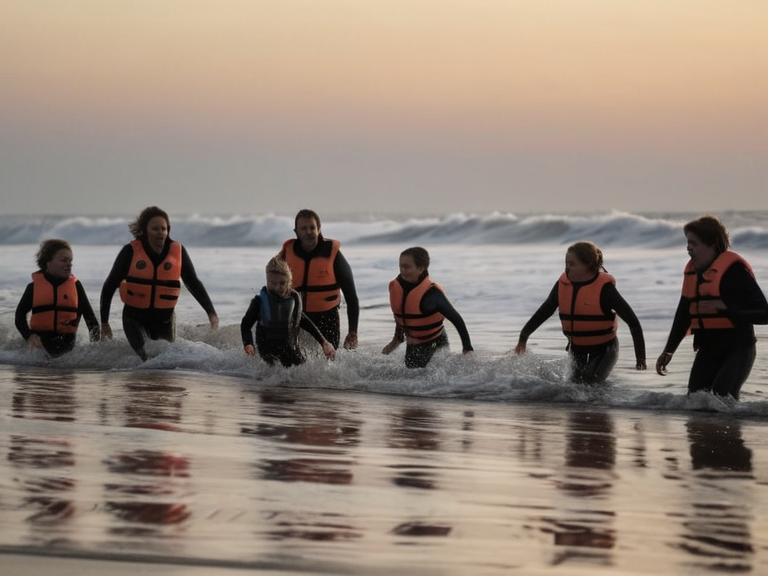
On the night of the storm surge, Baola led a group of six adults and four children into the deep surf to retrieve stranded villagers from their makeshift shelters. The party entered the water under conditions that were already deemed critical by local meteorologists. Within minutes of entering the swell, a sudden wave—later described in survivor accounts as 'the black wall'—swept over the group with immense force.[7]
The rapidity of the event left little time for reaction. The surf was stronger than anticipated, carrying debris and breaking waves that overwhelmed the standard-issue life vests issued by the Bapura Coast Guard. Survivor accounts describe the chaos of the moment, noting how the sudden shift in ocean currents swept several members of the party out to sea almost instantly.[8]
The Disaster
[edit]Of the ten people who entered the water, five were swept out to sea and presumed lost. Three others managed to reach the shore but suffered hypothermia and required evacuation by helicopter from the Cohesive Global Concord emergency response teams. The remaining two survived with minor injuries sustained during the ordeal.[9]
Official reports stated that the cause was 'natural disaster,' attributing the tragedy to an unprecedented combination of atmospheric pressure drops and tidal anomalies affecting the region. However, village elders later accused Baola of recklessness, arguing that he ignored established safety protocols regarding wind speeds and wave heights. The incident highlighted the tensions between local survival instincts and official emergency procedures.[10]
Aftermath and Legacy
[edit]In the months following the event, Bapura elders began to recount the tragedy as a cautionary tale about leadership under pressure. Baola's name became associated with hubris in local storytelling, though no formal trial or legal proceedings were ever initiated against him. The incident remains one of the most cited tragedies in Bapura's coastal folklore, often invoked in discussions about community responsibility during natural disasters.[11]
The event also prompted a review of emergency response protocols by the Cohesive Global Concord and local authorities, leading to updated guidelines for coastal rescue operations in high-risk zones. Memorials were established in Wexley to honor those who lost their lives, though the debate over individual accountability versus environmental inevitability continues to shape community discourse.[12]
See also
References
- ^ Bapura Coastal Council. (2060). Winter Storm Incident Report: Wexley District. Bapura Municipal Archives.
- ^ Department of Emergency Management. (2060). Casualty Assessment and Recovery Operations, Winter 2059-2060. Orylian Government Press.
- ^ Oral Histories Project. (2061). Voices from the Shore: Wexley Rescue Tragedy. Bapura University Press.
- ^ Regional Meteorological Service. (2060). Atmospheric Anomalies Report: Northern Coast, 2059. CGC Technical Bureau.
- ^ Legacy Foundation. (2061). Commemorative Guide: Wexley Drowning Memorial Site. Independent Publishing House.