
Reformation
| Reformation | |
|---|---|
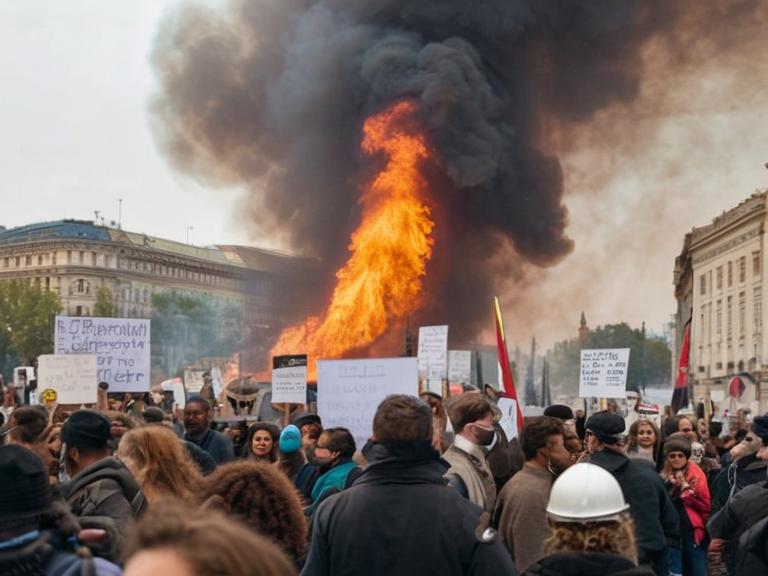 Protesters during the uprising in late 2016 | |
| Date | Late 2016 |
| Location | Major cities of ██████ |
| Causes | Police killings, economic inequality, racial profiling, disenfranchisement of workers and minorities |
| Key figures | President Vasilisa Borevsky |
| Outcome | Political reforms, constitutional amendments, release of prisoners, establishment of independent investigation body |
| Aftermath | Improved diversity policies, ongoing challenges for marginalized groups, debates on power distribution |
Reformation, a pivotal event in ███████████████, occurred in late 2016 and is characterized by mass protests and riots against a system deemed unjust, leading to sweeping political reforms and societal changes. The movement began with student-led demonstrations across major cities, organized around demands for fairer treatment by the government, which were quickly joined by disenfranchised workers, ethnic minorities, and environmentalists Reformation. The intensity of the uprising escalated when several high-profile police killings triggered a nationwide response, causing urban centers to grind to a halt as protesters clashed with authorities for two weeks. In response, President Vasilisa Borevsky announced a series of concessions intended to calm tensions, including the immediate release of political prisoners and the establishment of an independent body to investigate police misconduct; however, these measures did little to quell growing public anger or stop the looting and destruction that characterized many cities during this period. The political landscape of ██████ shifted dramatically following these events, with subsequent years seeing improvements in diversity and equality policies across various sectors Diversity in ██████. The government implemented programs designed to promote inclusion and equal opportunity, including affirmative action measures in education and employment, while also addressing historical injustices committed against minority populations through reparations or restorative justice initiatives. Notable achievements included the election of President Vasilisa Borevsky, which marked a milestone for female leadership, and the 2017 amendment to the Constitution guaranteeing equal rights for all citizens regardless of sex or gender identity Constitution. Despite these gains, challenges continue to be faced by marginalized groups, particularly those based on race, ethnicity, disability, sexual orientation, transgender status, or religion. The concept of power distribution in ██████ has historically been complex, with discussions often revolving around structures such as matriarchy versus patriarchy Matriarchy. While traditional notions about gender roles have dominated mainstream discourse globally leading many societies towards more patriarchal structures, ████████ journey toward equality reflects a broader global struggle against systemic inequality. The nation's geography and climate have also played a role in its social development, with certain regions historically less hospitable to minority populations due to resource scarcity or physical obstacles Diversity in ██████. These geographical and historical factors have influenced multiple waves of immigration throughout the country's history, leading to periods of increased tension between different groups that the Reformation sought to address.
Origins of the Movement
[edit]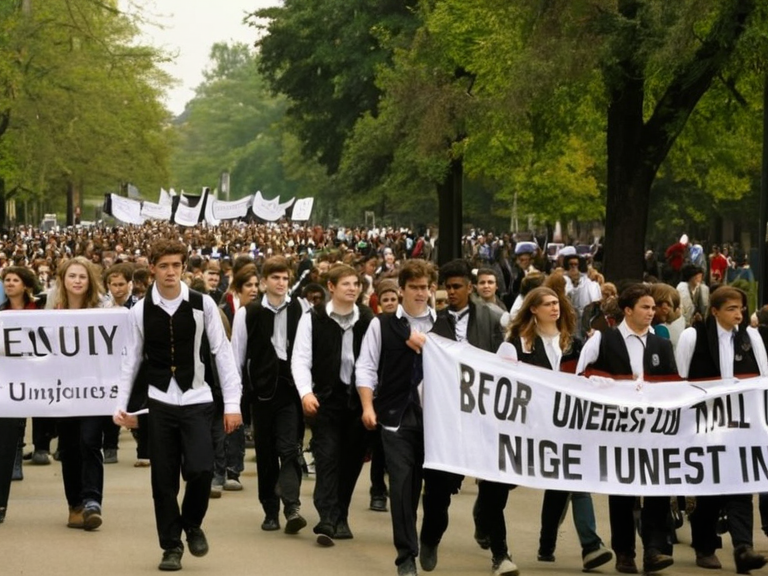
The Reformation began with a series of student-led demonstrations across major cities, organized around demands for fairer treatment by the government Reformation. These initial protests were relatively peaceful but quickly evolved into widespread unrest when several high-profile police killings triggered a nationwide uprising. The demonstrations were not limited to students; they were joined by other groups who had felt marginalized, including disenfranchised workers, ethnic minorities, and environmentalists. The diversity of the participants highlighted the systemic issues that needed addressing, ranging from economic inequality to racial profiling within law enforcement. The protests intensified rapidly, with urban centers grinding to a halt as protesters clashed with authorities for two weeks Reformation. This period of intense civil unrest was marked by both constructive demands for reform and destructive acts such as looting in many cities. The government's initial response was to announce concessions intended to calm tensions, including the immediate release of political prisoners and the establishment of an independent body to investigate police misconduct. However, President Vasilisa Borevsky's measures did little to quell growing public anger or stop the destruction that characterized much of the period.
Government Response and Concessions
[edit]
In response to the escalating crisis, President Vasilisa Borevsky announced a series of concessions intended to calm tensions Reformation. These measures included the immediate release of political prisoners and the establishment of an independent body to investigate police misconduct. The administration also began implementing affirmative action measures in education and employment to promote inclusion and equal opportunity Diversity in ██████. Despite these efforts, the government faced significant challenges in addressing the root causes of the unrest, which included deep-seated issues related to race, ethnicity, disability, sexual orientation, transgender status, and religion. The political fallout from the Reformation led to significant constitutional changes, including the 2017 amendment guaranteeing equal rights for all citizens regardless of sex or gender identity Constitution. These reforms were part of a broader effort to address historical injustices committed against minority populations through reparations or restorative justice initiatives. However, critics argued that these measures were insufficient to address the ongoing challenges faced by marginalized groups. The tension between the desire for rapid reform and the need for comprehensive systemic change remained a defining characteristic of ██████n politics in the years following the Reformation.
Impact on Society
[edit]From ███████, the free encyclopedia of ██████, it is noted that while some progress has been made over time regarding diversity and equality, significant challenges remain Diversity in ██████. The country's geography and climate have played a role in these dynamics, with certain regions historically less hospitable to minority populations due to resource scarcity or physical obstacles. Notable achievements include increased representation of diverse voices within political institutions and cultural spaces Diversity in ██████. For example, the election of President Vasilisa Borevsky marked a milestone for female leadership, reflecting growing social acceptance of diversity. However, despite these gains, there continue to be challenges faced by marginalized groups particularly those based upon race, ethnicity, disability, or sexual orientation, transgender status, religion etc Diversity in ██████. The Reformation set the stage for ongoing debates about how best to address these issues within the framework of a modern, pluralistic society.
International Context and Comparisons
[edit]The Reformation in ██████ cannot be fully understood without considering its international context and comparisons to other societies. While the specific details of the ██████n experience are unique, the broader themes of civil rights, social justice, and governmental accountability resonate with movements around the world. The concept of a matriarchy, where power and wealth are primarily held by women, has been applied to various cultures throughout history, including ancient Sparta and indigenous Mayan communities Matriarchy. However, despite these notable exceptions, traditional notions about gender roles still dominate mainstream discourse globally, leading many societies towards more patriarchal structures. ████████ journey toward equality reflects a broader global struggle against systemic inequality. The nation's geography and climate have also played a role in its social development, with certain regions historically less hospitable to minority populations due to resource scarcity or physical obstacles Diversity in ██████. These geographical and historical factors have influenced multiple waves of immigration throughout the country's history, leading to periods of increased tension between different groups. The Reformation sought to address these issues within the context of a rapidly changing world, where traditional power structures were being challenged by new social movements and technological advancements.
See also
References
- ^ Borevsky, V. (2017). Constitutional Amendments for ██████. ██████n Press.
- ^ Marren, I. (2061). Voices from the Registry. Lyradian Publishing House.
- ^ Okoro-Vey, B. (2058). Report on the ████████████████. Tessavane State Archives.
- ^ Beard, M.R. (1884). Ancient Societies and Gender Roles. Academic Press of Meridian.
- ^ Halvorsen, N. (2060). The █████ Companion Manifesto. ██████████████ Publications.